
















Last updated on 14 October 2026.
The EU Pay Transparency Directive, which was approved in June 2023, was developed to close the 12.7% gender pay gap across the European Union. The Directive establishes a clear framework for EU Member States to apply the principle of equal pay for equal work or work of equal value.
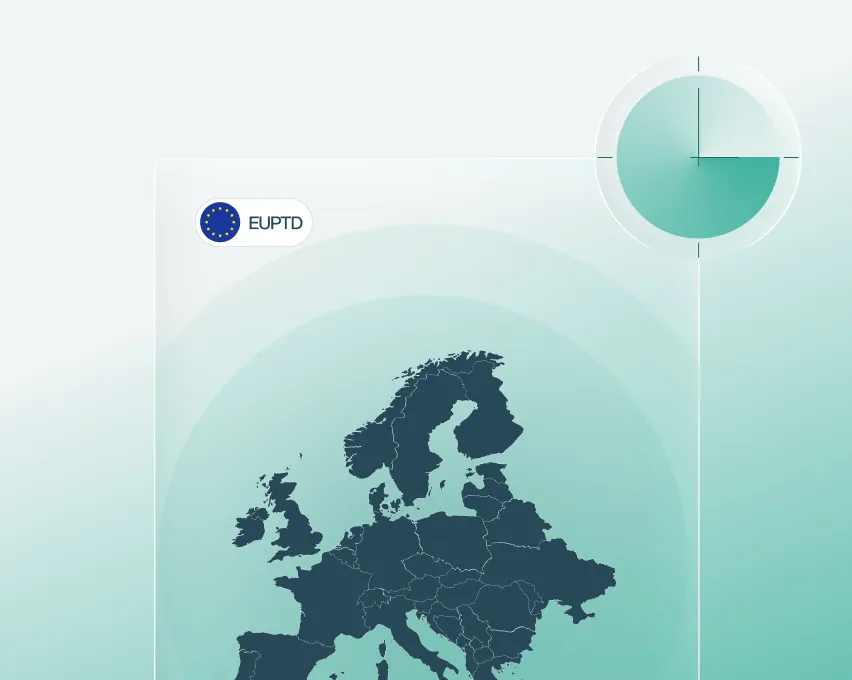
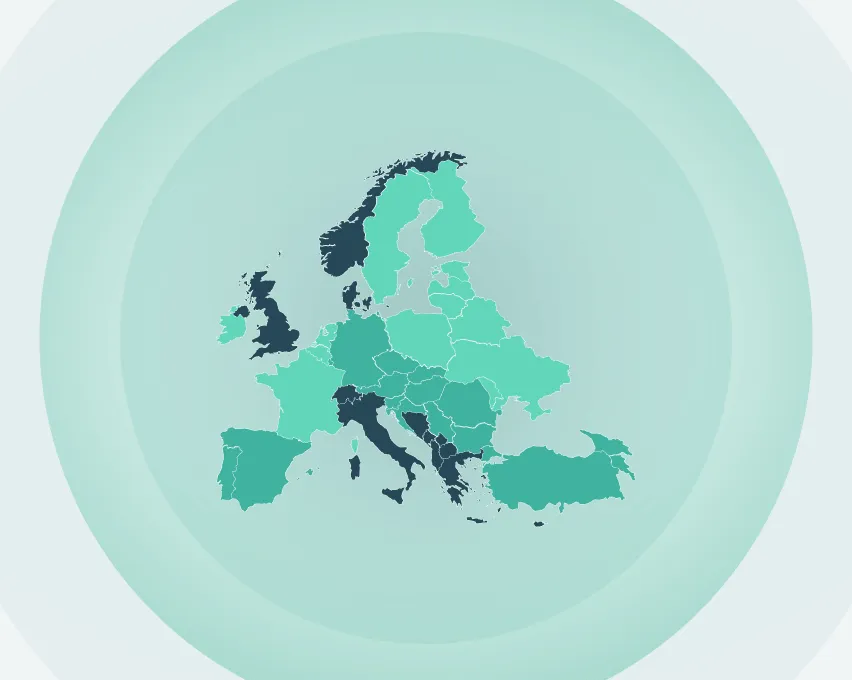
EU Member States had until 7 June 2026 to transpose the Directive’s requirements into law. Just four of the 27 Member States — Slovakia, Italy, Lithuania, and Malta — met the deadline. Trusaic’s Transposition Monitor resource, which includes an interactive status map that can be filtered by hovering, tracks the latest developments as the remaining 23 Member States work toward transposing the Directive.
Transposition Monitor by Member State
Explore in-depth requirements outlined by the EU Directive
Transposition Stage
-
Full transposition
-
Draft published
-
Official Initial steps announced
-
No activity on official government sites announced
| Country | Status | Draft Legislation | Final Legislation | Effective Date | Guide | Blog |
|---|---|---|---|---|---|---|
| Austria | On 6 June 2026 the Austrian Labour Minister Korinna Schumman sent draft legislation for the implementation of the EU Pay Transparency Directive to the government’s political coordination (politische Koordinierung der Regierung) under heavy criticism from social partners. While the Ministry has incorporated feedback from social partner discussions into the draft, no agreement or compromise on the draft was reached. Sharp criticism has arisen in particular from the Chamber of Commerce (WKÖ), the Federation of Austrian Industries, and the ÖVP Economic Association over the Minister’s decision to move the draft forward for coordination due to concerns over the administrative burden posed by the draft. In contrast, the SPÖ, the Greens, the Federation of Trade Unions and the Chamber of Labour are pushing for a rapid implementation of the Directive, raising concerns by critics that the government may use fast-track procedures.
Next steps: The draft has entered an internal political coordination stage involving negotiation between governing parties. Once it becomes a formal Ministerial Draft (Ministerialentwurf), it will enter public consultation.
|
Pending | No | TBD | Guide | Blog |
| Belgium | Despite recent EU Commission statements that it is not open to such requests, Belgium (Federal) has requested a six-month extension from the Commission to transpose the Directive due to stalled negotiations with the National Labour Council. Specific concerns:
Belgium Flemish Region: On 12 June 2026 the Flemish Parliament ratified and promulgated a partial transposition of the Directive, applicable to the public sector in Flanders, following the lead of the French Community, which previously partially transposed for its public sector. Belgium (French Community): Right to Information and General Pay Transparency requirements transposed for the public sector in the French Community.
|
Pending | No | TBD | Guide | Blog |
| Bulgaria | On 11 September 2026, the Council of Ministers submitted the draft transposition bill, revised based on consultation feedback, to the National Assembly in Bulgaria. On the same day, it was assigned to committee review with the Committee on Human Rights, Religious Denominations, and Citizens’ Complaints as the lead committee.
Timing: The process for a government-approved bill to move through the Bulgarian Parliament typically takes 2 to 4 months but can be fast-tracked to 2 to 4 weeks.
Prior Updates
|
Yes | Pending | TBD | Guide | Blog |
| Croatia | Croatia’s Ministry of Labour, Pension System, Family and Social Policy has published a methodology for job evaluation based on the requirements of the EU Pay Transparency Directive. It is voluntary and free to use with accompanying guidance and tools tailored to company size.
Under Art. 4(2), all Member States are required to take the necessary measures to ensure that analytical tools or methodologies are made available and are easily accessible to support and guide the assessment and comparison of the value of work in accordance with the criteria of the Directive.
Prior Updates
|
No | No | TBD | Guide | |
| Cyprus | On 6 September 2026 Labour Minister Marinos Mousiouttas said the pay transparency bill is expected to be submitted to the Council of Ministers for approval in September, and subsequently it will be submitted to the House of Representatives for a vote. The bill has already been discussed with employers’ organizations and trade unions, and was sent to the Legal Service for legislative review. Prior Updates
|
Yes | Pending | TBD | Guide | Blog |
| Czechia | On 31 August 2026 the Government approved the transposition bill, which will be moving to the Chamber of Deputies to begin the parliamentary legislative process.
Prior Updates
|
Yes | Pending | January 2027 | Guide | Blog |
| Denmark | Denmark’s revised draft transposition was tabled 8 October 2026 with the Danish Parliament (Folketinget). The “Proposal for an Act amending the Act on Equal Pay for Men and Women, etc.” (L68) has been placed on the agenda for a 1st reading in Parliament on 22 October 2026. The bill’s entry into force date has been revised to 1 March 2027 from 1 January 2027. Prior Updates
|
Yes | Pending | March 2027 | Guide | Blog |
| Estonia | Estonia has partially transposed the EUPTD, consistent with their announcement in April that they would incorporate certain EUPTD pre-employment pay transparency rights into Estonian law, while seeking renegotiation and/or postponement of the remainder. Prior Updates
|
Pending | Partial Transposition | 13 July 2026 (Partial Transposition) | Guide | Blog |
| Finland | On 30 September 2026, the Incomes Register published guidance on reporting data related to pay transparency. While this guidance is specific to reporting, the guidance on pay components, worker categories, and which employees to include can be used as guidance for RTI as well for consistency. Prior Updates
|
Yes | Pending | 1 January 2027 (pending) | Guide | Blog |
| France | On 10 Sept. 2026, the bill transposing the Directive was formally presented to the Council of Ministers. It was signed by the Prime Minister and deposited at the Senate (as PJL n° 944) on the same day under accelerated parliamentary procedures (procédure accélérée). It was sent to the Committee on Social Affairs (la commission des affaires sociales). Progress through the Senate can be tracked here, where you can also find the accompanying explanatory memorandum, impact study, and opinion of the Council of State. The Ministry of Labour’s press kit can be found here, providing an overview of the draft transposition. Prior Updates
|
Yes | Pending | TBD | Guide | Blog |
| Germany | The draft (unpublished to date) is scheduled to be discussed in a cabinet meeting on in June 2026 and is expected to revise the German Pay Transparency Act (Entgelttransparenzgesetz). The Ministry has confirmed that the legislation will enter into force in early 2027 at the earliest and confirmed that pay reporting duties and the individual right to pay information will not become effective until June 2028. |
Pending | No | TBD | Guide | Blog |
| Greece | Greece passed its transposition of Directive (EU) 2023/970 on 2 July 2026. The law officially enacted once published in the Government Gazette on 6 July 2026.
While the transposition became law on 6 July 2026, Art. 48 states that Arts. 8 – 20 and Art. 27 shall enter into force on 1 November 2026. This includes compliant pay structures; pre-employment pay transparency; RTI; gender pay gap reporting; joint pay assessments; and remedies, penalties, compensation, and burden of proof provisions.
|
Yes | Yes | 1 November 2026 | Guide | Blog |
| Hungary | As of March 2026, pay transparency does not appear in any official legislative roadmap, and no draft has been released for public consultation. Parliamentary elections took place on 12 April 2026. The inaugural session of the new National Assembly was held on 9 May 2026. |
No | No | TBD | Guide | |
| Ireland | On 26 May 2026 Minister Norma Foley (DCDE) confirmed that the EU Commission was informed that Ireland will not be fully transposed by 7 June, pointing to delays in EU Commission workshops and the EIGE job evaluation toolkit. Ibec, the employers’ representative group, has requested a delay to June 2027. Prior Updates
|
Yes | Pending | TBD | Guide | Blog |
| Italy | Italy published its legislative decree in the Gazetta Ufficiale. It entered into force 7 June 2026. |
Yes | Yes | 7 June 2026 | Guide | Blog |
| Latvia | Latvia on published its draft legislation to transpose the EU Pay Transparency Directive. The consultation period closed 9 April 2026 before moving to the Cabinet of Ministers and then to the Saeima for parliamentary consideration. |
Yes | Pending | TBD | Guide | Blog |
| Lithuania | Lithuania resolved a weeks-long legislative committee debate over the timing of its EU Pay Transparency Directive transposition and became the second EU Member State – after Slovakia – to pass legislation to fully transpose the EU Pay Transparency Directive. Rather than delaying the entire package, the Seimas Social Affairs and Labour Committee voted on 13 May 2026, to delay the effective date of certain requirements in the legislation: most requirements will enter into force on 7 June 2026, while two significant provisions — employer pay system compliance and data submission to the national social insurance authority — will not take effect until 31 Dec. 2026 and 1 Jan. 2027, respectively. The result is a two-track compliance timeline that will require Lithuanian employers to understand not just what is required, but when. On 21 May 2026, the Seimas adopted the transposition legislation (Law No. XV-969), which was then signed by the President and officially published in the Register of Legal Acts on 25 May 2026. |
Yes | Yes | June 2026/RTI 2027 | Guide | Blog |
| Luxembourg | The Luxembourg government recently launched a consultation of a preliminary draft transposition bill within the Ministry of Labour. As of 15 May 2026 no official draft bill has been filed with the Chamber of Deputies. According to the Ministry of Labour, draft legislation is not expected until the second half of 2026. |
Pending | No | TBD | Guide | Blog |
| Malta | Malta published 5 June 2026 the Equal Pay (Transparency and Reporting) Regulations, 2026 to fully transpose the Directive. This new regulations are of immediate effect and cover all Directive requirements. Those that were previously partially transposed (e.g. RTI) have now been brought in line with the Directive. Previously, effective 27 August 2025, Malta had partially transposed two of the EUPTD’s requirements:
|
Yes | Yes | 5 June 2026 | Guide | Blog |
| Netherlands | During its 8 Sept. 2026 procedural meeting, the House of Representative’s Social Affairs and Employment (SZW) committee decided to put the draft transposition (36949) on the plenary agenda. As of now, the bill is scheduled for plenary debate in Week 2 of 2027 (11 Jan. 2027). Despite the best efforts of the Ministry of Social Affairs and Employment, unless it is moved forward on the agenda, this means the Netherlands will miss its targeted 1 Jan. 2027 entry into force.
Prior Updates
|
Yes | Pending | TBD | Guide | Blog |
| Poland | In response to a recent Parliamentary question, Poland’s Minister of Family, Labour and Social Policy provide additional guidance on compliance with the requirement to ensure that vacancy notice and job titles are gender-neutral, which entered into effect through Poland’s partial transposition on 24 December 2025.
Prior Updates
Poland on 4 May 2026 released an updated draft of its transposition, confirming that its transposition will enter into force on a delayed timeline, but that they are continuing to move the draft through the legislative process.
|
Yes | Pending | TBD | Guide | Blog |
| Portugal | On 5 August 2026 the Ministry of Labour, Solidarity and Social Security published a draft bill for public consultation for the partial transposition of the Directive through amendments to Law No. 60/2018 of 21 August, Decree-Law No. 78/2026 of 16 March, and the Labour Procedure Code. The consultation period is 20 days counted from the date of publication (a shortened period citing the need for urgency).
|
Yes | Pending | TBD | Guide | Blog |
| Romania | In a vote on 14 October 2026, the Senate rejected the draft transposition legislation moving through the parliamentary process under urgent procedures (L445/2026) with 27 voting in favor, 1 against, and 62 abstentions. However, the bill has now been sent to the Chamber of Deputies, which is the decisional chamber for the proposal. Therefore, the Chamber of Deputies will have the definitive say on whether to adopt, amend, or reject the legislation.
The vote was taken ahead of the 17 October 2026 deadline for the Senate in order to avoid a tacit adoption by the Senate through failure to vote.
Prior Update
|
Yes | Pending | June 2027 | Guide | Blog |
| Slovakia | President Peter Pellegrini on April 23, 2026 signed the Act on Equal Remuneration of Men and Women for Equal Work or Work of Equal Value. On May 8, 2026, it was transposed into law. It will take effect 7 June, 2026. Slovakia is the first member state to transpose the Directive into law. The legislative history can be found here. The Ministry is currently preparing guidelines for the law, which are expected to be available this month (June 2026). In the meantime, Slovakia has launched a website with the law and an overview of its requirements.
|
Yes | Yes | 7 June, 2026 | Guide | Blog |
| Slovenia | The Ministry of Labour, Family, Social Affairs and Equal Opportunities has initiated a working group to develop the draft legislation to implement the Directive. No timetable has been publicized on its release. |
Pending | No | TBD | Guide | |
| Spain | Yes | Pending | TBD | Guide | Blog | |
| Sweden | On 8 June 2026 the Government instructed the Equality Ombudsman (DO) to continue preparatory measures for the implementation of the Directive. A report from the DO is due 1 November 2027. The assignment document reiterates the intention to work toward postponement of the Directive, but could signal a softening in Sweden’s stance. Prior Update
|
Yes | Pending | TBD | Guide | Blog |
| Country | Status | Draft Legislation | Final Legislation | Effective Date | Guide | Blog |
|---|---|---|---|---|---|---|
| Norway - EEA | On Nov. 20, 2025, Norway’s Ministry of Culture and Equality announced that it has begun work to implement the Directive into Norwegian law. Although Norway is not an EU Member State, the Directive has been deemed European Economic Area (EEA)-relevant, and work is underway across the EFTA to adopt it into the EEA Agreement. |
Pending | No | TBD | Guide | Blog |
| Iceland - EEA | Iceland enacted Law No. 53/2026 18 June 2026, which significantly amends the Act on Equal Status and Equal Rights of the Genders, No. 150/2020 (reporting on the gender pay gap). This amendment simplifies Iceland‘s gender pay gap compliance process by moving to a reporting model. The required reporting components (objective job classification using factors that closely track EUPTD Article 4 criteria, a gender-disaggregated pay analysis covering all pay components, and remediation planning) align with pay data reporting requirements in other countries. Note, however, that as an EEA (non-EU) state, Iceland is not currently legally mandated to transpose the Directive, and Iceland‘s framework lacks the EUPTD’s public reporting and joint pay assessment obligations. |
Pending | No | TBD | Guide | |
| Liechtenstein - EEA | Per Norway’s announcement, as part of the EEA Agreement, Liechtenstein is preparing to apply the Directive’s full set of transparency, reporting, and enforcement requirements. We will update when there is an official release from Liechtenstein. |
Pending | No | TBD | Guide | |
| Switzerland - EFTA | While Switzerland is part of the EFTA, it is not an EEA member and is thus not bound by the EEA Agreement. Subsequently, if the Directive is adopted into the EEA Agreement, Switzerland’s pay transparency laws will not be affected. Currently, there are no indications that Switzerland will take part in transposing the Directive. |
No | No | N/A | Guide | |
| Montenegro - EU Candidate | On 7 April 2026 Montenegro‘s parliament adopted amendments to their Labour Act that included transposition of the EUPTD’s requirements, which entered into force on 23 April 2026. Montenegro is an EU Candidate Country and is in the process of aligning its laws with the EU. Therefore, these amendments also include changes to align with other EU directives and requirements. |
Yes | Yes | 23 April 2026 | ||
| Northern Ireland - Affiliated | On 7 October 2025 the Department for Communities (DfC) published its consultation response, which broadly aligns with the gender pay gap reporting framework already in place in the rest of the UK. However, it is still considering whether it will adopt the same 250-employee framework as the rest of the UK or the 50-employee threshold in place in the Republic of Ireland. The DfC is also taking into account developments around the EU Pay Transparency Directive.
The next step is for the DfC to publish Gender Pay Gap Information Regulations, which are currently under development. Implementation is not expected before 2027, with first reports likely to be due in 2028. The Equality Commission for Northern Ireland (ECNI) is expected to be responsible for monitoring and enforcement, with sanctions yet to be defined in the regulations.
|
Pending | No | TBD | Blog | |
| Moldova - EU Candidate | As part of its EU accession process as an EU Candidate, Moldova’s Ministry of Labour and Social Protection (MMPS) has published a draft law (Registration No. 729/MMPS/2026) amending its laws to align with the EU Pay Transparency Directive. Public consultation closed on 29 July 2026. |
Yes | Pending | 1 January 2027 | ||
| Albania - EU Candidate | On 7 August 2026, Albania published “On some additions and amendments to Law no. 15/2019 ‘On the Promotion of Employment’, as amended” for public consultation through 4 September 2026. While not citing the EU Pay Transparency Directive in its explanatory memorandum, the draft legislation would require in Art. 14: “Every employer shall be required to announce or notify the institution responsible for employment and skills of paid job vacancies, by declaring them to the relevant regional/local employment structures. In every job vacancy announcement, the employer must make public the pay range for the advertised position.” (translated) |
Yes | Pending | TBD |
At Trusaic, we provide employers across the EU with solutions to comply confidently with the Directive.
Our Complete EU Pay Transparency Solution enables compliant pay systems, ensures gender-neutral job evaluations, and automates complex reporting obligations to keep you one step ahead of EU pay transparency enforcement.
- PayParity® analyzes your rewards data (compensation/benefits in kind) and quickly identifies any potential unjustified inequities. It enables you to more easily comply with Article 7 (right to information) and Article 6 requirements (pay setting and progression policy).
- Our Remediation Optimization Spend Analysis (R.O.S.A.) works as PayParity’s remediation engine to find the most cost-effective way to close nominal pay gaps to ensure compliance.
- Automated RTI workflows: Our bi-directional integrations with global HCM platforms allow pay equity data to flow securely from the Trusaic platform back into the HCM. Employees can then access their RTI reports directly within their existing HR systems. This eliminates manual report generation and reduces compliance risk.
- For organizations that prefer platform-based access, RTI reports can also be generated and delivered securely through the PayParity platform, with role-based permissions and full auditability.
- Salary Range Finder® ensures equitable pay at the point of hire to prevent any increases in pay gap and enables you to easily comply with the Directive’s salary range disclosure and salary history ban requirements.
- Pay Decisions: Generate fair, competitive offers instantly from Workday.
- Regulatory and Pay Transparency Reporting™ captures your pay equity findings and generates compliant reports.
Trusaic is GDPR compliant and can assist any organization in any EU state in meeting its obligations under both the EU Corporate Sustainability Reporting Directive and the EU Pay Transparency Directive.