

















Greece has transposed the EU Pay Transparency Directive (EUPTD) into national law. Greece’s Parliament passed its transposition of Directive (EU) 2023/970 on 2 July 2026, and the law — Law 5316/2026 — was officially enacted upon publication in the Government Gazette (ΦΕΚ Α΄ 105/6.7.2026) on 6 July 2026.
While the law itself entered into force on 6 July 2026, Article 48 delays the entry into force of the substantive employer-facing provisions — compliant pay structures, pre-employment pay transparency, the Right to Information, gender pay gap reporting, Joint Pay Assessments, and the remedies, penalties, compensation, and burden of proof provisions — until 1 November 2026. Employers with operations in Greece should treat 1 November 2026 as the operative compliance date for most obligations, while beginning preparation now.
Greece follows the Directive closely but adds a few notable employer-side features not commonly seen elsewhere: employers may refuse to respond to manifestly disproportionate or abusive (in particular, repetitive) Right to Information requests, and employers may claim compensation from an employee who misuses pay data they received (other than their own) outside the purpose of pursuing an equal pay claim. Where a collective labour agreement (CLA) applies, there is also a presumption of no unjustified wage discrimination, and CLAs can serve as the basis for compliant pay structures.
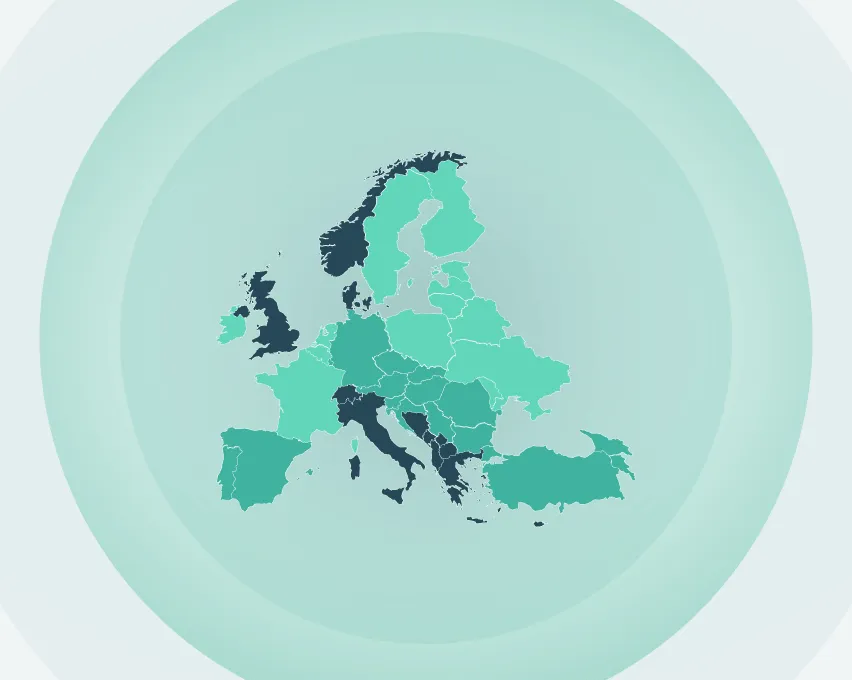
Track the latest EU Member State transposition developments with our monitor.
What are Greece’s reporting requirements?
Who needs to report?
Greece sets its reporting threshold at 100 employees, aligned to the Directive’s phased cadence:
- 250 or more employees: Annual reporting. First report due 7 June 2027, then annually on the same date thereafter.
- 150–249 employees: Triennial reporting. First report due 7 June 2027, then every three years on the same date thereafter.
- 100–149 employees: Triennial reporting. First report due 7 June 2031, then every three years on the same date thereafter.
- Fewer than 100 employees: Reporting is voluntary, on a triennial basis.
Employee headcount for threshold purposes is based on the average number of employees during the previous calendar year. Under the law’s transitional provisions, the reference period for first reports by employers with 150 or more employees runs from the law’s entry into force (6 July 2026) through 31 December 2026 — meaning the relevant measurement window has already begun.
What to report?
Reporting contents align with the seven indicators required under Article 9 of the EUPTD:
- Mean and median gender pay gaps for total pay and complementary or variable components
- Proportion of male and female workers receiving complementary or variable pay
- Proportion of male and female workers in each pay quartile
- Gender pay gaps by category of worker, broken down by basic pay and complementary or variable pay
A few Greece-specific calculation clarifications apply: complementary and variable pay does not need to be broken down into its component parts; and the same calculation methodology applies to part-time and temporary employees. Temporary workers must be included in reporting by the indirect employer (the user undertaking), based on information exchanged with the temporary employment agency.
If an unjustified gender pay gap of 5% or more is identified within a category of workers and is not remediated within six months, a Joint Pay Assessment is triggered (see below).
Where and when to report?
- Recipient: Reports are submitted to the Greek Ombudsman (Synigoros tou Politou), Greece’s designated monitoring body.
- Accuracy confirmation: The accuracy of the reported information must be confirmed in writing by the employer’s management, following consultation with employees’ representatives (where they exist). Those representatives have the right to access the methodologies the employer applied.
- Publication: Employers may publish the reported information on their own website or by other means. Public sector employers must post the information on their website.
- Sustainability reporting employers: Employers already subject to mandatory sustainability reporting may incorporate the reported pay data into their management report, subject to certain conditions.
- Clarifications: Employers must provide explanations of any pay differences within two months of a request.
- Remediation: Corrective measures for unjustified pay differences must be implemented within six months, in cooperation with employees’ representatives, the Labour Inspectorate, and the Ombudsman.
Internal disclosure
Employers must provide employees and employees’ representatives with the reported gender pay gaps by worker category. Public sector employers must additionally post this information on their website.
Joint Pay Assessment
Where reporting identifies a gender pay gap of 5% or more in any category of workers that is not justified and not remediated within six months, the employer must conduct a Joint Pay Assessment (JPA), with contents aligned to Article 10(2) of the EUPTD.
- The JPA must be completed in cooperation with employees’ representatives.
- It must be made available to employees and their representatives, to the Labour Inspectorate upon request, and to the Ombudsman.
- Corrective measures agreed through the JPA must be implemented, in cooperation with employees’ representatives, within one year of notification to the Ombudsman.
- Employee representation for JPAs: Where no trade union exists, employees are represented for JPA purposes by the three longest-serving employees at enterprises unless employees choose a different method of representation.
What are Greece’s pay transparency requirements?
Greece’s law mandates pay transparency in hiring and throughout employment. Employers are required to:
- Disclose initial pay before the interview: Employers must provide applicants with the initial pay level or range for the position — based on the employer’s objective, gender-neutral criteria and any applicable CLA provisions — in a manner ensuring an informed and transparent pay negotiation. This must occur by any appropriate means (written or oral) within a reasonable time before the job interview, or before the employment contract is concluded if no interview takes place (e.g., in job postings, advertisements, or professional networking listings).
- Use gender-neutral job postings, titles, and descriptions.
- Prohibition from requesting salary history from candidates.
- Maintain accessible pay criteria: Objective, gender-neutral criteria used to determine pay, pay levels, and salary progression must be made readily accessible to employees. Employers with fewer than 50 employees are exempt from providing pay progression criteria.
- Use compliant work-of-equal-value criteria: Criteria must be objective and gender-neutral, agreed with employees’ representatives where they exist, and account for skills, effort, responsibility, and working conditions — plus any other relevant factor, explicitly including seniority and relevant non-technical (soft) skills.
- Maintain compliant pay structures: Pay structures must be based on objective, gender-neutral criteria; allow for comparative assessment of jobs and worker categories; be documented in writing with a review procedure; clearly identify the components of remuneration; and be applied in an objective, gender-neutral manner. Employers bound by a CLA may rely on that agreement’s classifications and pay scales.
- Note the CLA presumption: Where a CLA applies, there is a presumption of no unjustified wage discrimination, and the CLA may serve as the basis for a compliant pay structure.
The Ministry of Labour and Social Security, in collaboration with other government bodies, is required to make available (non-mandatory) tools, evaluation methods, technical assistance, and training. Greece’s Fair Pay project released a training manual for employers in February 2026 in anticipation of these obligations.
What are Greece’s Right to Information (Article 7) requirements?
Employees may request, in writing, information on their individual pay level and the average pay levels, broken down by gender, for categories of employees performing similar work or work of equal value to them.
Key provisions include:
- Two-month response deadline: Employers must respond to an initial RTI request within two months. No statutory deadline applies to follow-up clarifications where the information provided was inaccurate or incomplete.
- Employer right to refuse: Employers may decline to respond where a request is manifestly disproportionate or abusive, particularly due to its repetitive nature. In that case, the employee may bring the request to the Ombudsman, who determines the validity of the request.
- Independent request channel: Requests may be submitted directly, through employees’ representatives, or through the Ombudsman.
- Limited use of data: Employers may require that employees not use information received (other than about their own pay) for any purpose other than pursuing their right to equal pay — and may claim compensation for damage if this restriction is breached.
- Temporary workers: The indirect employer (user undertaking) must provide RTI information to temporary workers after receiving the relevant individual pay data from the temporary employment agency.
- Privacy safeguards: Where disclosure under RTI, reporting, or JPA obligations would directly or indirectly reveal the pay of an identifiable employee, only employees’ representatives, the Labour Inspectorate, or the Ombudsman may access that information. They may advise the employee on a possible claim without disclosing individual pay levels.
What are the employment equity standards?
Greece already guarantees equal pay for equal work or work of equal value under Article 22 of the Greek Constitution and Law 1414/1984. Law 5316/2026 builds on this foundation with structured reporting, transparency mechanisms, and stronger enforcement.
Consistent with the Directive, for pay discrimination cases, comparators are not limited to employees of the same employer — comparisons may extend to situations where a single source determines pay across employers — and a comparable situation is not limited to workers employed at the same time.
What are the risks of non-compliance?
Enforcement measures under Greece’s transposition law include:
- Reversal of the burden of proof: Where an employee establishes facts from which discrimination may be presumed, the employer must prove no discrimination occurred. The burden also shifts where an employer has failed to meet its wage transparency obligations, unless the breach was manifestly unintentional and minor.
- Right to full reparation: A victim of an equal pay violation or wage transparency breach is entitled to full compensation — covering positive and consequential damage as well as moral damage, with no statutory cap. This includes back pay, related bonuses or payments in kind, default interest, lost income and professional opportunities, and damage from intersectional discrimination.
- Sanctions: The Minister of Labour and Social Security will determine the calculation method and amount of fines by separate decision. Employers may also be ordered to cure a violation, with a recurring fine for every three months of continued non-compliance — the amount to account for enterprise size, severity of breach, degree of fault, and recidivism. (Specific fine amounts were not yet fixed in the law itself as of this writing and will follow from Ministerial implementing instruments.)
- Oversight: The Greek Ombudsman (Synigoros tou Politou) is Greece’s designated monitoring body, alongside the Labour Inspectorate.
How can Trusaic help employers comply with Greece’s requirements?
Trusaic provides solutions to help employers operating in Greece comply confidently with the Directive.
Our Complete EU Pay Transparency Solution enables compliant pay systems, ensures gender-neutral job evaluations, and automates complex reporting obligations to keep you one step ahead of EU pay transparency enforcement.
- PayParity® analyzes your rewards data (compensation/benefits in kind) and quickly identifies any potential unjustified inequities. It enables you to more easily comply with Article 7 (right to information) and Article 6 requirements (pay setting and progression policy), and to identify and address any worker-category gaps of 5% or more before they trigger a Joint Pay Assessment.
- Our Remediation Optimization Spend Analysis (R.O.S.A.) works as PayParity’s remediation engine to find the most cost-effective way to close nominal pay gaps and ensure compliance.
- Automated RTI workflows: Our bi-directional integrations with global HCM platforms allow pay equity data to flow securely from the Trusaic platform back into the HCM. Employees can then access their RTI reports directly within their existing HR systems. This eliminates manual report generation and reduces compliance risk.
- For organizations that prefer platform-based access, RTI reports can also be generated and delivered securely through the PayParity platform, with role-based permissions and full auditability.
- Salary Range Finder® ensures equitable pay at the point of hire to prevent any increase in pay gaps and enables you to easily comply with the Directive’s salary range disclosure and salary history ban requirements.
- Pay Decisions: Generate fair, competitive offers instantly from Workday.
- Regulatory and Pay Transparency Reporting™ (RAPTR) captures your pay equity findings and generates compliant reports, helping you determine applicability, meet deadlines, and maintain audit-ready records across EU jurisdictions.
Trusaic is GDPR compliant and can assist any organization in any EU state in meeting its obligations under both the EU Corporate Sustainability Reporting Directive and the EU Pay Transparency Directive.