
















The European Union (EU) protects the right to equal pay in Article 157 of the EU Treaty, but enforcing this right has been a challenge historically. Due to the lack of pay transparency within and across employers and jurisdictions, pay discrimination is often hidden. That makes it difficult for workers who are unfairly paid to discover gaps or file pay discrimination claims.
In 2020, the European Commission published its Gender Equality Strategy and Action Plan on Gender Equality. The following year, in 2021, it adopted a proposal on binding pay transparency measures. The EU Pay Transparency Directive was subsequently approved in 2023, establishing a clear framework for EU member states to apply the principle of equal pay for equal work or work of equal value.
The Pay Transparency Directive addresses a clear, ongoing gap. According to Eurostat, the gender pay gap across the whole of the EU was 12.7% in 2023.
The directive aims to combat pay discrimination and close the gender pay gap by:
- defining key concepts;
- introducing individual rights to pay transparency;
- introducing reporting obligations;
- providing for joint pay assessments;
- and strengthening enforcement mechanisms.
Provisions include an obligation to remedy pay gaps of 5% or more, and increased pay transparency for job candidates and employees. In cases of pay discrimination, the burden of proof shifts to the employer.
Intersectional discrimination is also defined in EU legislation for the first time.
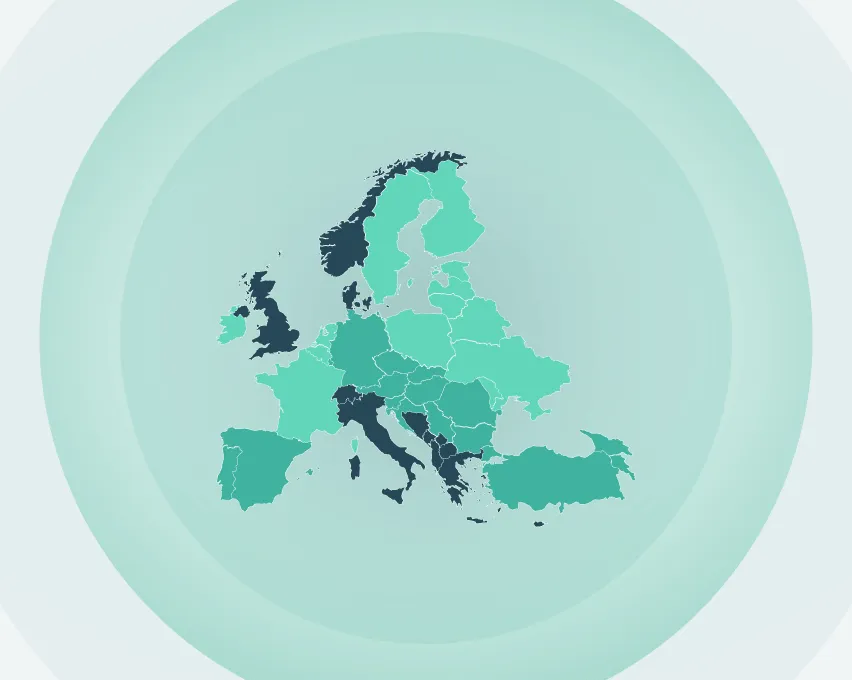
EU Member States had until 7 June 2026 to transpose the Directive’s requirements into law. Just four of the 27 Member States — Slovakia, Italy, Lithuania, and Malta — met the deadline. Trusaic’s Transposition Monitor resource, which includes an interactive status map that can be filtered by hovering, tracks the latest developments as the remaining 23 Member States work toward transposing the Directive.
What are the EU Pay Transparency Directive’s reporting requirements?
Gender pay gaps must be reported annually or triennially (based on employer size), beginning as soon as legislation is incorporated by the member states. Employers are required to publicly report on pay gap information, encompassing both base pay and “any other form of compensation.”
What to report?
Applicable employers will be required to calculate the following:
- Mean gender pay gap
- Median gender pay gap
- Mean gender pay gap in complementary or variable components of pay (e.g., bonuses)
- Median gender gap in complementary or variable pay components.
- Proportion of female and male workers receiving complementary or variable pay components.
- Proportion of female and male workers in each quartile pay band.
- Pay gaps between categories of workers (i.e., workers performing the same work, or work of equal value) broken down by base salary and complementary or variable components of pay.
Each member state will decide which organizations are required to comply. Applicable employers will be determined by the number of workers.
When to report?
Reporting deadlines depend on organization size.
- First reports for employers with 150+ employees are due June 7, 2027.
- Employers with 250+ employees will need to report annually thereafter.
- Employers with 150-249 employees must report every three years.
- Reports for organizations with 100-149 employees are due June 7, 2031, with subsequent reports to be submitted every three years.

Where are gender pay gap reports published?
Regulatory filing: Information will be reported to a designated body for monitoring pay inequities and transparency effectiveness.
External posting: While employers are not directly responsible for posting on their website under the Pay Transparency Directive, the employer may publish data on its website or make it publicly available in another manner; individual EU member states may require certain data to be made publicly available.
Internal employee disclosure: Workers, workers’ representatives, and labor inspectorate and the national equality body have the right to access and seek clarification on pay equity methodologies. Employers must respond to requests within a reasonable timeframe.
What is a Joint Pay Assessment?
When certain conditions are met, employers may be faced with a second and stricter limb of the Pay Transparency Directive’s pay gap reporting obligation, called a Joint Pay Assessment (JPA). This is a detailed pay equity audit which is done in cooperation with workers’ representatives.
The JPA includes seven criteria that examine the differences in pay discovered, reasons for the differences, and remedial measures. The JPA will need to be published to workers, and made available to equality bodies and labour inspectorates.
A (JPA) is carried out in cooperation with workers’ representatives if:
- A gender pay gap of 5% or more cannot be explained based on objective gender-neutral factors.
- The employer has not taken action to close the gap within six months.
Triggering a JPA will prove time consuming and risky for employers. It will be beneficial for employers to conduct an initial assessment before the Directive requires it in 2026.
Employers that only begin calculating their pay gap for the first time after the Directive is implemented risk being faced with immediate liabilities and little time to remedy these.
What are the EU Pay Transparency Directive’s pay transparency requirements?
The EU Directive creates a legal requirement for greater pay explainability and opportunity transparency as well as open discussions about pay.
Pay transparency before employment
Employers are required to provide information on the initial pay level or salary range to job applicants (either in the job posting or before the job interview). Applicants are also entitled to a non-discriminatory recruitment process, as well as gender-neutral vacancies and job titles upon hiring.
A salary history ban will also be in place.
Pay transparency during employment
Workers have the right to request individual and average pay level information categorized by gender for workers performing the same work or work of equal value. Employers must ensure the gender-neutral criteria used to define their pay, pay levels, and pay progression is easily accessible.
Pay secrecy confidentiality clauses are also prohibited.
What are the employment equity standards?
The directive aims to “strengthen the application of the principle of equal pay for equal work or work of equal value between men and women through pay transparency and enforcement mechanisms.”
“Work of equal value” is work that is determined to be of equal value in accordance with non-discriminatory and objective gender-neutral criteria, such as skills, effort, responsibility and working conditions (without undervaluing relevant soft skills). Category of workers means a group of workers performing the same work; or work of equal value grouped in a non-arbitrary manner based on non-discriminatory and objective gender-neutral criteria.
“Worker” includes independent contractors, agency workers, job applicants, part-time and full-time employees. It also extends to “domestic workers, on-demand workers, intermittent workers, voucher based-workers, platform workers, workers in sheltered employment, trainees and apprentices,” provided they meet the relevant criteria.
What are the risks of non-compliance with the EU Pay Transparency Directive?
Employers that fail to comply with the EU Pay Transparency Directive are at risk of incurring various financial penalties and sanctions.
Worker compensation: Workers who experience pay discrimination are entitled to uncapped compensation which may include full recovery of back pay including bonuses or payments in kind.
Burden of proof shifts to employer: The employer, not the worker, will have to prove the absence of pay discrimination.
Sanctions: There will be sanctions for employers found to have discriminated against employees, which could include fines. Member states will determine the level of sanctions for failure to comply.
Penalties: Under the EU Directive, member states must create penalties that consider aggravating or mitigating factors, which may include intersectional discrimination. The directive makes clear that member states must “ensure that penalties guarantee a real deterrent effect.”
EU member states may introduce additional rules that are more favorable to the claimant.
As the EU pay gap stands at almost 13%, most employers are at risk of a Joint Pay Assessment and punitive sanctions. Companies reporting pay gaps of more than 5% may also be exposed to higher risks of pay discrimination claims, due to the shift in the burden of proof.
To avoid this, employers should take steps to prepare well before the transposition deadline.
What is the role of workers’ representatives?
Another requirement of the EU Directive is the role of workers’ representatives. Countries where representatives are not already in place will have to implement systems for putting them in place.
Worker representatives will have the right to request additional clarification and details on pay gap data, including explanations for differences in pay, and the system chosen for categorizing workers.
Representatives also have a major role to play in Joint Pay Assessments and may act on behalf of workers in legal or administrative matters.
Corporate Sustainability Reporting Directive (CSRD)
EU Member States are required to incorporate CSRD Reporting Standards within their national legislation by June 16, 2024. Reporting deadlines begin in 2024, depending on business size and category.
50,000 organizations are expected to be impacted. 10,000 of those are non-EU organizations.
CSRD: What to report:
- Basic salary and remuneration (including other compensation and benefits).
- Ratio of total salary and remuneration for women vs men.
- Ratio broken down to employee category, including level and function.
- Explanation of methodology used in calculations.
Annual Sustainability Reports must be audited by an independent, accredited auditor. Pay data reporting is in addition to EU Directive requirements.
Can Trusaic assist with EU Pay Transparency Directive compliance?
Trusaic provides solutions to help employers operating in Italy comply confidently with the Directive. While some of Italy’s operational detail is still to come through implementing decrees, employers remain fully responsible for compliant pay systems, accurate reporting, RTI responses, and remediation — areas where Trusaic delivers direct value.
Our Complete EU Pay Transparency Solution enables compliant pay systems, ensures gender-neutral job evaluations, and automates complex reporting obligations to keep you one step ahead of EU pay transparency enforcement.
- PayParity® analyzes your rewards data (compensation/benefits in kind) and quickly identifies any potential unjustified inequities. It enables you to more easily comply with Article 7 (right to information) and Article 6 requirements (pay setting and progression policy), and to identify and address worker-category gaps of 5% or more before they trigger a Joint Pay Assessment.
- Our Remediation Optimization Spend Analysis (R.O.S.A.) works as PayParity’s remediation engine to find the most cost-effective way to close nominal pay gaps and ensure compliance.
- Automated RTI workflows: Our bi-directional integrations with global HCM platforms allow pay equity data to flow securely from the Trusaic platform back into the HCM, so employees can access their RTI reports directly within existing HR systems. This eliminates manual report generation and reduces compliance risk.
- For organizations that prefer platform-based access, RTI reports can also be generated and delivered securely through the PayParity platform, with role-based permissions and full auditability.
- Salary Range Finder® ensures equitable pay at the point of hire to prevent any increase in pay gaps and enables you to easily comply with the Directive’s salary range disclosure and salary history ban requirements.
- Pay Decisions: Generate fair, competitive offers instantly from Workday.
- Regulatory and Pay Transparency Reporting™ captures your pay equity findings and generates compliant reports, helping you determine applicability, meet deadlines, and maintain audit-ready records across EU jurisdictions.
Trusaic is GDPR compliant and can assist any organization in any EU state in meeting its obligations under both the EU Corporate Sustainability Reporting Directive and the EU Pay Transparency Directive.