













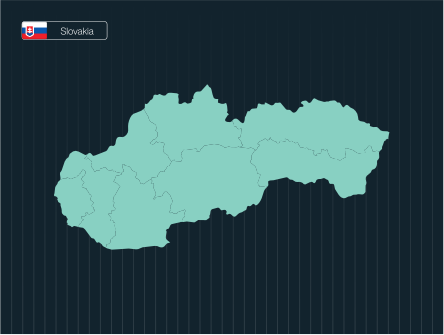
Slovakia has transposed the EU Pay Transparency Directive (EUPTD) into national law. Law No. 76/2026 Z. z. was approved by the National Council of the Slovak Republic on 15 April 2026, signed by President Peter Pellegrini on 23 April 2026, published in the Collection of Laws on 8 May 2026, and enters into force on 7 June 2026.
Slovakia’s law reflects a “minimal-plus” model — preserving the EU Directive’s intent while adding procedural clarity, stronger worker protections, and concrete enforcement mechanisms. Employers with operations in Slovakia must now act to comply with obligations that take effect 7 June 2026.
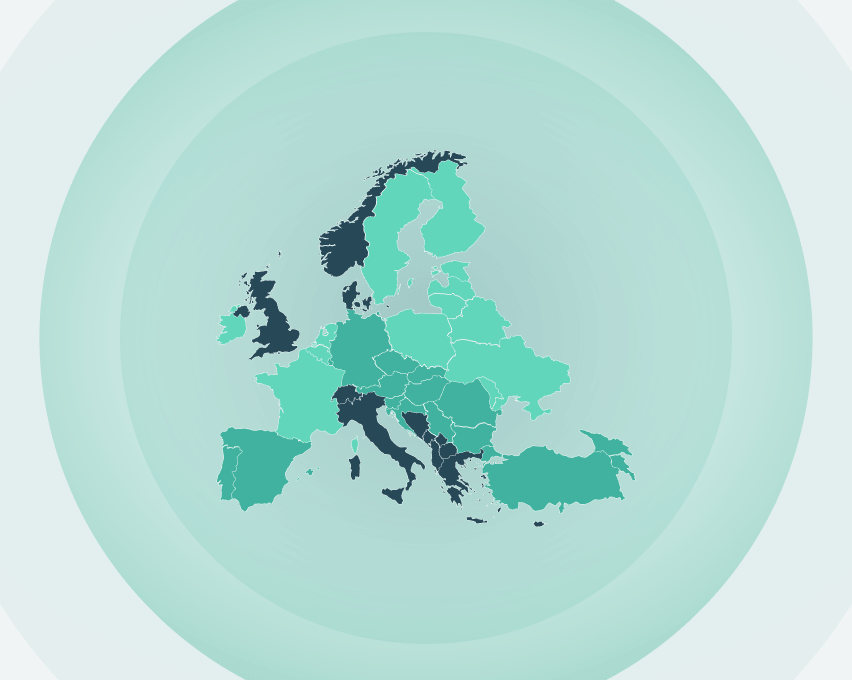
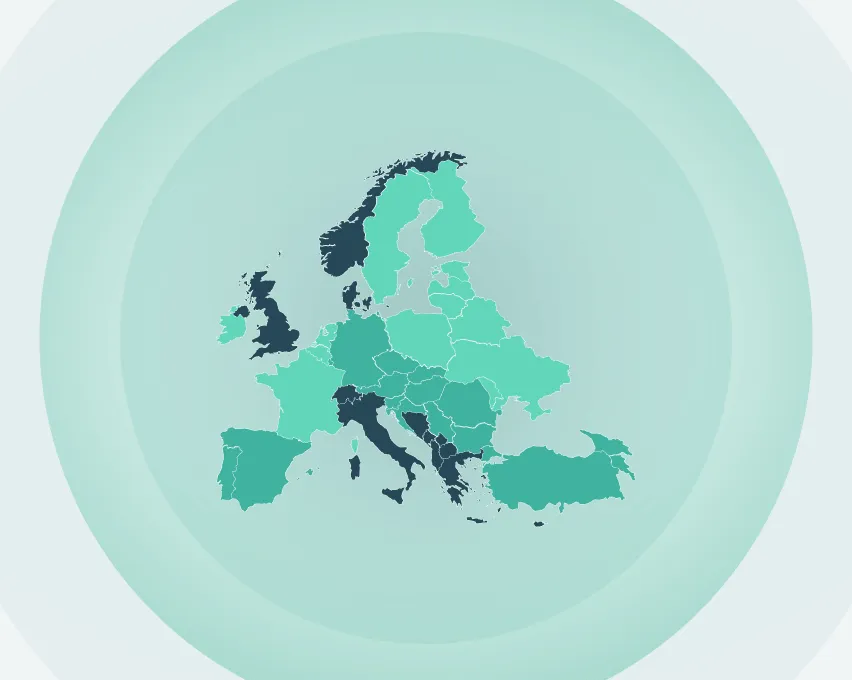
Track the latest EU Member State transposition developments with our monitor.
What are Slovakia’s reporting requirements?
Who needs to report?
Under Slovakia’s transposition law, employers must comply based on company size:
- 250 or more employees: Annual reporting begins 7 June 2027 (for data from 1 August 2026 to 31 December 2026)
- 150–249 employees: Triennial reporting begins 7 June 2027 (for data from 1 August 2026 to 31 December 2026)
- 100–149 employees: Triennial reporting begins 7 June 2031
- Fewer than 100 employees: Not subject to mandatory reporting under the law
What to report?
Employers are required to publish gender pay gap information and provide internal transparency to employees. Required reporting include:
- Mean and median gender pay gaps for total pay and complementary or variable components
- Proportion of male and female workers receiving complementary or variable pay
- Proportion of male and female workers in each pay quartiles
- Gender pay gaps by worker category, broken down by basic pay and complementary or variable pay
If a gender pay gap of 5% or more is identified within a category of workers and is not fully justified or remediated within six months, employers must conduct a Joint Pay Assessment in cooperation with worker representatives within two months of the expiration of the six-month remediation period. Where no worker representatives exist, employees may designate them for the purpose of joint pay assessments.
Where and when to report?
Reports must be submitted to the Ministry of Labour, Social Affairs and Family of the Slovak Republic by 15 April of the year following the reporting period, except for the first report. Employers must consult with employee representatives, where they exist, before submission. The Ministry will publish aggregated data enabling sectoral and regional comparisons.
Employers may also voluntarily publish their report on their own website.
Internal disclosure
Employers must provide employees with:
- Gender pay gap data by worker categories
- Explanations for pay differences, if requested
What are Slovakia’s pay transparency requirements?
Slovakia’s law, effective 7 June 2026, mandates pay transparency in hiring. Employers are now required to:
- Disclose pay ranges or starting salary at such a time as to ensure informed and transparent negotiations on pay. Including the range in a job advertisement satisfies this obligation. Salary ranges cannot be overly broad. Employers are already required under the Employment Services Act to share the base salary when publishing a job offer.
- Refrain from requesting salary history from candidates. Employers may ask about candidates’ own pay expectations, but best practice would be to avoid asking this question until the employer’s obligation to disclose pay ranges or starting salary has been fulfilled in order to ensure an informed and transparent negotiation of pay.
- Use gender-neutral job descriptions and titles
- Make objective, gender-neutral pay, pay level,and pay progression criteria accessible to all employees (e.g., on an intranet). Employers with less than 50 employees are exempt from providing criteria for pay progression.
- Ensure pay criteria and remuneration structure are compliant with the law by 31 July 2026.
Right to Information (Article 7)
Employees now have a statutory right to request information about their pay and the average pay levels of colleagues performing the same work or work of equal value, broken down by gender. However, while an employee’s right to their own pay level is effective 7 June 2026, the right to request average pay levels by worker category begins for the year 2027, meaning averages will not need to be provided to workers until 2028.
Key provisions include:
- Two-month response deadline: Employers must respond to pay information requests within two months.
- Pay level: Defined as the pay for the calendar year and corresponding hourly remuneration.
- Right to further explanation: Employees may request additional reasoned explanations of pay differences. Employers must respond to these follow-up requests within 30 days.
- Independent request channel: Requests may be submitted not only directly, but also through employee representatives and via the Slovak National Centre for Human Rights, creating an independent channel for employees who prefer not to go through internal structures.
- Privacy safeguards: Disclosure of pay comparison data is restricted where it would allow the pay level of a specific employee to be identified. In those cases, that information may only be disclosed to employee representatives, the labour inspectorate, or the Human Rights Centre.
- Pay secrecy clauses invalid: Contractual provisions that prohibit employees from disclosing or discussing their pay are explicitly invalid. Workers may freely share their own pay information. However, employers may require employees to use information, other than their own pay information, only to pursue equal pay rights.
Employment equity standards
Slovakia’s Labor Act already prohibits discrimination in employment, including on the basis of gender, and enshrines the right to equal pay for equal work. Law No. 76/2026 now adds structured reporting, transparency mechanisms, and robust enforcement to these protections. The law also enshrines the right for employees of the same sex to claim equal remuneration if they perform the same work or work of equal value.
The risks of non-compliance
Enforcement measures under Slovakia’s transposition law include:
- Reversal of the burden of proof in discrimination cases, including where an employer has failed to comply with its transparency obligations (with a narrow exception for manifestly unintentional and minor non-compliance)
- Employee rights to full compensation, including unpaid remuneration, lost career opportunities, non-pecuniary (moral) damages, and default interest on unpaid pay
- Administrative fines of €4,000 to €8,000 for failure to comply with pay gap reporting obligations, with a 15-day rectification period before sanctioning
- Oversight by the Ministry of Labour, the Labour Inspectorate, and the Slovak National Centre for Human Rights
How can Trusaic help employers comply with Slovakia’s EU Pay Transparency requirements?
Trusaic provides solutions to help employers operating in Slovakia comply confidently with the Directive.
Our Complete EU Pay Transparency Solution enables compliant pay systems, ensures gender-neutral job evaluations, and automates complex reporting obligations to keep you one step ahead of EU pay transparency enforcement.
- PayParity® analyzes your rewards data (compensation/benefits in kind) and quickly identifies any potential unjustified inequities. It enables you to more easily comply with Article 7 (right to information) and Article 6 requirements (pay setting and progression policy).
- Our Remediation Optimization Spend Analysis (R.O.S.A.) works as PayParity’s remediation engine to find the most cost-effective way to close nominal pay gaps to ensure compliance.
- Automated RTI workflows: Our bi-directional integrations with global HCM platforms allow pay equity data to flow securely from the Trusaic platform back into the HCM. Employees can then access their RTI reports directly within their existing HR systems. This eliminates manual report generation and reduces compliance risk.
- For organizations that prefer platform-based access, RTI reports can also be generated and delivered securely through the PayParity platform, with role-based permissions and full auditability.
- Salary Range Finder® ensures equitable pay at the point of hire to prevent any increases in pay gap and enables you to easily comply with the Directive’s salary range disclosure and salary history ban requirements.
- Pay Decisions: Generate fair, competitive offers instantly from Workday.
- Regulatory and Pay Transparency Reporting™ captures your pay equity findings and generates compliant reports.
Trusaic is GDPR compliant and can assist any organization in any EU state in meeting its obligations under both the EU Corporate Sustainability Reporting Directive and the EU Pay Transparency Directive.
FAQs
-
Who must report gender pay gap data in Slovakia?
Employers with 100 or more employees are required to report gender pay gap data. Employers with 250 or more employees report annually beginning in 2027. Employers with 150–249 employees also report beginning 7 June 2027 (triennial). Employers with 100–149 employees must begin reporting by 7 June 2031 (triennial).
-
Has Slovakia published its transposition law?
Yes. Slovakia’s Law No. 76/2026 Z. z. was approved by the National Council on 15 April 2026, signed by the President on 23 April 2026, published in the Collection of Laws on 8 May 2026, and entered into force on 7 June 2026.
-
What gender pay gap metrics are required?
Employers must report:
- Mean and median gender pay gaps (total and variable pay)
- Proportion of men and women receiving variable pay
- Gender distribution across pay quartiles
- Pay gaps by category of workers
-
What happens if a 5% pay gap is detected?
If a pay gap of 5% or more exists in a job category and is not justified or remediated within six months following reporting, a Joint Pay Assessment must be conducted with employee representatives. The assessment must be completed within two months and submitted to the Ministry of Labour.
-
Will employees be able to request pay information?
Yes. All employees have the right to request written information about their own pay level and the average pay levels by gender for roles of equal or comparable value. Employers must respond within two months and within 30 days for any follow-up explanation request. Average pay levels by gender for categories of workers must be provided for the first time for the year 2027.
-
Are salary ranges required in job postings?
In Part. Under prior law employers were already required to share base salary when publishing a job offer. Under this new law, employers must disclose pay ranges or starting salary at such a time as to ensure informed and transparent negotiations on pay.
-
Can employers ask candidates about their salary history?
No. Employers are prohibited from requesting salary history during the recruitment process. However, employers may ask candidates about their own pay expectations, and candidates may raise their expectations voluntarily.
-
What are the penalties for non-compliance?
Slovakia’s law sets administrative fines of €4,000 to €8,000 for failure to comply with pay gap reporting obligations. Employers receive a 15-day rectification period before a fine is imposed. The burden of proof in discrimination claims shifts to the employer, including where an employer has failed to comply with its transparency obligations, with a narrow exception for manifestly unintentional and minor breaches.
-
How can employers get started now?
Begin by:
- Auditing current pay structures against gender-neutral criteria to ensure compliance by 31 July 2026
- Ensuring pay and pay level criteria, as well as pay progression criteria where applicable, are accessible to all employees
- Updating recruitment processes to include salary range disclosure, to ensure a ban on questions regarding salary history, and to remove any pay secrecy clauses from employment contract templates.
- Preparing data systems for first-cycle reporting due 7 June 2027 (employers with 150+ employees)