













Summertime is typically a slowdown period for governing bodies across the EU. However, external pressure has mounted on Member States that missed the 7 June 2026 transposition deadline, which has led to increased legislative activity even as several national parliaments prepare to recess for the August holiday period.
With Greece’s transposition becoming law and updates from the Netherlands, Lithuania, Estonia, and Romania all landing in the past few weeks, this is a natural point to take stock: who has transposed, who is close, what changed recently, and what employers should expect once Member State governing bodies return to session in the fall.
Which EU Member States Have Fully Transposed the Directive?
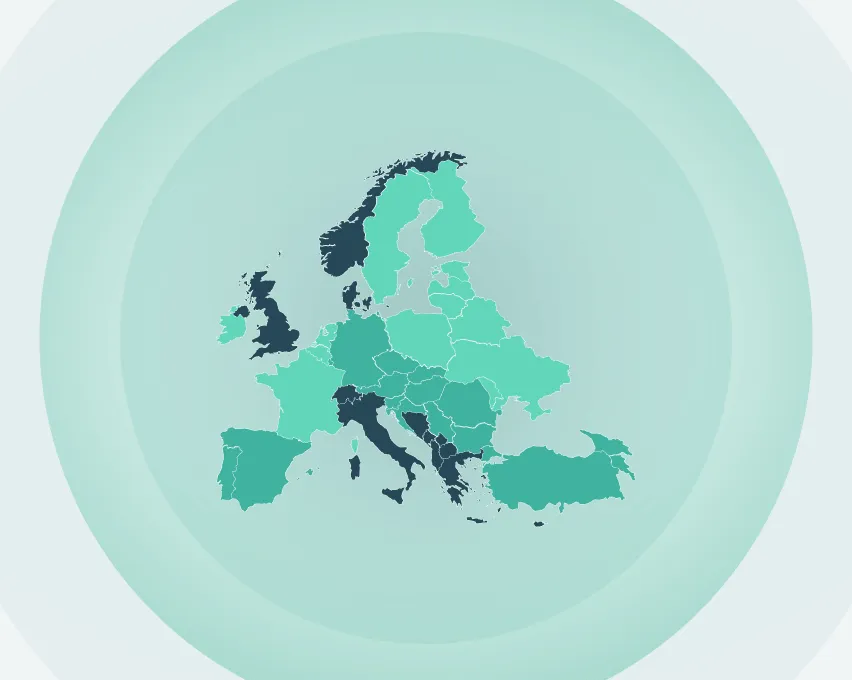
Five Member States have now passed legislation or implementing regulations fully transposing the EU Pay Transparency Directive: Slovakia, Lithuania, Italy, Malta, and now Greece.
Greece enacted its transposition of Directive (EU) 2023/970 on 2 July 2026, with the law taking effect upon publication in the Government Gazette on 6 July 2026. However, the substantive provisions — including compliant pay structures, pre-employment pay transparency, the Right to Information (RTI), gender pay gap reporting, and joint pay assessments — do not enter into force until 1 November 2026.
Slovakia, Lithuania, Italy, and Malta transposed earlier this year, each around the original 7 June 2026 deadline, though with country-specific nuances in how RTI and reporting obligations phase in.
It’s worth noting that the European Commission on 22 July 2026 published a Communication on the European Pillar of Social Rights, reaffirming its commitment to ensure the implementation and enforcement of the Directive.
The Commission stated it would “continue to provide support to Member States and social partners to implement the Directive effectively, keeping administrative burden proportionate while ensuring full compliance.” Specifically, the Commission stated that it will provide further support in particular to SMEs in implementing the Directive with the goal that implementation entails the least possible administrative burden.
The Commission did not address what steps it will take to enforce compliance from the 22 Member States that have not fully transposed.
What Recent Updates Have Come Out of the Netherlands and Lithuania?
Two countries with active drafts saw notable developments in July:
- Netherlands. On 9 July 2026, the government opened consultation on a draft ministerial regulation, building on a draft decree published for consultation on 19 June 2026. The regulation provides further definitions and calculation methodology for pay gap reporting, along with a draft reporting template. That consultation runs through 11 September 2026. The Netherlands’ bill remains under consideration by the Dutch House of Representatives’ Standing Committee on Social Affairs and Employment, with the government still targeting 1 January 2027 for entry into force.
- Lithuania. Having already transposed the Directive on 7 June 2026, Lithuania’s Minister of Social Security and Labour adopted an implementing order on 17 July 2026 governing how pay data for RTI and reporting purposes is collected, calculated, submitted, and published. That order entered into effect on 31 July 2026, filling in a key operational gap ahead of the country’s 1 January 2027 effective date for the RTI provisions of its transposition.
Where Do Other Advancing Member States Stand?
Beyond the five fully transposed countries, several Member States have published drafts. Some are on track to enter into force on or by 1 January 2027. Others have requested delays, or still have unclear transposition timelines.
- Denmark — proposal published, entry into force targeted for 1 January 2027, though the Folketing’s shortened summer break (resuming 12 August) has not yet put the draft back on the agenda.
- Finland — draft transposition (Government Proposal RP 129/2026 rd) submitted to Parliament on 9 July 2026, with consideration expected to begin in the fall.
- Latvia — draft published; bill is in a reconciliation stage before moving to the Cabinet of Ministers and then Parliament.
- Romania — bill pending in the Senate, with debate tolled during the parliamentary break beginning 1 July 2026; the Senate is expected to have roughly 38 days to reach a vote once it returns on 1 September 2026.
- Spain — draft published 3 August 2026. Spain opened a consultation period on a Draft Royal Decree amending Royal Decree 902/2020, of 13 October, on equal pay between women and men. The consultation period will last from 4 August through 24 August 2026.
- Estonia — partially transposed pre-employment pay transparency requirements (salary range disclosure, pay history ban, and pay secrecy ban) effective 13 July 2026, while continuing to seek a broader postponement of remaining requirements.
- Ireland — has confirmed that it has informed the EU Commission of its transposition delay and that there will be a phased implementation of the Directive. Pre-employment obligations originally set out in the General Scheme of the Equality (Miscellaneous Provisions) Bill 2024 will instead move forward through a new Pay Transparency Bill. Ibec, the employers’ representative group, has requested a delay to June 2027.
- Sweden — while Sweden’s government has prepared a draft transposition, it does not intend to submit a bill to the Riksdag while it seeks renegotiation of the Directive.
- Bulgaria — draft in progress.
- Czechia — draft submitted for inclusion on government agenda on 14 July 2026
Which Member States Have Not Yet Published a Draft?
Seven Member States have not yet officially published a full transposition draft: Austria, Croatia, Germany, Hungary, Luxembourg, Portugal, and Slovenia.
Germany has previously indicated it is targeting 2027 for entry into force, with RTI delayed to 2028.
Spain’s Ministry of Labour and Social Economy closed a prior consultation and is now drafting a Royal Decree, which will require further institutional review before publication.
The Austrian Ministry of Labour and Social Affairs has submitted a draft transposition for internal political coordination.
What Happens as Parliaments Break for Summer?
August traditionally slows legislative activity across the EU, and this year is no exception. Denmark’s Folketing is not expected to take up legislative activity again until mid-August. Romania’s Senate debate period is formally paused until 1 September. Cyprus, having held elections earlier this year is still working through the knock-on effects on its legislative calendar.
Expect activity to pick back up in September, as several countries with 1 January 2027 entry-into-force targets — including Czechia, Denmark, Finland, the Netherlands, and Latvia — will need to move their bills through remaining legislative stages before year-end to meet those dates.
What Should Employers Do During the Lull?
The summer recess is a good moment for employers to consolidate rather than pause preparation:
- Confirm which of your operating jurisdictions have now fully transposed (Slovakia, Lithuania, Italy, Malta, Greece) and check RTI and reporting effective dates specific to each.
- For jurisdictions targeting 1 January 2027 — Czechia, Denmark, Finland, the Netherlands, Latvia — use the recess period to advance internal pay equity analyses and data readiness ahead of anticipated fall legislative movement.
- Continue monitoring Trusaic’s Member State Transposition Monitor for updates as countries return from break.
How Trusaic Can Help
At Trusaic, we provide employers across the EU with solutions to comply confidently with the Directive.
Our Complete EU Pay Transparency Solution enables compliant pay systems, ensures gender-neutral job evaluations, and automates complex reporting obligations to keep you one step ahead of EU pay transparency enforcement.
- PayParity® analyzes your rewards data (compensation/benefits in kind) and quickly identifies any potential unjustified inequities. It enables you to more easily comply with Article 7 (right to information) and Article 6 requirements (pay setting and progression policy).
- Our Remediation Optimization Spend Analysis (R.O.S.A.) works as PayParity’s remediation engine to find the most cost-effective way to close nominal pay gaps to ensure compliance.
- Automated RTI workflows: Our bi-directional integrations with global HCM platforms allow pay equity data to flow securely from the Trusaic platform back into the HCM. Employees can then access their RTI reports directly within their existing HR systems. This eliminates manual report generation and reduces compliance risk.
- For organizations that prefer platform-based access, RTI reports can also be generated and delivered securely through the PayParity platform, with role-based permissions and full auditability.
- Salary Range Finder® ensures equitable pay at the point of hire to prevent any increases in pay gap and enables you to easily comply with the Directive’s salary range disclosure and salary history ban requirements.
- Pay Decisions: Generate fair, competitive offers instantly from Workday.
- Regulatory and Pay Transparency Reporting™ captures your pay equity findings and generates compliant reports.
Trusaic is GDPR compliant and can assist any organization in any EU state in meeting its obligations under both the EU Corporate Sustainability Reporting Directive and the EU Pay Transparency Directive.
Visit our always updated Member State Transposition Monitor to stay on top of the latest EU Pay Transparency Directive developments.