















This is the fourth blog in a new series of blogs that focuses on Article 7’s Right to Information requirement. Access the the first three blogs below:
- Blog 1: Challenges and How to Ensure Compliance
- Blog 2: Response Deadlines and Annual Worker Notification Requirements
- Blog 3: How Member States Are Addressing Privacy and GDPR Considerations
As employers prepare for the EU Pay Transparency Directive, much of the conversation has centered on reporting obligations and compliance deadlines. But one of the more consequential shifts introduced by the Directive is how it may enable employees to bring equal pay claims more effectively — particularly through (1) the interaction between the Right to Information (RTI) and the shift of the burden of proof under Article 18 and (2) the “single source” principle under Article 19.
This is where compliance moves beyond reporting mechanics and into litigation risk.
Right to Information as the Trigger
The Directive’s RTI requirement gives employees the right to request information about their pay and the average pay of comparable roles, broken down by gender. On paper, this is a transparency measure. In practice, it creates a structured pathway for employees to identify potential pay inequities.
Once that information is in hand, the next step becomes clearer. RTI provides a potential evidentiary foundation for an equal pay claim, if RTI reveals a gender pay gap, and an employer cannot adequately justify or explain the difference in pay based on objective, gender-neutral factors.
This is intentional by design, as it lowers the barrier for employees to seek compensation for disparities in pay due to discrimination.
Article 18 and the Burden of Proof Shift
The barrier is lowered further by the shift in the burden of proof required by the Directive when an equal pay claim is brought. Where an employee can establish before a competent authority or national court “facts from which it may be presumed that there has been direct or indirect discrimination, it shall be for the respondent to prove that there has been no direct or indirect discrimination in relation to pay.”
The specific factual requirements necessary to trigger a presumption of discrimination will likely be a focus of litigation over the coming years. It may end up varying in each national judicial system. It is expected that employees will leverage any data received through RTI to question the basis for any pay differences both through internal channels and in courts. Such test cases will clarify the evidentiary threshold required to establish a prima facie case of pay discrimination in order to shift the burden of proof to the employer.
The burden of proof also shifts to the employer automatically if the employer fails to comply with its transparency obligations.
Article 19 and the Expansion of Comparators
What makes this risk more complex is that the Directive does not confine comparisons in equal pay claims to a single legal entity. Under Article 19, Member States are required to ensure that employees can compare themselves to others beyond their immediate employer, where a “single source” determines pay.
In other words, even if two employees sit in different legal entities, they may still be considered comparable where a single source stipulates the elements of pay relevant to such a comparison.
This concept is not new. It stems from jurisprudence developed by the European Court of Justice, which has long recognized that pay comparisons can extend across entities when there is centralized control over pay and the discrimination stems from that centralized control.
While establishing a single source is not always straightforward, the Directive makes clear that this pathway must be available in all Member States.
Article 19 also establishes that comparisons shall not be limited to workers who are employed at the same time as the worker concerned and where no real comparator can be established, other evidence can be used to prove alleged pay discrimination, including statistics or a hypothetical comparator.
The Key Tension: Local Reporting, Broader Liability
One of the more nuanced aspects of the Directive is the distinction between how organizations report pay data and how they may ultimately be assessed in a claim.
While the Directive does not define “employer,” transpositions are expected to maintain a legal entity approach to compliance. That means RTI responses and pay gap reporting will generally be handled at the entity level, without aggregation across a corporate group or across countries.
However, when it comes to enforcement, that boundary may not hold.
An employee could argue that a comparable role performing work of equal value exists in another entity — particularly if both are subject to a centralized pay-setting function. This creates the potential for cross-entity equal pay claims, even in structures that appear compliant from an RTI and reporting standpoint.
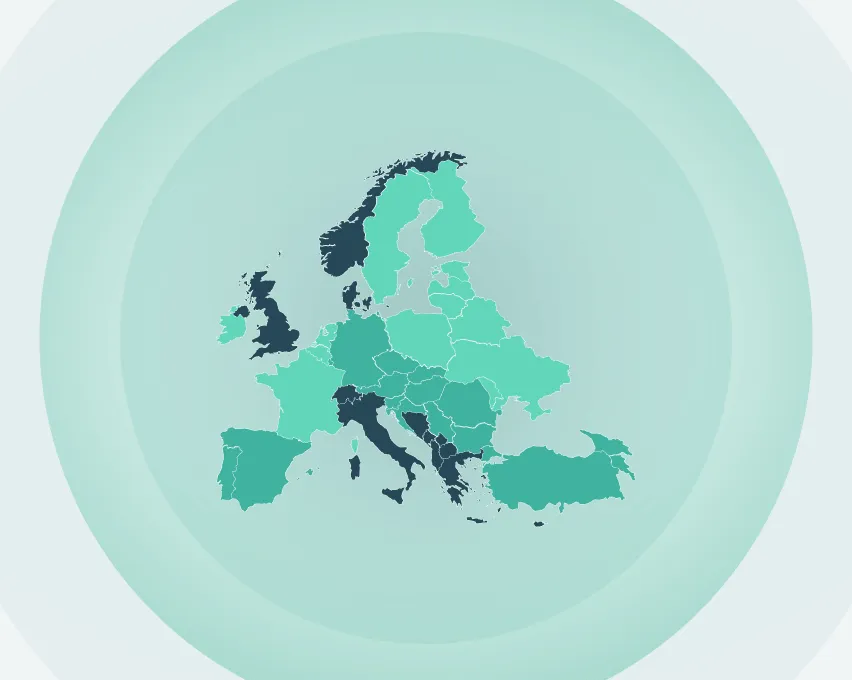
Several Member States have already begun to clarify this distinction and when aggregated reporting may be permitted:
- Slovakia has explicitly noted that the single source concept may apply to equal pay claims, while reporting obligations remain tied to the individual legal entity.
- Italy’s draft legislation introduces limited flexibility, allowing aggregation where a uniform group wage policy exists and provides a more accurate representation of pay.
- The Netherlands has indicated that aggregation should only occur where subsidiaries lack any autonomy over pay decisions.
The direction of travel is consistent. Reporting frameworks may remain localized, but legal exposure may extend across entities.
What This Means for Employers
For organizations with decentralized pay structures, this may not materially change their risk profile. But for those operating with centralized compensation strategies, which is common among multinational employers, the implications are more significant.
If pay decisions are effectively made at a group level, courts and regulators may look beyond legal entity boundaries when evaluating comparability in equal pay claims. That means disparities that are invisible in entity-level reporting could still surface in a claim.
This is why many organizations are rethinking how they approach pay equity analysis under the Directive. Limiting analysis to the legal entity level may satisfy reporting requirements, but it may not fully address the risk introduced by the single source principle.
A more proactive approach often includes:
- Evaluating whether centralized pay governance exists in practice
- Conducting internal analyses that reflect how comparisons could be made in a claim
- Identifying and addressing disparities before they are surfaced
The EU Pay Transparency Directive is designed to do more than increase visibility — it is structured to enable enforcement.
RTI gives employees access to additional data. Article 18 impacts the potential impact of that data. Article 19 expands how that data can be used. Together, they create a framework where equal pay claims are not only more accessible, but potentially broader in scope.
How Trusaic Is Helping Clients Comply with Right to Information Requests
At Trusaic, we are helping employers move from reactive compliance to scalable readiness.
First, organizations conduct a defensible pay equity analysis through PayParity®. This ensures that total remuneration is analyzed, unjustified gaps are identified and remediated using R.O.S.A., and ready for RTI disclosures. A validated pay equity analysis can provide confidence and a clear understanding of risk as companies begin RTI compliance.
Second, we enable automated RTI workflows. Our bi-directional integrations with global HCM platforms allow pay equity data to flow securely from the Trusaic platform back into the HCM. Employees can then access their RTI reports directly within their existing HR systems. This eliminates manual report generation and reduces compliance risk.
For organizations that prefer platform-based access, RTI reports can also be generated and delivered securely through the PayParity platform, with role-based permissions and full auditability.
Reports can be generated instantly, refreshed regularly, and delivered in any EU language — easing the operational strain on organizations.
Finally, our expert advisory team will assist you in constructing your contextual narratives alongside RTI reports. (Note: Employers also have the option to utilize our in-platform AI-powered contextual narrative support). Rather than presenting raw pay data without explanation, organizations can configure tailored narratives that reflect their pay philosophy and clarify wage-influencing factors. For large enterprises anticipating thousands of RTI interactions, this significantly reduces administrative burden while improving employee understanding.
Organizations that partner with us will not only be supported in meeting Directive’s requirements — they will enter this new transparency landscape with confidence and credibility.