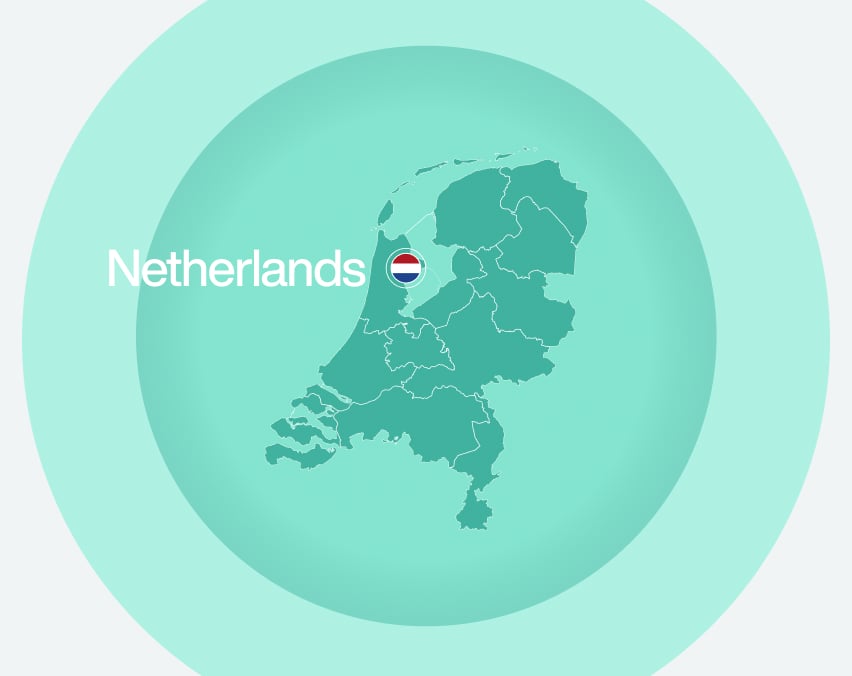
















On 19 June 2026, the Netherlands published a draft Decree on the implementation of the Wage Transparency Directive for men and women for public consultation. The draft decree supplies the practical compliance detail that sits beneath the transposition law currently moving through the Dutch Parliament.
The consultation period closes on 31 July 2026. Until then, the public — including employers — can submit feedback on the draft.
Among other things, the draft decree covers definitions of pay concepts, the formula for calculating the pay gap, clarification on the handling of agency workers, and additional rules for the electronic submission of reporting.
Why Did the Netherlands Need a Separate Decree?
In its draft transposition legislation, the Netherlands deliberately left certain terms to be filled in through additional general administrative orders rather than defined in the primary law. These include basisloon (basic pay), brutoloon (gross pay), and loonkloof (pay gap). This draft decree is one such implementing regulation, and it is accompanied by explanatory notes that provide practical guidance on interpreting both the draft law and the draft decree.
For employers, one of the most consequential clarifications is the additional detail on which pay elements fall within scope.
How Will Employers Calculate Gross Wage?
To reduce the administrative burden of both the reporting obligation and the right to information, the decree defines “gross wage” (brutoloon) using a figure employers already produce: the “wage LB/PH” from the payroll declaration chain.
The payroll declaration chain (loonaangifteketen) is a shared system operated by the Tax and Customs Administration, the UWV (the Dutch social security agency), and Statistics Netherlands (CBS). Employers submit payroll data once, and the system makes it available to those users. Because the data already exists, employers do not have to gather it again.
To move from “wage LB/PH” to the gross wage used for reporting, employers make two adjustments:
- Subtract holiday allowance and employment-conditions amounts that were paid out of previously accrued balances.
- Add back the holiday allowance and employment-conditions amounts accrued during the period.
According to the explanatory notes, these adjustments are intended to decouple the wage earned or accrued from how it is ultimately used.
How Does the Decree Treat Variable and Complementary Pay?
Here the draft decree is narrower than the Directive. Because the gross wage is tied to the payroll declaration chain, only taxable wage components that appear in that chain are counted. In practice, the value of additional or variable components is based on one-off payments taxed at the “special rate” (bijzonder tarief).
The result is that certain individually attributable pay components may fall outside the scope of included pay. The Netherlands justifies this on the grounds that such components are often not individually comparable between employees, offer limited insight into pay differences between men and women, and would increase the administrative burden on employers if included.
What Should Employers Do Now?
The decree signals how the Netherlands intends to operationalize RTI and reporting once the transposition law takes effect, and it gives employers an early, concrete view of the pay data they will need to produce. Employers with a Dutch workforce should review the draft decree and explanatory notes against their current payroll and pay equity data — particularly how their variable and complementary pay components map to the payroll declaration chain — and consider whether to participate in the consultation before it closes on 31 July 2026.
How Trusaic Can Help
At Trusaic, we provide employers across the EU with solutions to comply confidently with the Directive.
Our Complete EU Pay Transparency Solution enables compliant pay systems, ensures gender-neutral job evaluations, and automates complex reporting obligations to keep you one step ahead of EU pay transparency enforcement.
- PayParity® analyzes your rewards data (compensation/benefits in kind) and quickly identifies any potential unjustified inequities. It enables you to more easily comply with Article 7 (right to information) and Article 6 requirements (pay setting and progression policy).
- Our Remediation Optimization Spend Analysis (R.O.S.A.) works as PayParity’s remediation engine to find the most cost-effective way to close nominal pay gaps to ensure compliance.
- Automated RTI workflows: Our bi-directional integrations with global HCM platforms allow pay equity data to flow securely from the Trusaic platform back into the HCM. Employees can then access their RTI reports directly within their existing HR systems. This eliminates manual report generation and reduces compliance risk.
- For organizations that prefer platform-based access, RTI reports can also be generated and delivered securely through the PayParity platform, with role-based permissions and full auditability.
- Salary Range Finder® ensures equitable pay at the point of hire to prevent any increases in pay gap and enables you to easily comply with the Directive’s salary range disclosure and salary history ban requirements.
- Pay Decisions: Generate fair, competitive offers instantly from Workday.
Trusaic is GDPR compliant and can assist any organization in any EU state in meeting its obligations under both the EU Corporate Sustainability Reporting Directive and the EU Pay Transparency Directive.
Visit our always updated Member State Transposition Monitor to stay on top of the latest EU Pay Transparency Directive developments.