













The EU Pay Transparency Directive’s Article 7 Right to Information requirement has been live for two months in Italy, Slovakia (individual pay levels), and Malta.
Trusaic has enterprise and mid-market employers alike with RTI obligations in those jurisdictions. The following is a summary of what they’ve experienced so far: how many requests have come in, what has proven hardest, and what they’re changing before RTI reaches their larger markets.
Their early experiences offer a valuable preview for the many organizations still waiting for their own go-live dates.
Request Volume Has Been Uneven and Hard to Predict
If there is a single headline from these first two months, it’s that there is no “typical” request rate yet.
In Italy, for example, several organisations indicated they have seen little-to-no requests come through from workers despite notifying them of their right to request. Another organisation with thousands of workers in Italy, however, has seen roughly 10% of its significant employee population in Italy submit an RTI request; far more than it anticipated. This organisation reported that it did not have any issues meeting the demand due to the workflow it established ahead of time.
A key concern that remains among employers is the ability to handle large waves of requests at one time. Two moments in particular are expected to drive spikes:
- The annual notification. Because employers must remind workers of their rights each year, most expect the largest wave of requests to arrive immediately after that notice goes out, with an anticipated drop-off period to follow.
- Larger markets going live. A 10% request rate that produced several hundred requests in Italy could translate into a substantially larger number in an employer’s biggest markets. Germany and France are the two key markets organisations are eagerly awaiting further government guidance and fine-tuning their processes to withstand the anticipated demand that could surface.
Data from an upcoming Trusaic EUPTD readiness survey found that just 12% of organisations considered themselves “fully prepared” to respond to RTI requests as of July 2026; 21% considered themselves “not prepared at all.”
The lesson early adopters are drawing thus far is not “brace for the volume” but “make the process repeatable and scalable before it arrives.”
The Most Common Challenge Is Governance
Nearly every employer has indicated the biggest challenge thus far is the governance around RTI requests. The request lifecycle goes well beyond the comp and rewards function, where the pay report itself sits.
Several dimensions of that governance challenge stood out:
- Consistency across a fragmented footprint. One organisation operating across 23 countries, with roughly 90 legal entities, described its central difficulty as landing on a single, coherent approach. This is particularly complicated due to inconsistent implementation across Member States. Layered on top of that is the data problem: pulling together payroll, benefits, and other remuneration components across dozens of entities and disparate systems is complex, and some payroll environments remain fragmented.
- A pragmatic, phased view of “pay.” Because assembling total remuneration takes time, many organisations are starting with base pay with the intention of layering in bonus, commission, equity, and benefits-in-kind, down the road to reach full compliance.
- Privacy in small populations. Employers with only a handful of workers in a given entity flagged genuine concern about data privacy and the risk of indirectly identifying individuals. This has been a key point of deliberation for Member States during the draft and implementation process, with most Member States opting for additional safeguards around the disclosures for small worker categories.
Worker Education Is a Priority
This is a pain point that also fits into the governance conversation but was prominent enough to be its own issue. As one organisation framed it: right to information is a meaningless exercise if the disclosure isn’t accompanied by genuine understanding from workers.
This logic is straightforward, as the entire purpose of RTI is to help workers understand the “how” and “why” behind what they are paid. Once a pay figure is delivered, someone has to be able to explain it, and that ownership question remains largely unresolved across many organisations.
- Line managers often aren’t equipped to walk an employee through pay-level data and the reasons behind any gap. There’s legitimate concern such conversations could lead to additional risk and/or lead to false worker expectations.
- Rewards teams can’t reasonably absorb it either. As one organisation noted, that function would potentially be fielding hundreds or thousands of requests simultaneously, making it an unrealistic home for individual pay conversations.
In the near term, full employee training is on everyone’s roadmap but nobody currently has the capacity. In the meantime, employers are leaning on one-pagers, FAQs, and other lightweight materials to deliver the required education. Where energy is being invested now is manager enablement:
- One employer noted that they have rolled out manager training and are deliberately aligning messaging across RTI and gender pay gap reporting so the language is consistent for both.
- The same organisation has advised managers to always include an HR business partner on any pay-related conversation tied to RTI, for the concerns referenced above.
From Reactive to Proactive: What Early Adopters Are Building
A core theme across all conversations is each organisation is building its own playbook for getting ahead of problems based on learnings from the first two months. Obligations in Italy, Slovakia, and Malta have served as a training ground of sorts for what’s to come.
- Provide pay information proactively. Rather than fielding requests one by one, several employers are considering publishing pay information alongside the annual notification. An example of this would be on an intranet site where employees can look up their own RTI details directly. Offering the data centrally, in lieu of processing individual requests, directly addresses the feared volume spike.
- Stagger annual notifications by country. Since volume is expected to peak when the annual notice goes out, timing that notice differently across Member States spreads the load so it is more manageable for smaller rewards teams.
- Communicate on a cascade before go-live. One employer shared its target sequence for future markets: about one month before go-live, communicate to local HR and HR leadership; two to three weeks out, brief all people-managers in that country; and in the go-live week, notify employees
- Build and pressure test end-to-end workflow. The employer that absorbed several hundred Italian requests credits a process it built ahead of go-live. Its people services team pulls the pay report from Trusaic’s PayParity RTI module and routes it to the employee’s people business partner for review. Where a gap appears, the business partner attaches a pre-approved letter vetted by legal that explains the potential legitimate business reasons a gap may exist, delivered alongside the RTI response. The business partner then has the conversation, points the employee to relevant policies, and captures any further questions through an escalation form. The organisation has been explicit with its business partners that a gap disclosed in an RTI response does not mean that a pay raise is required and does not by itself create a claim.
- Treat the first market as a test ground. For organisations with RTI obligations across numerous Member States, Italy was consistently referenced as a test ground for what will and will not scale across other large EU markets.
When RTI Goes Live Across the Rest of the EU
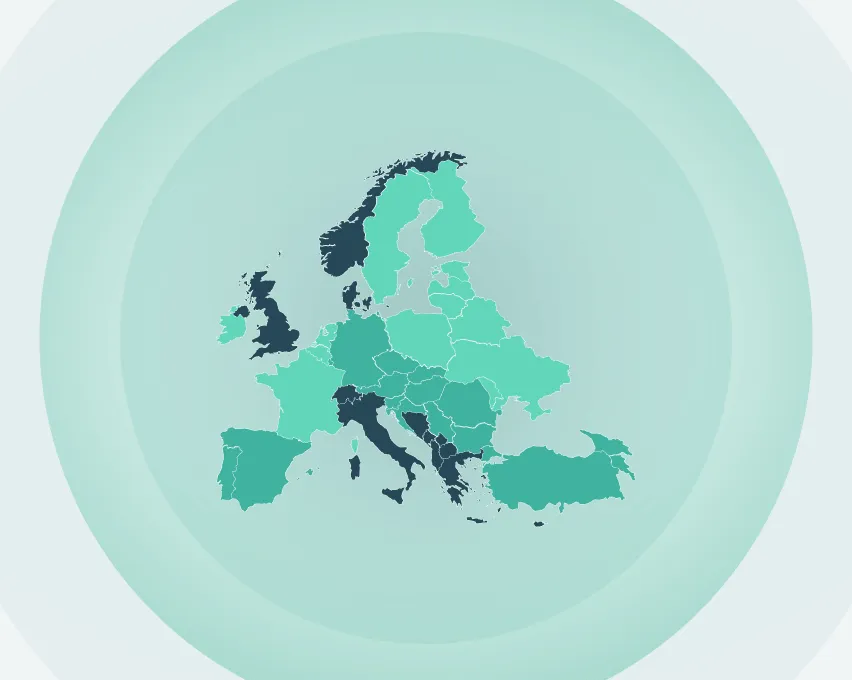
As a refresher, RTI went live in June 2026 in Italy, Slovakia, and Malta. Slovakia’s version is two-tracked, as workers can access individual pay-level information now, but average pay levels by worker category won’t apply until the 2027 reporting year, which is effectively 2028. Lithuania has transposed but delayed its RTI obligation to begin with January 2027 monthly data.
Looking ahead:
- Greece has transposed as well, but RTI does not enter into force until 1 November 2026.
- A cluster of Member States are targeting 1 January 2027, including Denmark, Finland and the Netherlands. As currently drafted, Czechia’s general transparency rules would take effect 1 January 2027, with RTI following on 1 January 2028.
- Poland has partially transposed, with remaining requirements including RTI expected to follow and will enter into effect 6-month after publication.
- Spain, and Portugal recently published draft legislation for public consultation, moving towards implementation subject to parliamentary processes.
- Several markets remain delayed or on hold, including Sweden and France, . Meanwhile, Germany has not issued its draft legislation yet.
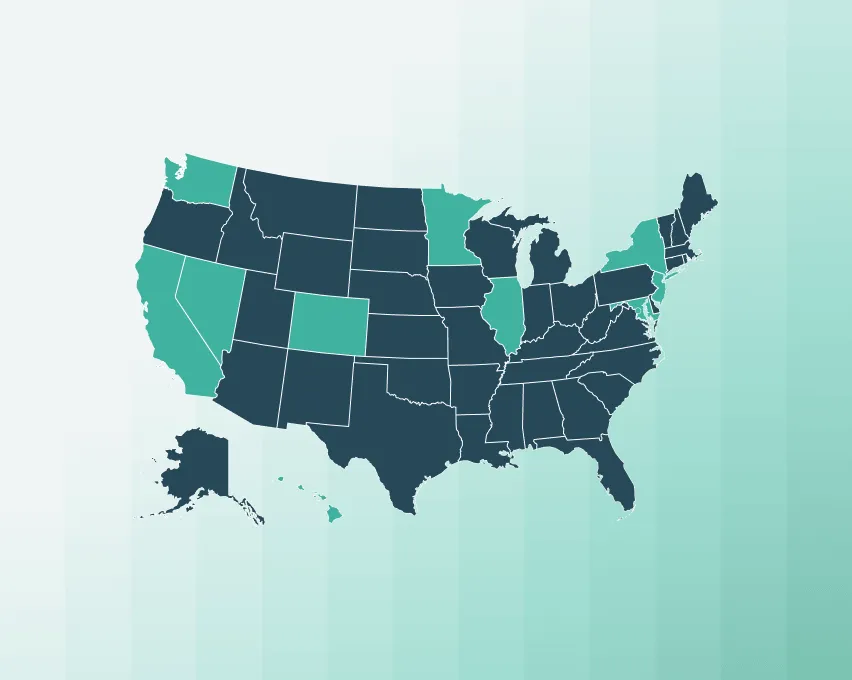
You can track the latest developments with our Transposition Monitor resource, which includes an interactive status map.
How Trusaic Can Help
At Trusaic, we provide employers across the EU with solutions to comply confidently with all of the components of the Directive, including RTI.
Our Complete EU Pay Transparency Solution enables compliant pay systems, ensures gender-neutral job evaluations, and automates complex reporting obligations to keep you one step ahead of EU pay transparency enforcement.
- PayParity® analyzes your rewards data (compensation/benefits in kind) and quickly identifies any potential unjustified inequities. It enables you to more easily comply with Article 7 (right to information) and Article 6 requirements (pay setting and progression policy).
- Our Remediation Optimization Spend Analysis (R.O.S.A.) works as PayParity’s remediation engine to find the most cost-effective way to close nominal pay gaps to ensure compliance.
- Automated RTI workflows: Our bi-directional integrations with global HCM platforms allow pay equity data to flow securely from the Trusaic platform back into the HCM. Employees can then access their RTI reports directly within their existing HR systems. This eliminates manual report generation and reduces compliance risk.
- For organizations that prefer platform-based access, RTI reports can also be generated and delivered securely through the PayParity platform, with role-based permissions and full auditability.
- Salary Range Finder® ensures equitable pay at the point of hire to prevent any increases in pay gap and enables you to easily comply with the Directive’s salary range disclosure and salary history ban requirements.
- Pay Decisions: Generate fair, competitive offers instantly from Workday.
- Regulatory and Pay Transparency Reporting™ captures your pay equity findings and generates compliant reports.
Trusaic is GDPR compliant and can assist any organization in any EU state in meeting its obligations under both the EU Corporate Sustainability Reporting Directive and the EU Pay Transparency Directive.
Visit our always updated Member State Transposition Monitor to stay on top of the latest EU Pay Transparency Directive developments.