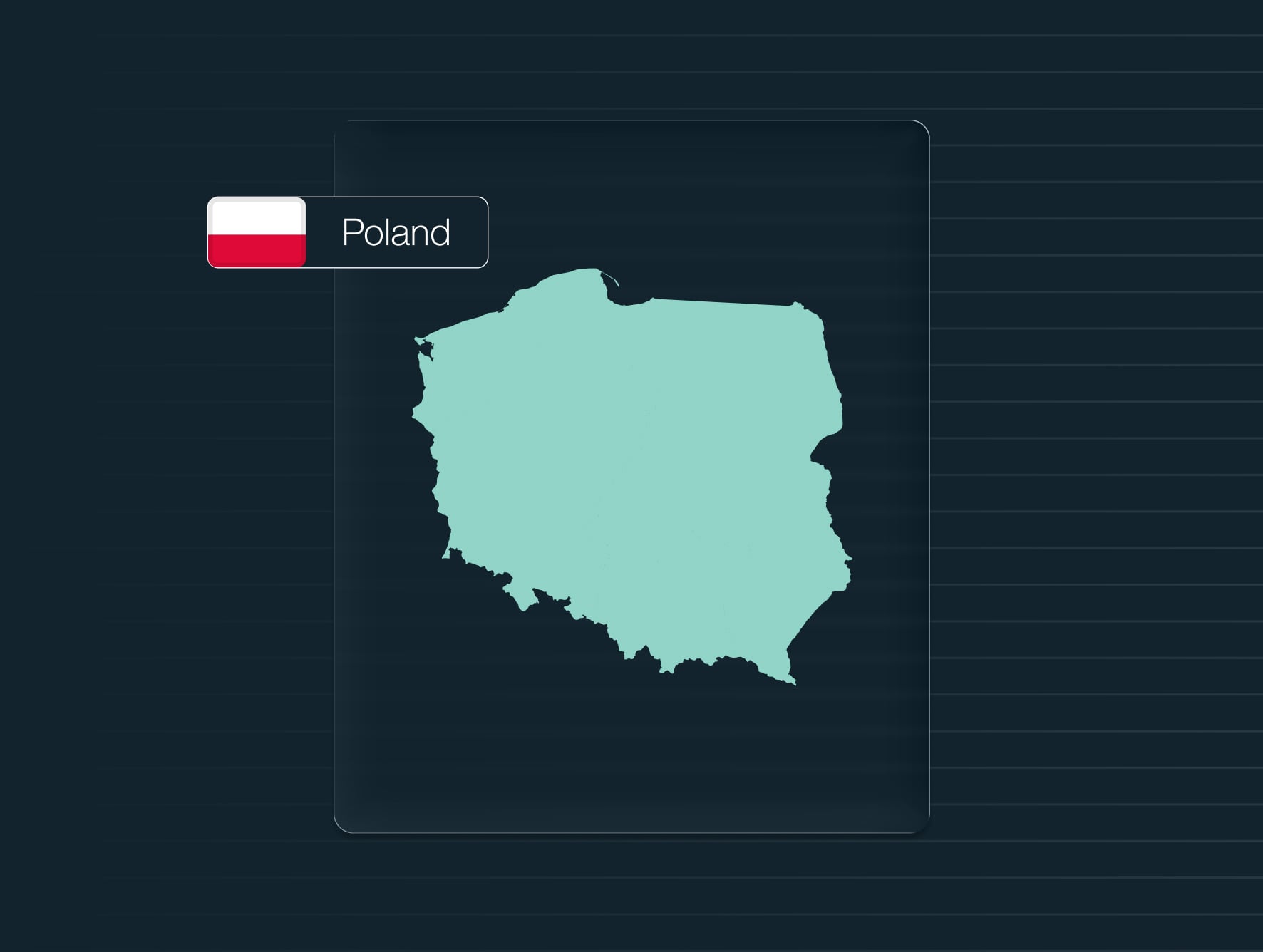















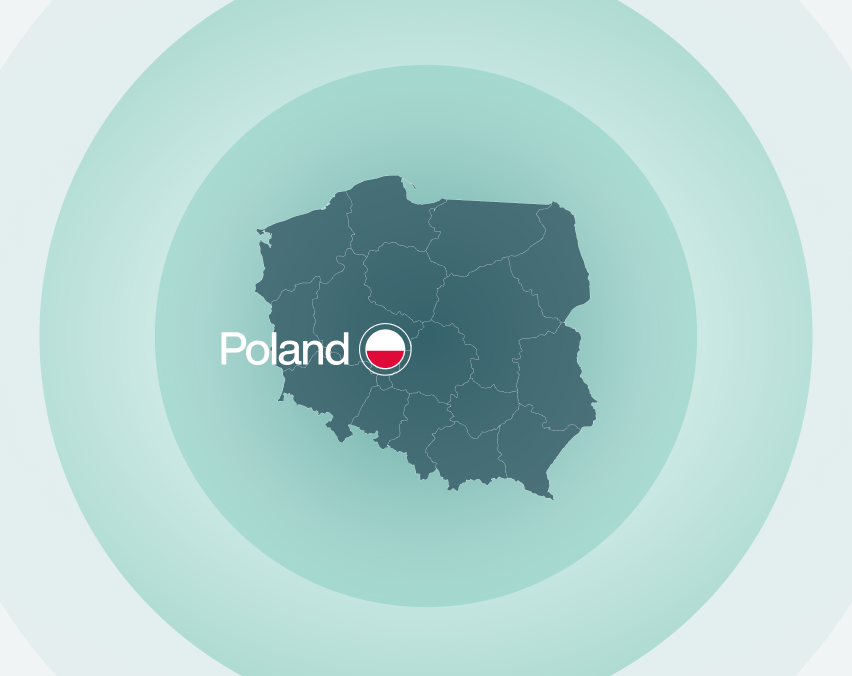
Poland on 4 May 2026 released an updated draft transposition of the remaining requirements of the EU Pay Transparency Directive, following a public consultation period that concluded in January.
While the draft continues to move through the legislative process, employers should not expect immediate compliance deadlines. A delayed entry into force is now confirmed: 6 months after publication.
Background
In June 2025, Poland amended its Labour Code to transpose certain pre-employment transparency requirements, which took effect 24 Dec. 2025. The remaining requirements were addressed in a separate draft published in December 2025, which underwent a public consultation that closed in January 2026.
Poland has now published an updated version of that draft, reflecting feedback received during the consultation. The draft must still be reviewed by committees of the Council of Ministers, approved by the full Council of Ministers, and referred to the Sejm (parliament) before it can be enacted. Under Art. 74 of the draft, the law would enter into force six months after its publication — confirming signals previously given by the Ministry that transposition would be delayed.
Right to Information in Poland
The right-to-information (RTI) provisions are maintained largely as previously drafted with additional provided and a consequential clarification of the relevant timeframe for RTI data. Employees retain the right to request information about their individual pay level and the average pay levels of colleagues performing the same work or work of equal value. Employers have 30 days to respond, both to initial requests and to requests for supplementation where information is alleged to be inaccurate or incomplete. This maintains the shortest deadline to respond to RTI requests of EU Member State drafts to date.
When an employee believes the information provided is inaccurate or incomplete, they must specify the scope of the information in question.
The most consequential clarification in the draft is that pay levels for RTI purposes are to be calculated for the period of 12 months for which remuneration was paid, immediately preceding the month in which the request is submitted. This equates to a rolling 12-month lookback for RTI data, requiring employers to keep data updated on a monthly basis.
A notable change: Poland has removed the prior requirement that employers provide an annual reminder of RTI rights by 31 March. Reminders of RTI rights must be provided to employees in accordance with the Directive: once a year.
Remuneration: Definition and Exclusions
The draft provides a specific definition of “remuneration level” in Art. 2(3) that will govern the scope of pay comparisons and disclosures:
“Annual gross remuneration calculated on the basis of the actual remuneration received by the employee in a given period.”
The definition explicitly excludes two categories of payments:
- Cash or in-kind benefits received equally by all employees, or made available to all employees without any conditions for use
- Benefits related to the termination of employment (e.g., severance pay)
This clarification is meaningful to employers, as the Directive’s definition is broad about what constitutes pay, which generates ambiguity around whether any components, even those where there is no risk of discrimination, may be excluded. A company-wide flat benefit — such as a Christmas gift card or gym memberships — would fall outside the remuneration calculation, provided they are uniformly received by all employees or made available to all employees without any eligibility conditions. Poland’s explanatory notes also specifically notes the exclusion of benefits financed from the Company Social Benefits Fund, which depend on the life, family, and financial situation of the person entitled to use the Fund, rather than employer discretion or employee performance. .
This makes the calculation much more straightforward for employers operating in Poland.
Hourly Pay: A Contractual Hours Baseline
When pay must also be expressed on an hourly basis, i.e. for both RTI and gender pay gap reporting, the draft takes a clear methodological approach: the hourly calculation must be based on the contractual hours specified in the employment contract, not actual hours worked.
The relevant definitions under Art. 2 are:
- Hourly remuneration level (Art. 2(4)): the quotient of the remuneration level and the nominal working time appropriate to the period of employment
- Nominal working time (Art. 2(7)): the number of working hours resulting from the working time specified in the employment contract
In other words, actual pay serves as the numerator; contractual hours serve as the denominator. This creates a potential distortion: an employee who works significant overtime will have higher actual pay but an unchanged contractual hours denominator, which could produce a lower apparent hourly rate and skew pay comparisons.
For employees who joined mid-year, hours are pro-rated to the period of employment with that employer.
Gender Pay Gap: A Directional Difference
Poland’s draft adopts a gender pay gap formula that reverses the direction of subtraction used by Eurostat:
(Women’s average pay − Men’s average pay) ÷ Men’s average pay × 100%
When men are paid more, this formula produces a negative gap value. Eurostat’s formula produces a positive value in the same scenario.
For compliance purposes, this distinction is largely academic. The Joint Pay Assessment (JPA) trigger under the Directive — a difference in average pay of at least 5% in any category of workers — depends on the absolute value of the gap, not its sign. A gap of −7% and a gap of +7% both trigger the same JPA obligation.
As a reminder, the Directive requires remediation of all unjustified pay gaps; 5% is just a JPA trigger.
That said, employers should be aware that their reported figures will carry negative signs where men’s pay is higher, which is the inverse of how international benchmarks and ESG reporting frameworks typically present the same data. Internal reports and external disclosures may need to account for this difference in presentation.
The Minister of Labour will finalize and publish a regulation with detailed information on the calculation of each of the reporting elements.
Key Takeaways for Employers
Poland’s updated draft legislation provides critical points of clarification and confirms a minimum six-month delay in transposition. Other items for employers with workers in Poland to be cognizant of:
- Pre-employment transparency requirements are already in effect as of 24 Dec. 2025, via the June 2025 Labour Code amendments.
- The 31 March deadline for the annual RTI reminder has been removed in favor of the Directive’s baseline requirement that it be provided once per year.
- Hourly pay calculations will use contractual hours as the denominator. Review how overtime and other variations from contractual hours may affect disclosed hourly rates.
- Poland’s gender pay gap formula produces negative values when men earn more. Absolute gaps still govern JPA triggers; the sign difference affects presentation only.
- The remuneration definition excludes universally available benefits and termination-related payments. Review benefits structures now to assess what falls in or out of scope.
How Trusaic Can Help
At Trusaic, we provide employers across the EU with solutions to comply confidently with the Directive.
Our Complete EU Pay Transparency Solution enables compliant pay systems, ensures gender-neutral job evaluations, and automates complex reporting obligations to keep you one step ahead of EU pay transparency enforcement.
- PayParity® analyzes your rewards data (compensation/benefits in kind) and quickly identifies any potential unjustified inequities. It enables you to more easily comply with Article 7 (right to information) and Article 6 requirements (pay setting and progression policy).
- Our Remediation Optimization Spend Analysis (R.O.S.A.) works as PayParity’s remediation engine to find the most cost-effective way to close nominal pay gaps to ensure compliance.
- Automated RTI workflows: Our bi-directional integrations with global HCM platforms allow pay equity data to flow securely from the Trusaic platform back into the HCM. Employees can then access their RTI reports directly within their existing HR systems. This eliminates manual report generation and reduces compliance risk.
- For organizations that prefer platform-based access, RTI reports can also be generated and delivered securely through the PayParity platform, with role-based permissions and full auditability.
- Salary Range Finder® ensures equitable pay at the point of hire to prevent any increases in pay gap and enables you to easily comply with the Directive’s salary range disclosure and salary history ban requirements.
- Pay Decisions: Generate fair, competitive offers instantly from Workday.
- Regulatory and Pay Transparency Reporting™ captures your pay equity findings and generates compliant reports.
Trusaic is GDPR compliant and can assist any organization in any EU state in meeting its obligations under both the EU Corporate Sustainability Reporting Directive and the EU Pay Transparency Directive.
Visit our always updated Member State Transposition Monitor to stay on top of the latest EU Pay Transparency Directive developments.