













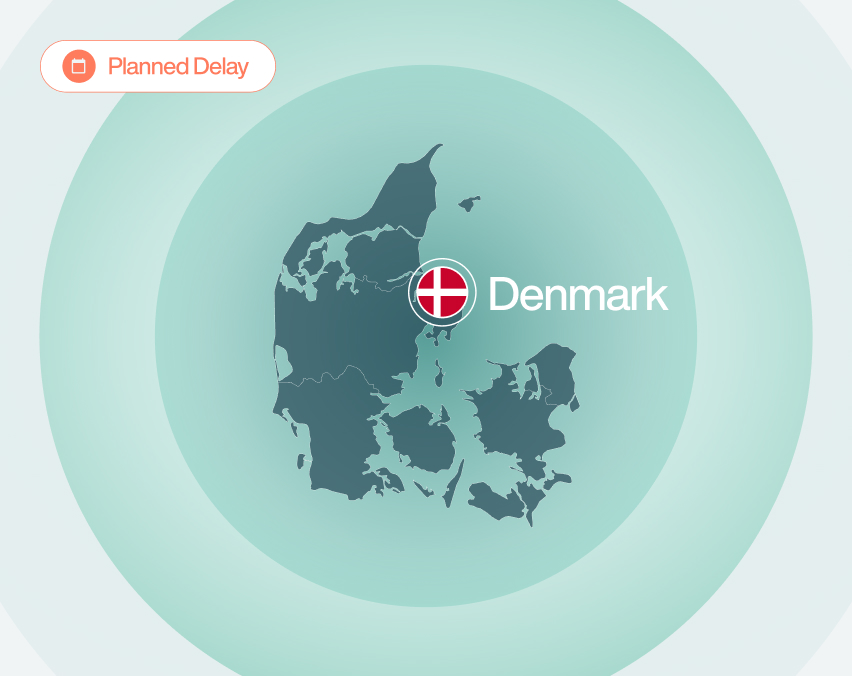
On Feb. 26, 2026, Denmark published its proposal to amend Denmark’s Equal Pay Act in order to transpose the EU Pay Transparency Directive into national law.
The proposal, which was sent for consultation, signals a structured and data-driven implementation approach — one that closely aligns with the Directive’s minimum requirements while introducing certain clarifications and procedural nuances unique to Denmark.
The consultation process is set to conclude on March 27, 2026. Below is a breakdown of what employers need to know.
Entry into Force: No Employer Obligations Until 2027
The draft legislation proposes a Jan. 1, 2027 entry into force, which would mean:
- No Right to Information (RTI) obligations prior to 2027
- Reporting requirements would not begin until 2028
This effective date mirrors the Netherlands implementation timeline and conflicts with the required June 7, 2026 transposition date. The reporting delay also conflicts with the EUPTD’s June 7, 2027 reporting deadline for employers with 150+ employees. The EU Commission has indicated Member States that fail to comply with the Directive’s transposition deadlines could be subject to infringement proceedings under Article 258 of the Treaty on the Functioning of the European Union.
Pre-Employment Transparency & Right to Information
Denmark’s draft closely follows the Directive’s minimum standards under Articles 4, 5, 6, and 7.
Key Highlights
- Employers must disclose the initial pay or pay range for a position to job applicants at such a time to ensure informed and transparent salary negotiations
- Two-month deadline for employers to respond to RTI requests (consistent with the Directive)
- Definitions of “pay” and “pay level” align with the Directive
- RTI responses must include gross annual and gross hourly pay
- Employees may request reasonable clarifications of RTI responses and additional details if the information provided is inaccurate or incomplete
- Employers must provide a reasoned response to requests for clarifications within a reasonable period of time, which the explanatory notes suggest to be four weeks
Notable Difference from Many Other Member States
There is no exception for employers with fewer than 50 employees to provide pay progression criteria.
Several other draft transpositions have introduced small-employer carveouts, which is provided as an option for Member States in Article 6 of the Directive. Denmark has not.
Reporting Framework Under Article 9
Denmark’s reporting structure is distinctive in that it proposes to rely heavily on existing wage data submitted under the Statistics Denmark Act.
What Data Will Be Used?
Reporting will leverage actual earnings data already submitted to Statistics Denmark (Danmarks Statistik), which includes:
- Base salary
- Qualification supplements
- Bonuses
- Pension contributions
- Taxable benefits (e.g., company cars, phones, health insurance)
- Irregular payments
- Actual hours worked (including overtime)
- Absence data (e.g., sickness, maternity leave)
This earnings dataset will form the initial basis of the required Article 9 reporting elements.
Reporting Timeline & Thresholds
First Reports (150+ Employees)
- First wage statements issued by Statistics Denmark no later than Sept. 1, 2028
- Annual reporting for employers with 250+ employees
- Reporting requirements every three years for employers with 150–249 employees
100–149 Employees (and 50–99 Employees, as applicable)
- First statements issued no later than Sept. 1, 2030
- Reporting requirements every three years thereafter
Wage statements, supplemented by the employer as necessary, must be submitted to the new Danish Labour Market Institute for Equal Pay within one month of receipt or, in the case of an employer. An employer that is required to prepare their own wage statement, or voluntarily does so, must complete the report by December 31 of the applicable reporting year and submit it within one month of its preparation.
How the Reporting Process Will Work
- Statistics Denmark prepares a wage statement (free of charge) for employers with at least 100 employees.
- If the employer reports through an employers’ organization, that organization sends the wage statement.
- The statement will include all reporting elements required under Article 9.
- The employer must:
- Consult employee representatives
- Ensure the information and methodology are correct. For example, Statistics Denmark classifies workers based on DISCO codes, which may not be sufficient to comply with the requirement of categorization by work of equal value for the reporting of gender pay gaps by worker category. It is the employer’s responsibility to ensure that information is accurately reported, which may require supplementation of the wage statement. Supplementation may also be necessary for workers that are not paid based on hours worked.
- Submit the wage statement to the Labour Market Institute for Equal Pay within one month of receipt (or completion, if self-prepared)
Rights to Clarification & Remediation
Employees, employee representatives (trade union shop stewards), and the Labour Market Institute for Equal Pay have the right to:
- Receive the wage statement from the employer
- Request clarifications or additional information
Employers must respond within two months.
If the response does not fully justify the reported differences, the draft requires remediation within a “reasonable period,” with explanatory notes indicating that this would be approximately two months.
Collective Agreements
The proposal allows for the preemption of requirements by collective agreement to the extent that corresponding obligations and rights are included in an applicable collective bargaining agreement.
Data Protection & Confidentiality
Denmark has proposed implementing the optional additional safeguards under Article 12(3) of the Directive:
- Disclosure may be limited where reporting could identify an individual employee’s pay.
- Personal data protection safeguards and procedures will apply where necessary.
Enforcement & Consequences
Failure to comply may result in:
- Employee claims for compensation
- Potential administrative fines
As with other Member States, enforcement mechanisms are tied to both compensation rights and financial penalties.
What’s Next?
The consultation period runs through March 27, 2026. Following consultation, revisions may be introduced before final adoption.
Employers with operations in Denmark should:
- Review their pay structure documentation and progression criteria
- Assess readiness to respond to RTI requests within two months
- Understand how their submitted wage data and the DISCO classification aligns with Article 9 reporting elements and categorization by work of equal value
- Prepare internal governance processes for wage statement validation and submission
Denmark’s draft underscores a broader trend across the EU: while the framework is harmonized, national implementation details matter — particularly around reporting mechanics and employer verification responsibilities.
We will continue monitoring developments as the consultation process concludes and the legislation progresses toward final adoption.
How Trusaic Can Help
At Trusaic, we provide employers across the EU with solutions to comply confidently with the directive.
Our Complete EU Pay Transparency Solution enables compliant pay systems, ensures gender-neutral job evaluations, and automates complex reporting obligations to keep you one step ahead of EU pay transparency enforcement.
- PayParity® analyzes your rewards data (compensation/benefits in kind) and quickly identifies any unjustified inequities.. It enables you to easily comply with Article 7 (right to information) and Article 6 requirements (pay setting and progression policy).
- Our Remediation Optimization Spend Agent (R.O.S.A.) works as PayParity’s AI remediation partner to find the most cost-effective way to close nominal pay gaps to ensure compliance.
- Salary Range Finder ensures equitable pay at the point of hire to prevent any increases in pay gap and enables you to easily comply with the Directive’s salary range disclosure and salary history ban requirements.
- Pay Decisions: Generate fair, competitive offers instantly from Workday.
- Regulatory Pay Transparency Reporting™ captures your pay equity findings and generates compliant, one-click reports across all EU jurisdictions.
- Our Pay Transparency Agent answers all your pay transparency reporting questions instantly.
- Our Communications Agent crafts perfect contextual narratives in any EU language to support your annual pay reports.
Trusaic is GDPR compliant and can assist any organization in any EU state in meeting its obligations under both the EU Corporate Sustainability Reporting Directive and the EU Pay Transparency Directive.
Visit our always updated Member State Transposition Monitor to stay on top of the latest EU Pay Transparency Directive developments.