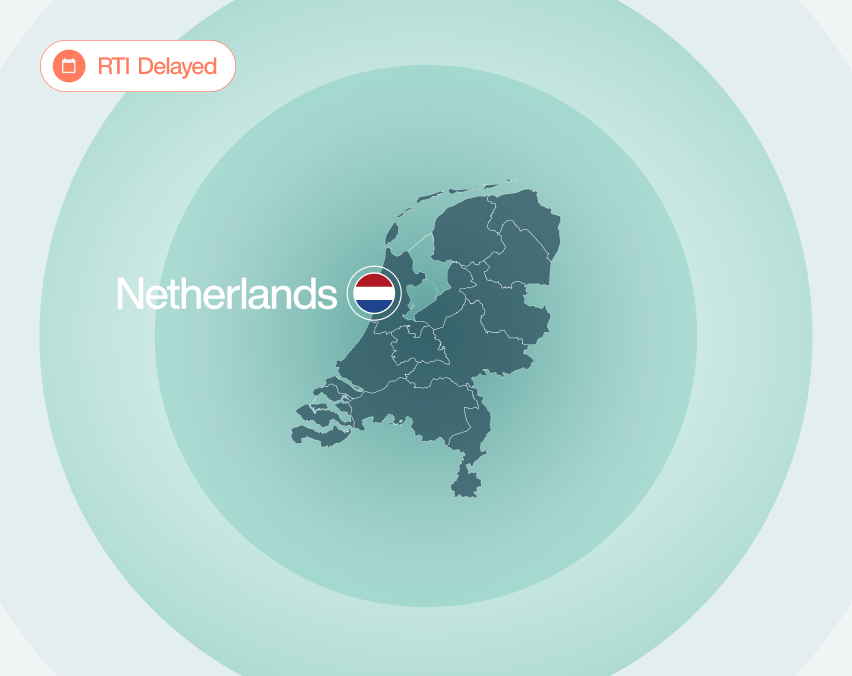














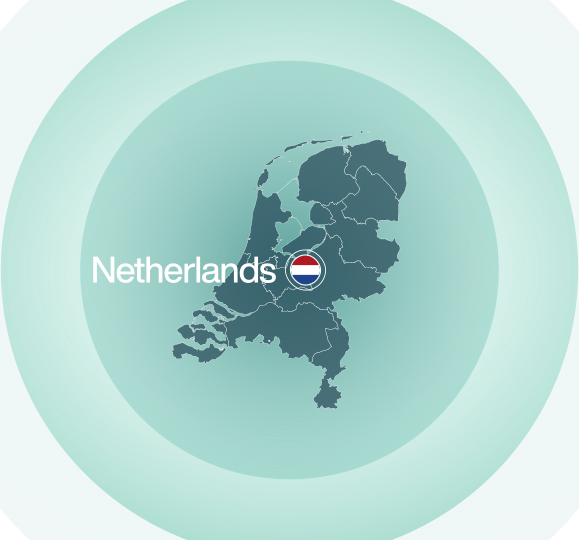
On 1 September 2026, the Dutch Minister of Social Affairs and Employment responded to approximately 270 questions submitted by the House of Representatives (Tweede Kamer) on the bill implementing the EU Pay Transparency Directive (Parliamentary Paper 36949). The documents are noted as received on 2 September 2026.
Meeting the 1 September deadline ensured the government’s answers would be added to the 8 September 2026 procedural meeting of the House’s Social Affairs and Employment (SZW) committee, keeping a 1 January 2027 entry into force feasible.
This latest step builds on the Netherlands’ progress on its transposition effort this summer. The Netherlands published a draft decree to implement the Directive in June 2026 with a consultation period that ran through July. The Netherlands also opened a consultation on 9 July 2026 on accompanying ministerial regulations, which closes on 11 Sept. 2026. For background on how the legislation reached this point, see our prior coverage of the bill’s submission to Parliament.
A Pure Implementation Philosophy, No Gold-Plating
Throughout its response, the government frames the bill as a straightforward implementation of the Directive, with no national gold-plating. It repeatedly distinguishes between mandatory provisions, where Member States have no discretion, and areas where the Directive leaves discretion to Member States. Where the government did exercise discretion, it asserts that it did so with a focus on reducing burden on employers.
Entry Into Force Confirmed for 1 January 2027
The government reiterated its intention for the bill to enter into force on 1 January 2027 and reminded the House that this has been its position since September 2025, when it communicated the timeline directly to the House. The delay reflects the need to design national regulations, and their implementation, so that employers can carry out the obligations effectively and with the least possible administrative burden.
The government again recognized that employees can only invoke the Directive’s measures against private employers, including the right to information, once the bill enters into effect. In the meantime, employers can voluntarily prepare for and choose to apply certain measures.
Easing the Administrative Burden
A recurring theme in the response is the government’s effort to make the obligations as practical as possible. It cites several measures aimed at reducing administrative burden, including:
- Leveraging existing data processes, such as the payroll tax return process (loonaangifteketen)
- Standardizing definitions and calculation methods
- Introducing a mandatory reporting template
Privacy and the Choice Not to Transpose Article 12(3)
The government acknowledged that pay information in small groups can be traceable to individual employees. It balances that concern against an employee’s need for sufficient information to effectively assess a possibly unjustified pay difference and, where necessary, raise it in court.
On that basis, the government continues to defend its decision not to transpose the optional Article 12(3) of the Directive, which would have required small-group disclosures capable of revealing identifiable pay information to be routed through workers’ representatives, labour inspectorates, or equality bodies. GDPR safeguards still apply.
Estimating the Volume of Right to Information Requests
The government estimates that roughly 5% of employees will submit a right to information (RTI) request annually, equating to between 450,000 and 490,000 employees. It also committed to a public campaign to normalize the exercise of this right.
Our recent blog provided details on RTI volume in Italy, Slovakia, and Malta through the first two months of it being live.
Unadjusted Versus Adjusted Pay Differences
The government recognized that reporting uncorrected pay differences instead of statistically corrected pay differences can lead to confusion. It defended the value of the uncorrected figures, which are required by the Directive, noting that they show actual income inequality between men and women and give a picture of the position of women in the labour market, whether across the market or within a specific organization.
An uncorrected gap can arise, for example, because more men than women hold higher positions in an organization, or because women more often work part-time.
How Agency Workers Are Handled
For agency workers, the hirer (inlener) reports, because it holds the job-evaluation system that fixes the value of the work, but the hirer and the supplier (uitlener) share responsibility for ensuring equal pay.
Equal pay for agency workers at the inlener is already required by Articles 8 and 8a of the Waadi. Additional data exchange will be required between the inlener and uitlener in order to ensure accurate reporting.
The government notes this is the European Commission’s preferred option.
A Note of Amendment on Minor Points
Alongside its response, the government submitted a note of amendment to adjust the bill on a few points it characterizes as minor:
- Clarifying that the reversal of the burden of proof applies to non-compliance with all transparency obligations, including the salary history ban, which had been inadvertently omitted as a cross-reference
- Technical amendments to the Works Council Act provisions to ensure the required involvement of works councils in reporting
- Technical amendments to align requirements of the associated acts around temporary and posted workers
What This Means for Employers With Dutch Operations
The government’s answers move the bill closer to its parliamentary conclusion and reaffirm a 1 January 2027 target. Employers should treat that date as a fixed planning horizon rather than waiting for final enactment.
The response also signals where practical demand will concentrate. With an estimated 450,000 to 490,000 RTI requests expected each year, and a public campaign designed to increase awareness, organizations will need scalable, defensible processes to respond accurately and on time.
The confirmed use of the payroll tax return process and a mandatory reporting template means employers should begin mapping their existing data infrastructure to those requirements now.
How Trusaic Can Help
At Trusaic, we provide employers across the EU with solutions to comply confidently with all of the components of the Directive.
Our Complete EU Pay Transparency Solution enables compliant pay systems, ensures gender-neutral job evaluations, and automates complex reporting obligations to keep you one step ahead of EU pay transparency enforcement.
- PayParity® analyzes your rewards data (compensation/benefits in kind) and quickly identifies any potential unjustified inequities. It enables you to more easily comply with Article 7 (right to information) and Article 6 requirements (pay setting and progression policy).
- Our Remediation Optimization Spend Analysis (R.O.S.A.) works as PayParity’s remediation engine to find the most cost-effective way to close nominal pay gaps to ensure compliance.
- Automated RTI workflows: Our bi-directional integrations with global HCM platforms allow pay equity data to flow securely from the Trusaic platform back into the HCM. Employees can then access their RTI reports directly within their existing HR systems. This eliminates manual report generation and reduces compliance risk.
- For organizations that prefer platform-based access, RTI reports can also be generated and delivered securely through the PayParity platform, with role-based permissions and full auditability.
- Salary Range Finder® ensures equitable pay at the point of hire to prevent any increases in pay gap and enables you to easily comply with the Directive’s salary range disclosure and salary history ban requirements.
- Pay Decisions: Generate fair, competitive offers instantly from Workday.
- Regulatory and Pay Transparency Reporting™ captures your pay equity findings and generates compliant reports.
Trusaic supports GDPR compliance and can assist any organization in any EU state in meeting its obligations under both the EU Corporate Sustainability Reporting Directive and the EU Pay Transparency Directive.
Visit our always updated Member State Transposition Monitor to stay on top of the latest EU Pay Transparency Directive developments.