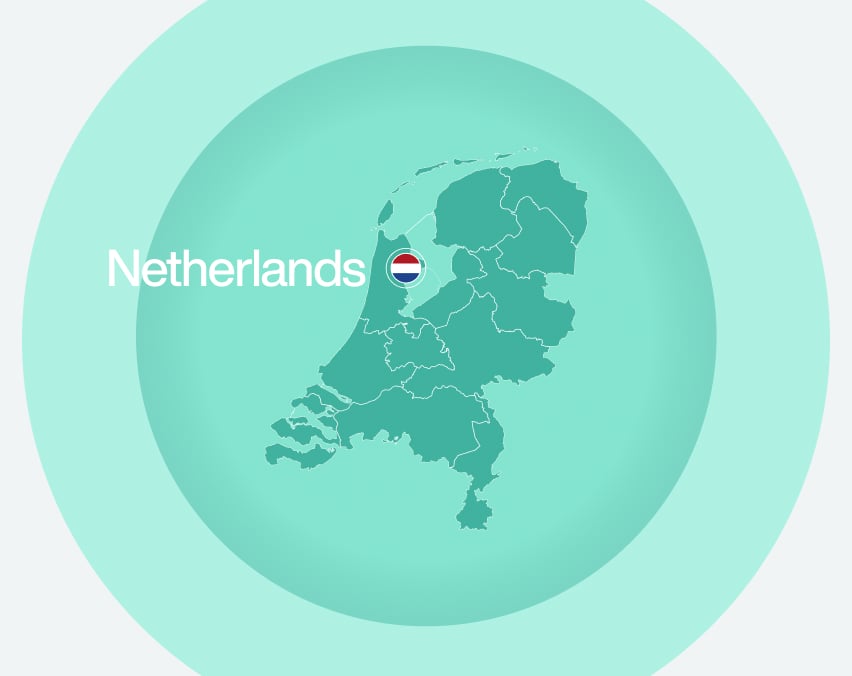
















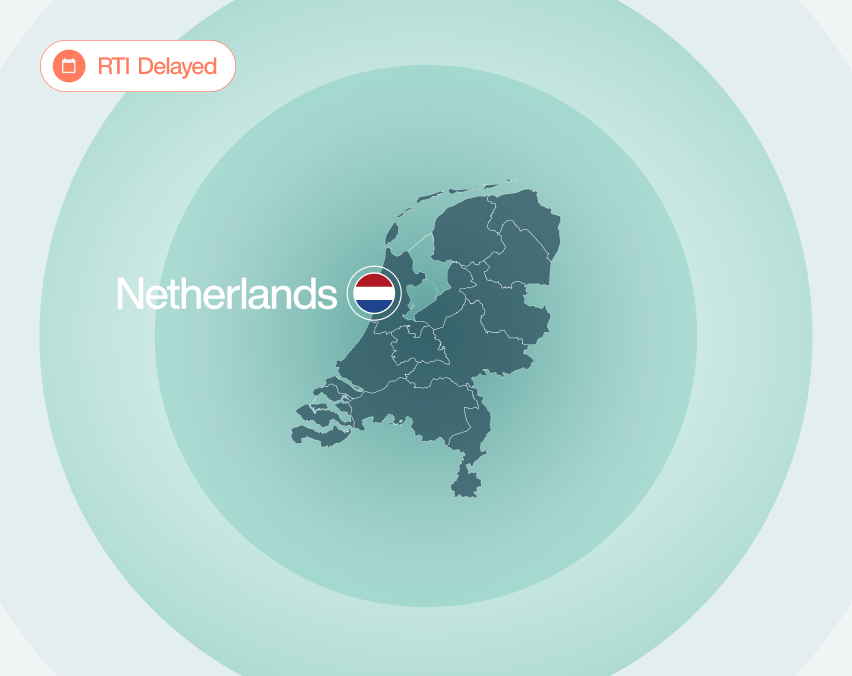
The Netherlands has taken a significant step forward in its EU Pay Transparency Directive transposition, submitting its draft legislation to the House of Representatives (Tweede Kamer) on 21 May 2026.
The submission came alongside a further report responding to feedback on the January 2026 draft legislation that the Council of State had provided in its 1 April 2026 opinion.
The Council of State’s opinion raised six areas requiring attention before the bill could be submitted to Parliament:
- administrative and regulatory burden,
- the feasibility of government-compiled pay gap reports,
- the consequences of missing the June 2026 deadline,
- the designation of a monitoring body,
- the treatment of non-binary employees in reporting calculations,
- and employer data use restrictions on RTI information.
The further report addresses each of these points, largely confirming the existing approach while providing additional explanation and targeted refinements to the draft.
The legislation itself remains substantively consistent with the January 2026 draft. The bill’s submission confirms what had been anticipated: the Netherlands will not meet the 7 June 2026 transposition deadline, with the current aim being entry into force on 1 January 2027.
What Did the Council of State Flag, and How Did the Government Respond?
Administrative and Regulatory Burden
The Council of State raised concerns about the considerable administrative and regulatory burden the legislation would place on employers and requested a fuller explanation of the effectiveness and efficiency of the proposed approach.
In response, the government noted that for the preparation of pay gap reporting, employers can largely rely on data already available to them for payroll tax return filings, which reduces incremental burden. The Ministry of Social Affairs and Employment is in active discussions with software developers to have software support ready as soon as possible, and lower-level regulations will elaborate on the specific data employers must report. The monitoring body is expected to make an intended reporting format available in advance of the reporting obligation.
Government-Compiled Pay Gap Reports
The Council of State recommended that the government reconsider whether a national civil service could prepare initial pay gap reports on behalf of employers — or provide a better explanation of why that approach is not feasible.
The government investigated this option and concluded it does not meet the desired burden reduction, for three reasons:
- First, the government lacks knowledge of employer remuneration policy. For example, the government is not in a position to determine whether wage components are allocated to all employees in the same way.
- Second, employers must in any case determine pay gap reporting by worker category, which cannot be derived from government administrative data alone.
- Third, employers would still need to verify any government-supplied data, eliminating much of the anticipated efficiency gain.
Consequences of Missing the June 2026 Deadline
The Council of State sought discussion in the explanatory memorandum of the legal consequences of failing to transpose by 7 June 2026, and recommended abiding by the 2027 reporting deadlines set out in the Directive.
The government addressed this directly. The explanatory memorandum now includes a risk assessment covering each of the Directive’s obligations during the transposition delay period. Two categories of legal risk are identified.
- Public sector employees may be able to enforce certain Directive rights that are sufficiently precise and unconditional directly against government employers once the deadline passes.
- The European Commission may also initiate infringement proceedings, which could result in financial penalties against the Netherlands.
On the reporting timeline, the government confirmed it is maintaining the delayed start of 2028, citing the same three sequencing constraints: the reporting method must first be established through lower-level regulation, software developers must convert that method into usable tools, and the monitoring body must be operationally ready to receive and publish reports.
Designation of a Monitoring Body
The Council of State requested clarity on which body would serve as the designated monitoring authority under the legislation.
The government confirmed that the Directorate of Services, Partnerships, and Implementation (DSU) of the Ministry of Social Affairs and Employment will serve as the monitoring body on behalf of the Minister of Social Affairs and Employment. DSU will be responsible for receiving and publishing employer reporting once the reporting obligation takes effect.
Treatment of Non-Binary Employees
The Council of State required further elaboration on how remuneration of non-binary persons should be handled in RTI and reporting calculations.
Under the approach confirmed in the further report, employees who identify as non-binary and have been recorded as such by the employer are, in principle, excluded from wage reporting. The employer’s own records serve as the primary source. Non-binary employees who wish to be included in reporting as either a man or a woman may voluntarily indicate that preference to the employer, but the employer may not require them to do so.
Non-binary employees must still be counted in the total employee headcount calculation, which determines whether an employer meets the threshold for mandatory reporting obligations.
Employer Restrictions on Employee Use of RTI Information
The Council of State recommended that employers be permitted, consistent with Article 7(6) of the Directive, to require that workers who receive RTI information about colleagues’ pay not use that information for any purpose other than exercising their right to equal pay.
The government revised the draft law accordingly. Employers may now require employees to use pay equity data received through RTI disclosures, other than information about their own pay, exclusively for the purpose of applying the principle of equal pay. This obligation is grounded in the good employee conduct standard under Article 7:611 of the Dutch Civil Code.
If an employee fails to comply, the employer may take proportionate measures within the employment relationship, such as a warning or a disciplinary measure.
What Other Clarifications Does the Updated Bill Include?
Beyond the Council of State responses, the updated legislation and explanatory notes include several additional refinements:
- Clarification of the Labour Inspectorate’s role in enforcement
- Better alignment between the concept of “wage level” in the national law and “pay level” as used in the Directive
- Stipulation that further rules on reporting obligations will be set out in an Order in Council
- Clarification of the flow of information involving temporary workers
- Clarification of how to handle cross-border work in an international context
- Clarification of the role and influence of works councils
On job evaluation and classification, the Ministry confirmed that a guide has been developed to support employers in establishing a sound system ahead of the 1 January 2027 effective date.
What Does This Mean for Employers With Dutch Operations?
The bill’s submission moves the legislative process into its parliamentary phase.
Employers should not wait for final enactment to begin preparation. Job evaluation and classification, pay system review, and data infrastructure for eventual reporting all require lead time that is now limited.
The government’s warning about direct effect is also relevant for organizations with Dutch public or semi-public sector employees. Those employers face potential enforcement exposure beginning 7 June 2026, even absent enacted national legislation. For private sector employers, the 1 January 2027 target provides a defined planning horizon, and the months remaining should be used to close gaps in compensation data, assess worker category structures, and prepare for the RTI and reporting obligations that will follow.
How Trusaic Can Help
At Trusaic, we provide employers across the EU with solutions to comply confidently with the Directive.
Our Complete EU Pay Transparency Solution enables compliant pay systems, ensures gender-neutral job evaluations, and automates complex reporting obligations to keep you one step ahead of EU pay transparency enforcement.
- PayParity® analyzes your rewards data (compensation/benefits in kind) and quickly identifies any potential unjustified inequities. It enables you to more easily comply with Article 7 (right to information) and Article 6 requirements (pay setting and progression policy).
- Our Remediation Optimization Spend Analysis (R.O.S.A.) works as PayParity’s remediation engine to find the most cost-effective way to close nominal pay gaps to ensure compliance.
- Automated RTI workflows: Our bi-directional integrations with global HCM platforms allow pay equity data to flow securely from the Trusaic platform back into the HCM. Employees can then access their RTI reports directly within their existing HR systems. This eliminates manual report generation and reduces compliance risk.
- For organizations that prefer platform-based access, RTI reports can also be generated and delivered securely through the PayParity platform, with role-based permissions and full auditability.
- Salary Range Finder® ensures equitable pay at the point of hire to prevent any increases in pay gap and enables you to easily comply with the Directive’s salary range disclosure and salary history ban requirements.
- Pay Decisions: Generate fair, competitive offers instantly from Workday.
- Regulatory and Pay Transparency Reporting™ captures your pay equity findings and generates compliant reports.
Trusaic is GDPR compliant and can assist any organization in any EU state in meeting its obligations under both the EU Corporate Sustainability Reporting Directive and the EU Pay Transparency Directive.
Visit our always updated Member State Transposition Monitor to stay on top of the latest EU Pay Transparency Directive developments.