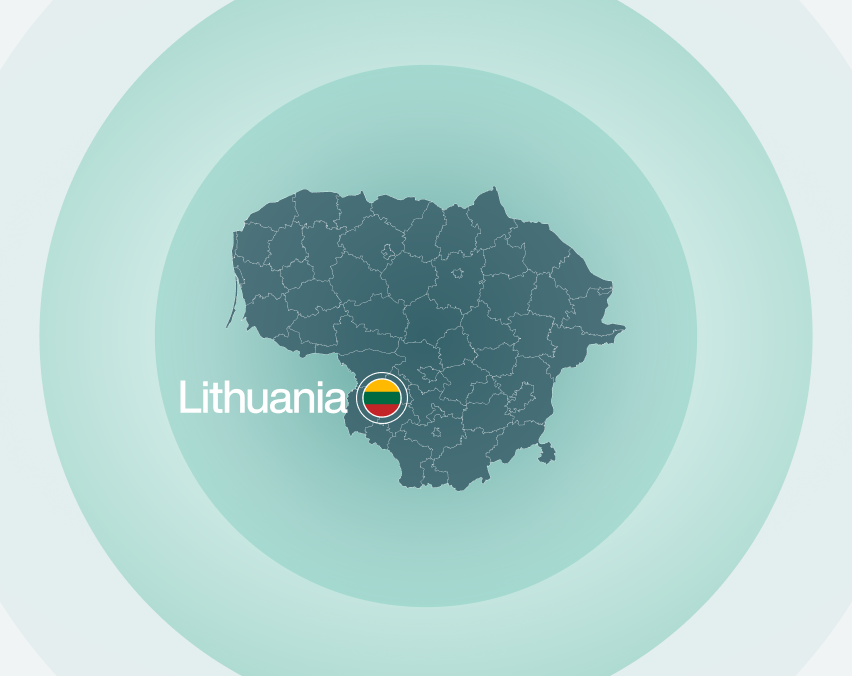














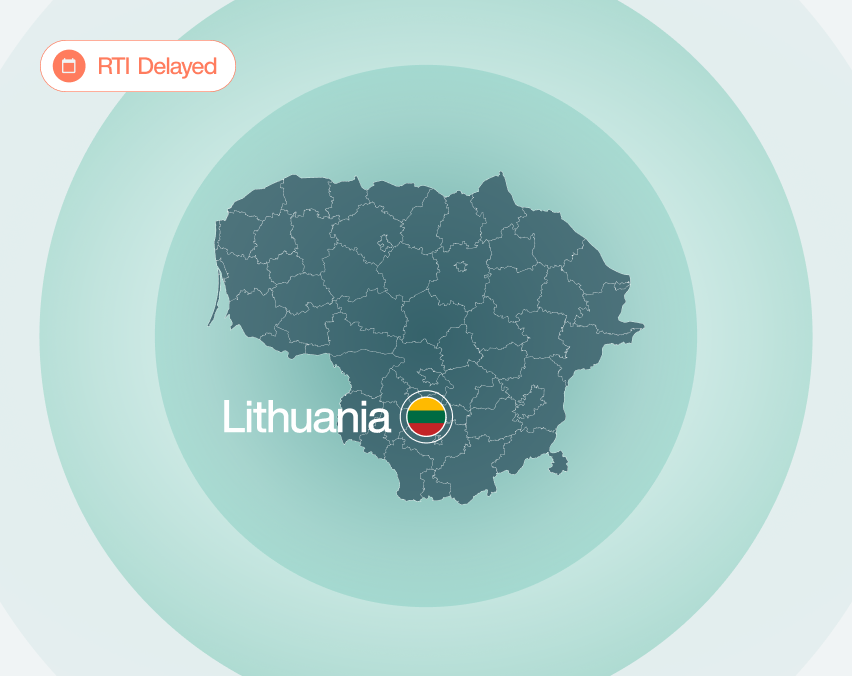
Lithuania resolved a weeks-long legislative committee debate over the timing of its EU Pay Transparency Directive transposition and became the second EU Member State — after Slovakia — to pass legislation to fully transpose the EU Pay Transparency Directive.
Rather than delaying the entire package, the Seimas Social Affairs and Labour Committee voted on 13 May 2026, to delay the effective date of certain requirements in the legislation: most requirements will enter into force on 7 June 2026, while two significant provisions — employer pay system compliance and data submission to the national social insurance authority — will not take effect until 31 Dec. 2026 and 1 Jan. 2027.
The result is a two-track compliance timeline that will require Lithuanian employers to understand not just what is required, but when. On 21 May 2026, the Seimas adopted the transposition legislation (Law No. XV-969), which was then signed by the President and officially published in the Register of Legal Acts on 25 May 2026.
What Is the Current Status of Lithuania’s EU Pay Transparency Transposition?
Lithuania’s transposition has moved through a compressed and contested legislative window. The Social Affairs and Labour Committee held two key votes in May 2026. On 8 May, the Committee approved a motion to delay the entire transposition to 1 Jan. 2027, while simultaneously considering a compromise from the Ministry of Social Security and Labour to preserve earlier effective dates for certain provisions.
On 13 May, the Committee reconvened and adopted the compromise — a split effective-date structure that decouples the data infrastructure requirements from the broader compliance framework.
The resulting timeline:
- 7 June 2026: The majority of transposition requirements enter into force.
- 31 Dec. 2026: Deadline for employers to confirm or update their pay systems to meet compliance requirements.
- 1 Jan. 2027: Monthly data submission to Sodra (the Board of the State Social Insurance Fund) begins, and right-to-information requirements
These revised transition provisions were incorporated in the enacted legislation.
Why Are Lithuania’s Right to Information Requirements Delayed to 2027?
Lithuania’s RTI provisions will not enter into force until January 2027, but also its RTI framework is structurally dependent on data that Sodra will collect from employers through monthly submissions. Fulfilling employee RTI requests will require Sodra-supplied data derived from those submissions — data that will not begin flowing until after January 2027, and potentially not until 2028, at the earliest.
The Committee’s decision to delay RTI requirements is not a standalone policy choice; it reflects the sequencing logic of the underlying data architecture.
As previously stated, Article 17 of the legislation, which contains the RTI provisions, will not enter into effect until 1 Jan. 2027 under the agreed compromise proposal. Employers with Lithuanian operations should understand that RTI readiness is not solely an internal HR function — it will require coordination with the national Sodra data submission process once it launches. An employer must begin responding to RTI requests only after Sodra begins providing the employer the necessary data.
What Data Will Employers Be Required to Report to Sodra?
The monthly Sodra data submission requirement, once it begins in January 2027, will be substantive. Based on the explanatory notes that accompanied the 19 March 2026 draft, the reporting framework involves two categories of data.
What Baseline Data Must Employers Provide?
Employers will provide worker classification data once, then update it as necessary:
- Worker categories: Workers’ position group numbers as specified in the employer’s pay system.
- Agreed working time norm: The average weekly hours an employee is contractually required to work, excluding additional work and overtime.
- Agreed working time regime: The distribution of working hours across a working day, week, month, or other accounting period not exceeding three consecutive months. The explanatory notes identify five regime types: fixed-duration shifts with a set number of working days per week; cumulative working time accounting; flexible schedules with fixed core hours and variable start/end times; split working time; and individual working time regimes.
What Data Must Employers Submit Monthly?
Monthly submissions cover three components:
- Gross (imputed) wages: All wage components, including base pay and additional earnings such as overtime premiums, night work, weekend and holiday pay, employee-paid social insurance contributions and income tax, paid non-worked time (annual and additional leave, parental rest time, downtime not attributable to the employee), wage indexation differences, material allowances, sickness benefit regardless of financing source, compensation for unused leave, severance, and other compensatory payments.
- Gross (calculated) additional wages: The variable component of remuneration — bonuses for qualifications, performance of additional duties, substitution arrangements, and employer-initiated incentive payments tied to individual, team, or company performance — as well as premiums for work under abnormal conditions including days off, holidays, overtime, and increased workload.
- Paid working time: Actual hours worked plus paid non-worked time directly related to work, including annual leave, additional leave, parental rest time, downtime, and other working time for which gross wages are calculated.
The procedure for collecting, calculating, submitting, and publishing this data will be established by the Ministry of Social Security and Labour.
What Does Lithuania’s Split Timeline Mean for Employers?
Lithuania’s two-track structure creates distinct planning obligations depending on which compliance layer is at issue.
For general requirements taking effect 7 June, employers should confirm their current state against the enacted transposition text. For pay system requirements, the 31 Dec. deadline to confirm or update compliant systems defines a clear but limited window. For the Sodra data infrastructure, employers should begin assessing what payroll and HR systems currently capture against the three monthly data categories above — particularly the granular working time regime classifications and the distinction between imputed and calculated wages.
Employers should monitor for implementing regulations from the Ministry of Social Security and Labour, which will govern the precise mechanics of the Sodra submission process.
How Trusaic Can Help
At Trusaic, we provide employers across the EU with solutions to comply confidently with the Directive.
Our Complete EU Pay Transparency Solution enables compliant pay systems, ensures gender-neutral job evaluations, and automates complex reporting obligations to keep you one step ahead of EU pay transparency enforcement.
- PayParity® analyzes your rewards data (compensation/benefits in kind) and quickly identifies any potential unjustified inequities. It enables you to more easily comply with Article 7 (right to information) and Article 6 requirements (pay setting and progression policy).
- Our Remediation Optimization Spend Analysis (R.O.S.A.) works as PayParity’s remediation engine to find the most cost-effective way to close nominal pay gaps to ensure compliance.
- Automated RTI workflows: Our bi-directional integrations with global HCM platforms allow pay equity data to flow securely from the Trusaic platform back into the HCM. Employees can then access their RTI reports directly within their existing HR systems. This eliminates manual report generation and reduces compliance risk.
- For organizations that prefer platform-based access, RTI reports can also be generated and delivered securely through the PayParity platform, with role-based permissions and full auditability.
- Salary Range Finder® ensures equitable pay at the point of hire to prevent any increases in pay gap and enables you to easily comply with the Directive’s salary range disclosure and salary history ban requirements.
- Pay Decisions: Generate fair, competitive offers instantly from Workday.
- Regulatory and Pay Transparency Reporting™ captures your pay equity findings and generates compliant reports.
Trusaic is GDPR compliant and can assist any organization in any EU state in meeting its obligations under both the EU Corporate Sustainability Reporting Directive and the EU Pay Transparency Directive.
Visit our always updated Member State Transposition Monitor to stay on top of the latest EU Pay Transparency Directive developments.