

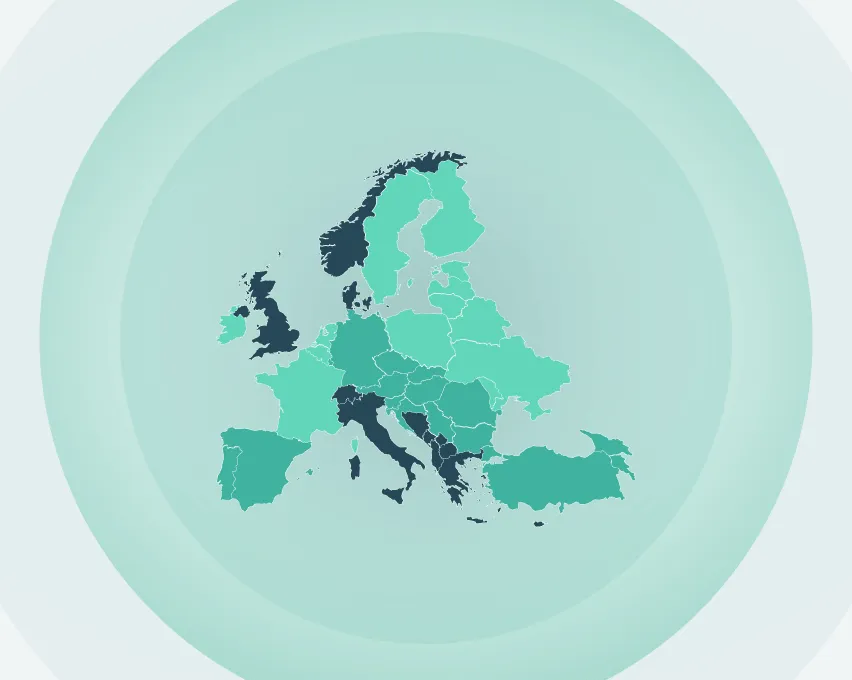








Germany has yet to publish draft legislation to transpose the EU Pay Transparency Directive (EUPTD), leaving it among the Member States still working through implementation more than three months after the 7 June 2026 deadline.
While the government’s own drafting process remains out of view, a research paper prepared for an individual Member of the Bundestag offers an early, detailed look at how German lawmakers may be thinking through two of the Directive’s thorniest issues: how much discretion Member States actually have, and how the Directive squares with EU data protection law.
The Bundestag’s Fachbereich EU 6 (Section for European and International Law, Foreign Affairs and Security) published “Questions concerning Directive (EU) 2023/970 on pay transparency: Margins of discretion and data protection issues” (EU 6 – 3000 – 085/26). It was prepared as an individually commissioned work for a Member of the Bundestag and does not reflect the views of the Bundestag as a whole. Even so, it gives employers a useful window into some of the legal reasoning likely to shape Germany’s eventual draft.
What Does the Paper Cover?
The Fachbereich was asked to do two things: map out where the Directive gives Member States genuine room to maneuver, and assess where the Directive’s transparency obligations may run into conflict with data protection law.
On the first point, the paper walks through the areas of discretion the Directive leaves open, including how Member States define the timing of initial pay disclosure and what counts as a “reasonable period of time” for responding to worker requests.
These are exactly the kinds of implementation details that have varied widely across the Member States that have already transposed the Directive, from response windows to the format of Right to Information (RTI) disclosures.
Where Data Protection Meets Pay Transparency
The paper’s data protection analysis starts from first principles. Any national rules implementing the Directive must conform with the EU Charter of Fundamental Rights, specifically the right to respect for private life and communications and the right to protection of personal data, the latter given concrete form through the GDPR.
From there, the processing of personal pay data must serve a legitimate purpose, be suitable and necessary to that purpose, and not be disproportionate to the interference with fundamental rights.
Article 12(1) of the Directive reinforces this by requiring that personal data be processed in accordance with the GDPR, meaning the full set of GDPR processing principles apply: lawfulness, fairness, and transparency; purpose limitation; data minimization; accuracy; storage limitation; and integrity and confidentiality.
For employers, this confirms that RTI compliance is not solely a compensation exercise. It is a data protection exercise running in parallel.
A Notable Conclusion: Article 12(3) May Not Be Truly Optional
The most significant finding in the paper concerns Article 12(3), which gives Member States the option to limit disclosure of information that would directly or indirectly reveal the pay of an identifiable worker. On its face, this is discretionary language. The Fachbereich’s analysis disagrees.
The authors conclude that, from a fundamental rights perspective, this “option” is not actually optional: a corresponding rule in national law is called for. In their words: “This option is, however, not optional; rather, a corresponding rule in national law is called for from a fundamental rights perspective.”
In practice, this means the paper treats the protection against disclosing an identifiable worker’s pay as a requirement flowing from the Charter, not a policy choice Germany can decline.
A Recommendation on Comparison Group Size
The paper also weighs in on a question that has divided legal opinion across the EU: how small a worker category can get before disclosing pay data risks revealing an identifiable individual.
Germany’s current Pay Transparency Act (Entgelttransparenzgesetz, or EntgTranspG) already addresses this in Article 12(3), which sets a minimum comparison group of six employees of the opposite sex for the existing right to information under that law. The Fachbereich recommends Germany retain that threshold in its EUPTD transposition, reasoning that the risk of identifying an individual worker increases as the comparison group shrinks.
This is proposing a more concrete position than most Member States have taken. As Trusaic has covered in its RTI series, most draft transpositions leave this threshold to employer judgment rather than fixing a specific number, with Finland’s non-binding guidance around five employees being one of the few reference points published so far.
What Does This Mean for Employers?
Germany’s eventual draft legislation is still pending, but this paper suggests two likely features:
- a codified limitation on disclosures that could directly or indirectly reveal an identifiable worker’s pay,
- and a retained minimum comparison group size modeled on existing German law.
Employers with German operations should treat both as reasonably likely design choices, and should begin evaluating whether their RTI reporting infrastructure can support category-level thresholds and alternative disclosure routes to worker representatives or equality bodies where direct disclosure isn’t permitted.
How Trusaic Can Help
At Trusaic, we provide employers across the EU with solutions to comply confidently with all of the components of the Directive.
Our Complete EU Pay Transparency Solution enables compliant pay systems, ensures gender-neutral job evaluations, and automates complex reporting obligations to keep you one step ahead of EU pay transparency enforcement.
- PayParity® analyzes your rewards data (compensation/benefits in kind) and quickly identifies any potential unjustified inequities. It enables you to more easily comply with Article 7 (right to information) and Article 6 requirements (pay setting and progression policy).
- Our Remediation Optimization Spend Analysis (R.O.S.A.) works as PayParity’s remediation engine to find the most cost-effective way to close nominal pay gaps to ensure compliance.
- Automated RTI workflows: Our bi-directional integrations with global HCM platforms allow pay equity data to flow securely from the Trusaic platform back into the HCM. Employees can then access their RTI reports directly within their existing HR systems. This eliminates manual report generation and reduces compliance risk.
- For organizations that prefer platform-based access, RTI reports can also be generated and delivered securely through the PayParity platform, with role-based permissions and full auditability.
- Salary Range Finder® ensures equitable pay at the point of hire to prevent any increases in pay gap and enables you to easily comply with the Directive’s salary range disclosure and salary history ban requirements.
- Pay Decisions: Generate fair, competitive offers instantly from Workday.
- Regulatory and Pay Transparency Reporting™ captures your pay equity findings and generates compliant reports.
Trusaic supports GDPR compliance and can assist any organization in any EU state in meeting its obligations under both the EU Corporate Sustainability Reporting Directive and the EU Pay Transparency Directive.
Visit our always updated Member State Transposition Monitor to stay on top of the latest EU Pay Transparency Directive developments.