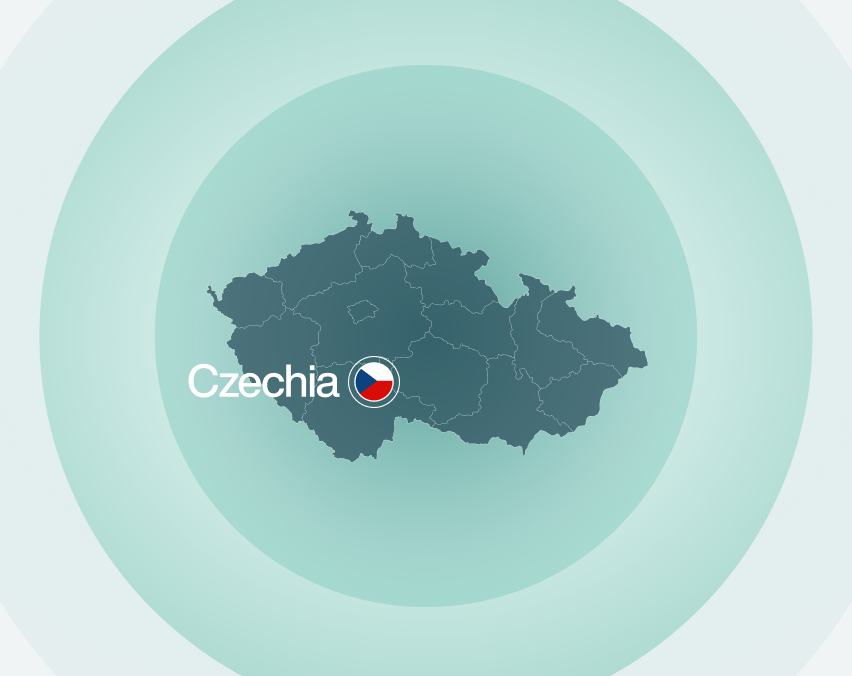














The Czech government on 31 August 2026 approved the bill to transpose the EU Pay Transparency Directive, advancing the proposal introduced earlier this year by the Ministry of Labour and Social Affairs (MoLSA). The measure now moves to the Chamber of Deputies to begin the parliamentary legislative process where its provisions could still be refined before final adoption.
Czechia’s MoLSA originally introduced the draft law 16 March 2026, which laid out a minimalist, system-integrated approach to transposition. It was subsequently revised based on consultation feedback received by MoLSA. Below is an overview of the core obligations as approved and outlined in the Ministry’s release.
Greater Transparency in Recruitment
Employers will be required to demonstrably inform applicants of the minimum level of remuneration, along with any other monetary or non-monetary benefits, before an employment relationship is established. This can be satisfied through the job advertisement, during the selection procedure, or when the contract is signed, but no later than before an employment contract is signed.
In line with the Directive’s salary history ban, employers will not be able to ask applicants about their previous pay. These rules also extend to Czechia’s flexible work arrangements, namely agreements to perform work (DPP) and agreements to perform work activity (DPČ).
Clear and Non-Discriminatory Pay Rules
Employers must establish and maintain a transparent, non-discriminatory remuneration system that ensures equal pay for equal work or work of equal value. The system must be documented, set out in an internal regulation, or agreed in a collective agreement, and must define groups of work of equal value, classify employees into those groups, and specify how pay is determined.
Job evaluation will rest on objective criteria such as complexity, responsibility, and the strenuousness of the work performed, and may account for skills needed for the role, including problem-solving, managing stress, and coordinating with others.
Expanded Right to Information
On written request, an employee can obtain their own pay and the average pay of employees performing work in the same group, broken down by gender.
Employers must respond within two months and must remind employees of this right, and how to use it, at least once a year. The privacy of other employees is protected throughout.
MoLSA will establish by decree the method to calculate the amount of remuneration for work and other pecuniary benefits and benefits of monetary value for this right to information.
Reporting Requirements
Regular pay gap reporting will apply only to employers with 100 or more employees:
- 250+ employees – report annually
- 100–249 employees – report once every three years
The first reports are due in 2028 for employers with 150 or more employees, and in 2031 for those with 100 to 149 employees.
To limit the administrative burden, reporting will draw on data the state already collects through the Unified Monthly Employer Report (JMHZ) and pay gaps by worker category submitted by employers. MoLSA, acting as the monitoring body, will process pay gap data and publish only anonymized, aggregated information, for example by employer size, sector, or region.
A 5% Gap Is Not an Automatic Violation
A difference between the average pay of women and men does not, on its own, constitute a breach. An employer is required to conduct a detailed assessment only where the average hourly pay gap within a group of work is at least 5%, cannot be explained by objective and non-discriminatory reasons, and is not corrected within six months.
Where those conditions are met, the employer must analyze the causes, review its pay system, and take measures to eliminate unjustified differences. The employer must discuss the results of the analysis and the proposed measures to eliminate any unjustified differences with the trade union and the works council. If no trade union or works council operates at the employer, the analysis must be made accessible to all employees and the opportunity provided to form a works council. The aim is to enable remediation primarily at the employer level. Objective justifications may include differing working conditions, work performance, or results.
How Trusaic Can Help
At Trusaic, we provide employers across the EU with solutions to comply confidently with all of the components of the Directive.
Our Complete EU Pay Transparency Solution enables compliant pay systems, ensures gender-neutral job evaluations, and automates complex reporting obligations to keep you one step ahead of EU pay transparency enforcement.
- PayParity® analyzes your rewards data (compensation/benefits in kind) and quickly identifies any potential unjustified inequities. It enables you to more easily comply with Article 7 (right to information) and Article 6 requirements (pay setting and progression policy).
- Our Remediation Optimization Spend Analysis (R.O.S.A.) works as PayParity’s remediation engine to find the most cost-effective way to close nominal pay gaps to ensure compliance.
- Automated RTI workflows: Our bi-directional integrations with global HCM platforms allow pay equity data to flow securely from the Trusaic platform back into the HCM. Employees can then access their RTI reports directly within their existing HR systems. This eliminates manual report generation and reduces compliance risk.
- For organizations that prefer platform-based access, RTI reports can also be generated and delivered securely through the PayParity platform, with role-based permissions and full auditability.
- Salary Range Finder® ensures equitable pay at the point of hire to prevent any increases in pay gap and enables you to easily comply with the Directive’s salary range disclosure and salary history ban requirements.
- Pay Decisions: Generate fair, competitive offers instantly from Workday.
- Regulatory and Pay Transparency Reporting™ captures your pay equity findings and generates compliant reports.
Trusaic supports GDPR compliance and can assist any organization in any EU state in meeting its obligations under both the EU Corporate Sustainability Reporting Directive and the EU Pay Transparency Directive.
Visit our always updated Member State Transposition Monitor to stay on top of the latest EU Pay Transparency Directive developments.