













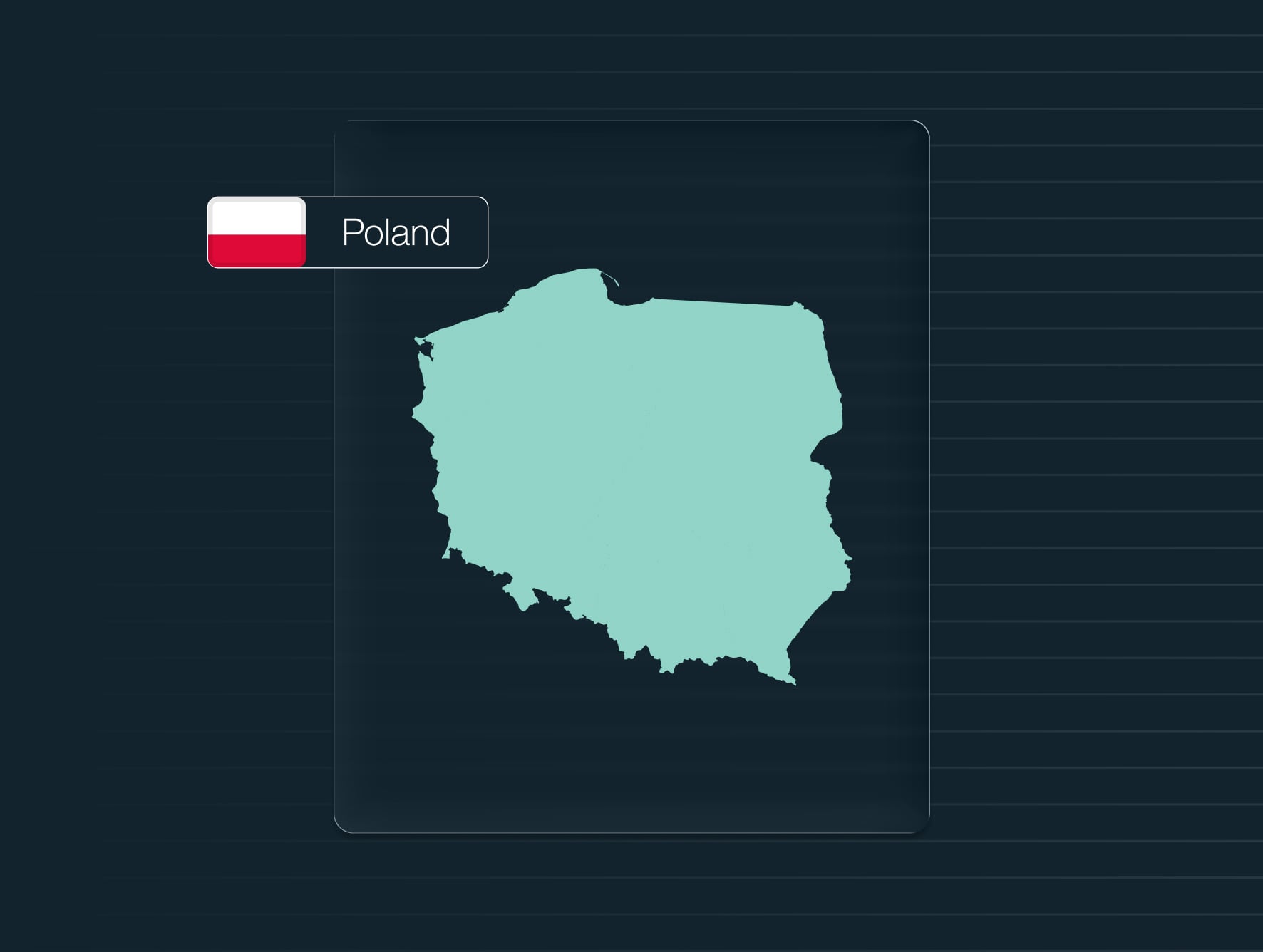
Poland has taken another important step toward full transposition of the EU Pay Transparency Directive (EUPTD).
On Dec. 16, 2025, the Polish government published the draft law that will form the foundation of its forthcoming legislation implementing the remaining EUPTD requirements — most notably, gender pay gap reporting, salary structure requirements, and enforcement mechanisms.
Poland has already enacted legislation covering the transparency-in-hiring aspects of the Directive, including:
- Starting pay disclosure
- Salary history ban
- Gender-neutral job titles and descriptions
These provisions will take effect Dec. 24, 2025.
Importantly, Poland’s newly published draft legislation does not expand beyond the minimum requirements of the Directive, while clarifying deadlines, definitions, and the role of employee representatives.
Below is what employers need to know from the draft legislation.
Key Takeaways of Poland’s Draft Legislation
1. Categories of Worker and Pay Structure Requirements
All employers will be required to establish salary structures enabling them to determine whether employees perform the same work or work of equal value.
Employers must evaluate jobs using the Directive’s four core criteria:
- Skills
- Effort
- Level of responsibility
- Working conditions
Additional criteria may be used if they are objective and gender-neutral. Criteria for the assessment of equal work and worker categories must be done in consultation with trade unions and consultations must last between 5 and 15 days.
Additional tools and information from the Polish government can be found here, including Polish guidance on assessing and comparing the value of work according to the four criteria adopted in Directive 2023/970.
2. Transparency of Pay Setting
Employers must make their pay-setting and pay-progression criteria easily accessible to employees.
- Employers with fewer than 50 employees will only need to disclose pay progression criteria upon request within 14 days.
- Larger employers must proactively ensure this information is readily available.
This requirement aligns with Articles 6 of the EUPTD, reinforcing pay-setting transparency across the EU.
3. Expanded Right to Information for Workers
Employees will have the right to request:
- Their own individual level of remuneration, and
- The average salary levels of employees performing the same work or work of equal value.
This aligns with Article 7 of the EUPTD and will require employers to maintain accurate salary structures and gender-neutral job evaluations.
Poland defines remuneration levels as the gross annual remuneration and the corresponding gross hourly remuneration, calculated on the basis of remuneration received in a given period, excluding the same cash or in-kind benefits received by all employees within a category of employees or made available to all employees within a category of employees.
Employers will have 30 days to respond to requests for information or additional detail and by March 31 each year must inform employees of the right to this information.
4. Gender Pay Gap Reporting Requirements
Employers with 100 or more employees must:
- Conduct gender pay gap analysis
- Submit pay gap reports by March 31 each year using tools provided by the Central Statistical Office
This reporting obligation will move Poland into alignment with the EUPTD’s phased thresholds for reporting frequency based on headcount. The first pay gap report for employers with at least 150 employees must be submitted by June 7, 2027 for the period from June 7, 2026 to Dec. 31, 2026.
Joint pay assessments will be required where unexplained gaps of 5% or more exist.
5. Trade Union and Employee Representative Participation
Employers must cooperate with:
- Trade unions (where present)
- Elected employee representatives (where no union exists) for the purpose of joint pay assessments and resulting remedial measures.
This participation applies to:
- Criteria for assessment of equal work and worker categories
- Accuracy of reporting information and methodology
- Joint pay assessments
- Designing measures to address identified gender pay gaps
These participation rights reflect existing Polish industrial relations practices.
6. Fines for Non-Compliance
Poland is instituting a structured penalty regime ranging from: PLN 3,000 to PLN 50,000.
Fines may be imposed for failing to:
- Conduct job evaluations
- Provide employees access to pay criteria
- Fulfill right-to-information requests
- Prepare gender pay gap reports
- Conduct required joint pay assessments
- Take remedial action on identified pay gaps
Employers will also face penalties for including pay-secrecy clauses, which mirror the EUPTD’s explicit ban on such restrictions.
What Comes Next?
This draft legislation would go into effect on June 7, 2026. The Government has targeted a planned enactment of the law for the second quarter of 2026
With transparency-in-hiring obligations already taking effect Dec. 24, employers must now begin preparing for the more complex structural and reporting components set forth in this draft act.
How Trusaic Can Help
At Trusaic, we provide employers in Poland and across the EU with solutions to comply confidently with the Directive.
Our Pay Equity Software Suite enables compliant pay systems, ensures gender-neutral job evaluations, and automates complex reporting obligations to keep you one step ahead of EU pay transparency enforcement.
- PayParity® analyzes your rewards data (compensation/benefits in kind) and quickly identifies inequities to determine if your adjusted gender pay gap is above 5%. It enables you to easily comply with Article 7 (right to information) and Article 6 requirements (pay setting and progression policy).
- Our Remediation Optimization Spend Agent (R.O.S.A.) works as PayParity’s AI remediation partner to find the most cost-effective way to close nominal pay gaps above 5% to ensure compliance.
- Salary Range Finder ensures equitable pay at the point of hire to prevent your pay gap from rising above 5% and enables you to easily comply with the Directive’s salary range disclosure and salary history ban requirements.
- Pay Decisions: Generate fair, competitive offers instantly from Workday.
- Regulatory Pay Transparency Reporting™ captures your pay equity findings and generates compliant, one-click reports across all EU jurisdictions.
- Our Pay Transparency Agent answers all your pay transparency reporting questions instantly.
- Our Communications Agent crafts perfect contextual narratives in any EU language to support your annual pay reports.
Trusaic is GDPR compliant and can assist any organization in any EU state in meeting its obligations under both the EU Corporate Sustainability Reporting Directive and the EU Pay Transparency Directive.
Visit our always updated Member State Transposition Monitor to stay on top of the latest EU Pay Transparency Directive developments.