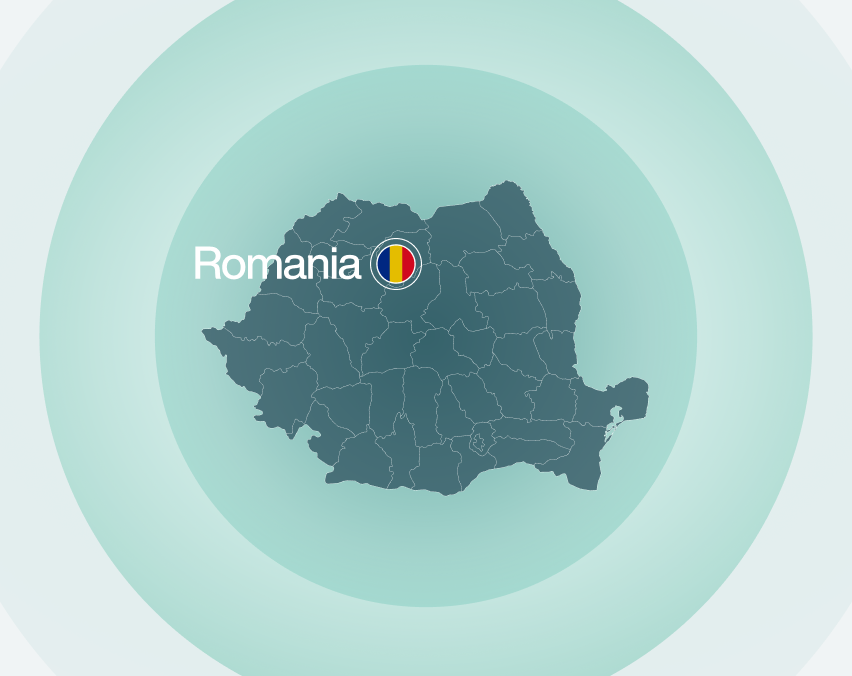















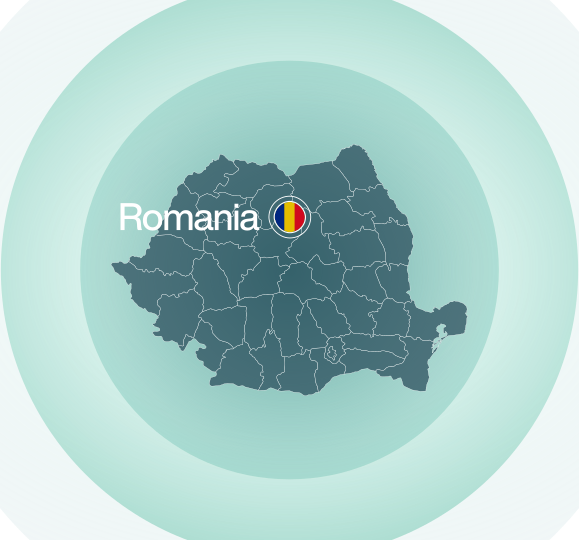
After months of stalled momentum, Romania’s EU Pay Transparency Directive transposition has suddenly accelerated — though not without a significant complication.
On 17 June 2026, certain members of Parliament unexpectedly registered the draft law implementing the Directive with the Romanian Senate (Reg. No. B392/2026). The move was a surprise, coming just weeks before the parliamentary summer recess and after a period in which transposition appeared to have stalled following the collapse of the Romanian government in early May. The registered text appears to largely align with the minimalist draft originally published by the Ministry of Labour on 30 March 2026.
Days later, the bill picked up speed, drew an early warning shot from Romania’s Legislative Council, and then decelerated to be picked up for consideration after the summer recess in September.
What Just Happened With Romania’s EU Pay Transparency Bill?
The legislative activity over the second half of June moved quickly:
- 17 June 2026: Members of Parliament registered the draft transposition law with the Senate (Reg. No. B392/2026).
- 22 June 2026: A request to process the draft through emergency procedures was made and approved. The bill was sent to the relevant agencies and councils for comment, with the Legislative Council required to submit its report by 26 June 2026.
- 26 June 2026: The Legislative Council issued a negative opinion on the draft.
- 29 June 2026: The bill’s Senate registration number was updated to L445/2026, which means it is now with the Senate’s standing committees as an active, official legislative project; a 45-day deadline was set for Senate consideration.
The use of emergency procedures signals that the bill’s sponsors are trying to compress the legislative timeline as much as possible. However, the Senate now has 45 days to debate, amend, and formally vote on the bill, calculated from 29 June 2026. That clock will be tolled (paused) during the parliamentary summer break, which begins 1 July 2026. Therefore, the Senate will have 43 days to reach a vote when it returns on 1 September 2026. After a vote (or the passage of those 43 days), the bill will move to the Chamber of Deputies. The deadline for amendments has been set for 2 September 2026. Reports by various committees are also due by set deadlines in the beginning of September. Even if the Senate does not make use of the full 45 days, the earliest the Romanian bill could become law is likely late October.
What Does the Legislative Council’s Negative Opinion Mean?
The negative opinion (no. 631/29.06.2026) is the most consequential development. In practical terms, it means the Legislative Council has flagged parts of the bill as structurally deficient, unconstitutional, or poorly drafted.
In this case, the Legislative Council has raised concerns on all fronts, stating that the draft is almost entirely contrary to the principle of legality, enshrined by art. 1(5) of the Romanian Constitution, and that it requires a complete revision. The Legislative Council states that its analysis of the draft was “particularly difficult” due to the “defective, imprecise drafting,” which “lack[ed] predictability and coherence,” “disregard[ed] specialist legal language,” and which the Legislative Council attributes to the likely use of automated translations or artificial-intelligence tools as opposed to Romanian specialists in the legal field. (translations from Romanian)
In addition, the Legislative Council points to several procedural deficiencies, including no impact study, no budgetary forecast, no information on the impact on human rights and fundamental freedoms, and no record on consultations. The Legislative Council also faulted the legislative proposal for not being accompanied by a correspondence table with the provisions of the Directive, questioning the completeness of the transposition.
Finally, the Legislative Council takes issue with specific provisions of the draft legislation, including the ambiguity and imprecision of its definitions (e.g. “worker” and “remuneration”), the excessive length of time provided to employers to remedy unjustified pay gaps (90 working days), and the misalignment of the burden of proof provisions to both current law and the Directive’s requirements.
The opinion is advisory rather than binding — it does not, on its own, stop the bill from advancing. However, it raises the bar for the senators backing the legislation, who will now need to defend the legality and soundness of the draft before moving it forward. A negative opinion can also create openings for legal or political challenges later in the process. Given the significant and fundamental concerns expressed by the Legislative Council, the likelihood is increased that the current draft legislation will be further delayed and require substantial amendments before enactment.
What Does Romania’s Bill Require?
The substance of the registered draft tracks the version Trusaic analyzed earlier this year. Romania has taken a minimalist approach that closely mirrors the Directive while avoiding significant “gold-plating,” but it pairs that with notably tighter compliance timelines. Key features include:
- Right to Information: Employers must respond to pay information requests within 30 working days, stricter than the Directive’s two-month standard, with an annual reminder to workers required by the end of the first quarter.
- Remediation: Unjustified pay gaps must be remedied within 90 working days, extendable to no more than six months in duly justified situations.
- Reporting: The Directive’s 100-employee threshold and reporting deadlines are maintained, though the standard reporting format is still to be established by the Ministry of Labour.
- Monitoring: The National Agency for Equal Opportunities between Women and Men (ANES) is designated as the monitoring authority, with proposed administrative fines for non-compliance.
The three main updates to the 30 March 2026 draft legislation previously analyzed include: (1) expanding the pay disclosure requirement for applicants to require separate disclosure of complementary and variable pay components with descriptions in addition to base pay; (2) clarifying that the involvement of workers’ representatives only applies “where they exist,” including for joint pay assessments; and (3) updated fines to be determined based on multipliers of the national gross minimum wage. The national gross minimum wage is currently at RON 4,050, but due to increase to RON 4,325 starting on 1 July 2026.
Because the Legislative Council’s specific objections are not yet public, employers should treat these provisions as the current — but not necessarily final — shape of Romanian law.
What Should Employers Do Now?
Romania’s sudden acceleration is a reminder that transposition timelines can shift quickly, even after long periods of inactivity. Multinational employers tracking the EU Pay Transparency Directive should:
- Continue preparing against the substance of the current draft — particularly Romania’s compressed RTI and remediation timelines — rather than waiting for final enactment, recognizing that the Legislative Council’s opinion may drive later amendments.
- Plan to monitor for further amendments and developments in the fall.
How Trusaic Can Help
At Trusaic, we provide employers across the EU with solutions to comply confidently with the Directive.
Our Complete EU Pay Transparency Solution enables compliant pay systems, ensures gender-neutral job evaluations, and automates complex reporting obligations to keep you one step ahead of EU pay transparency enforcement.
- PayParity® analyzes your rewards data (compensation/benefits in kind) and quickly identifies any potential unjustified inequities. It enables you to more easily comply with Article 7 (right to information) and Article 6 requirements (pay setting and progression policy).
- Our Remediation Optimization Spend Analysis (R.O.S.A.) works as PayParity’s remediation engine to find the most cost-effective way to close nominal pay gaps to ensure compliance.
- Automated RTI workflows: Our bi-directional integrations with global HCM platforms allow pay equity data to flow securely from the Trusaic platform back into the HCM. Employees can then access their RTI reports directly within their existing HR systems. This eliminates manual report generation and reduces compliance risk.
- For organizations that prefer platform-based access, RTI reports can also be generated and delivered securely through the PayParity platform, with role-based permissions and full auditability.
- Salary Range Finder® ensures equitable pay at the point of hire to prevent any increases in pay gap and enables you to easily comply with the Directive’s salary range disclosure and salary history ban requirements.
- Pay Decisions: Generate fair, competitive offers instantly from Workday.
Trusaic is GDPR compliant and can assist any organization in any EU state in meeting its obligations under both the EU Corporate Sustainability Reporting Directive and the EU Pay Transparency Directive.
Visit our always updated Member State Transposition Monitor to stay on top of the latest EU Pay Transparency Directive developments.