













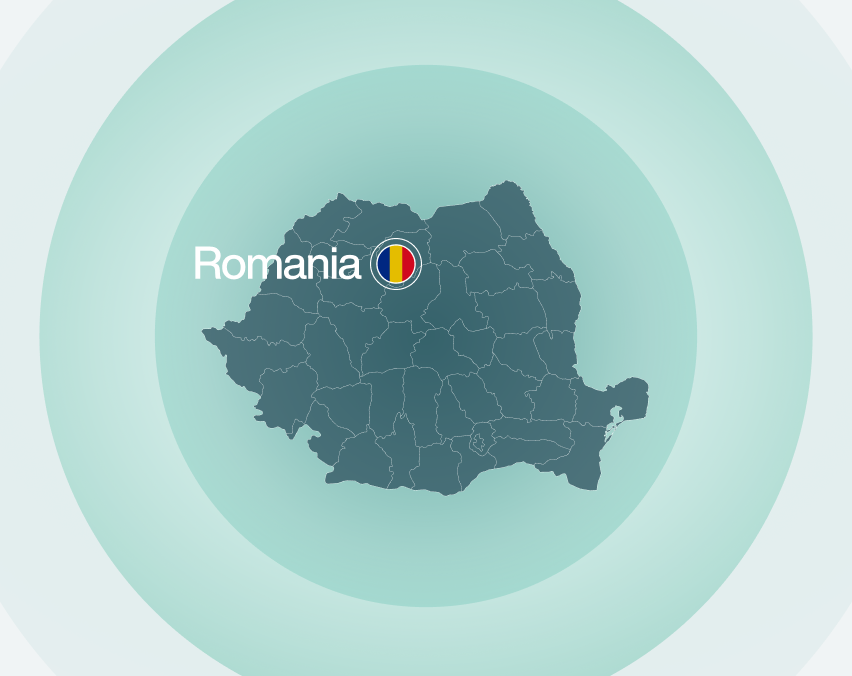
On March 30, 2026, Romania’s Ministry of Labour, Family, Youth and Social Solidarity published its draft legislation to transpose the EU Pay Transparency Directive into national law.
The draft went through public consultation (dezbatere publică) until April 8, and will require approval from Parliament before entering into force. It may be amended further as it moves through the legislative process.
Romania’s proposal closely aligns with the Directive’s baseline requirements while avoiding significant national expansion or “gold-plating.” There are, however, a couple key nuances to the draft in regard to Right to Information response windows and annual reminders.
A Minimalist Approach With Tight Compliance Expectations
Romania’s draft largely mirrors the Directive as written, signaling a clear intent to implement the framework without adding substantial new obligations.
At the same time, the draft introduces more stringent timelines in key areas, reinforcing the expectation that employers operationalize compliance quickly:
- 30 working days to respond to employee RTI requests
- 90 working days to remediate unjustified pay gaps, which can be extended only in duly justified situations to not more than 6 months
These timelines are notably tighter than the Directive’s general requirement of responding to RTI requests within two months and the six-month timeline for remediating unjustified pay gaps before a Joint Pay Assessment (JPA) may be triggered.
Key Provisions Employers Should Watch
While the draft is structurally aligned with the Directive, several provisions stand out for their potential impact:
Definition of “Work of Equal Value”
The draft defines work of equal value as roles requiring similar or equal professional knowledge and skills and the application of an equal or similar amount of intellectual and/or physical effort, responsibilities, and working conditions. This differs in framing from the Directive’s use of “skills, effort, responsibility, and working conditions” in the addition of “professional knowledge.”
This subtle shift could influence how employers:
- Conduct job evaluations
- Group comparable roles
- Defend pay decisions in practice
The draft also clarifies who qualifies as “Workers’ Representatives,” as well as their role, including in agreeing, where appropriate, to the worker categories used by employers.
Pay Criteria Exception
Under the draft transpositions, employers must provide employees with easy access to criteria used to determine the remuneration and the levels of remuneration (as well as salary scales for personnel paid from public funds).
Employers with at least 50 employees must provide access to criteria for pay progression. This grants an exception to employers with less than 50 employees from providing pay progression criteria.
Burden of Proof Aligns with the Directive
Romania adopts the Directive’s framework on burden of proof:
- Workers establish facts from which discrimination may be presumed
- The burden then shifts to the employer to demonstrate the absence of discrimination in pay
This reinforces the importance of maintaining legally-defensible pay systems and documentation.
Accelerated RTI Response Timeline
Employers must respond to pay information requests within 30 working days, a stricter requirement than the Directive’s two-month standard. Romania’s RTI annual reminder to workers is required by the end of the first quarter (March 31).
For organizations operating at scale, this raises a critical challenge:
- Managing high volumes of requests efficiently
- Ensuring consistent, accurate, and compliant responses
Key Details Remain Unclear for Reporting
While the Directive’s 100-employee threshold for mandatory reporting and first reporting deadlines are maintained in the draft, the reporting methodology and the standard reporting format is to be established at a later date by the Ministry of Labour, Family, Youth and Social Solidarity.
Employers will have 30 working days to respond to requests for additional details on the information reported, with the possibility of extension by another 30 working days.
Enforcement and Penalties
The draft designates the National Agency for Equal Opportunities between Women and Men (ANES) as the monitoring authority.
Proposed penalties include:
- RON 10,000–20,000 (~€2,000–4,000) for violations
- RON 20,000–30,000 for repeated non-compliance
What This Means for Employers
Romania’s draft demonstrates that “minimalist” does not mean “low impact.” Even without extensive national additions, tight compliance deadlines create a meaningful compliance burden.
For multinational employers, Romania also reinforces a broader trend emerging across Member States:
- Increasing variability in implementation details
- Diverging timelines and interpretations
- Growing complexity in building a unified EU-wide compliance strategy
How Trusaic Can Help
At Trusaic, we provide employers across the EU with solutions to comply confidently with the Directive.
Our Complete EU Pay Transparency Solution enables compliant pay systems, ensures gender-neutral job evaluations, and automates complex reporting obligations to keep you one step ahead of EU pay transparency enforcement.
- PayParity® analyzes your rewards data (compensation/benefits in kind) and quickly identifies any potential unjustified inequities. It enables you to more easily comply with Article 7 (right to information) and Article 6 requirements (pay setting and progression policy).
- Our Remediation Optimization Spend Analysis (R.O.S.A.) works as PayParity’s remediation engine to find the most cost-effective way to close nominal pay gaps to ensure compliance.
- Automated RTI workflows: Our bi-directional integrations with global HCM platforms allow pay equity data to flow securely from the Trusaic platform back into the HCM. Employees can then access their RTI reports directly within their existing HR systems. This eliminates manual report generation and reduces compliance risk.
- For organizations that prefer platform-based access, RTI reports can also be generated and delivered securely through the PayParity platform, with role-based permissions and full auditability.
- Salary Range Finder® ensures equitable pay at the point of hire to prevent any increases in pay gap and enables you to easily comply with the Directive’s salary range disclosure and salary history ban requirements.
- Pay Decisions: Generate fair, competitive offers instantly from Workday.
- Regulatory and Pay Transparency Reporting™ captures your pay equity findings and generates compliant reports.
Trusaic is GDPR compliant and can assist any organization in any EU state in meeting its obligations under both the EU Corporate Sustainability Reporting Directive and the EU Pay Transparency Directive.
Visit our always updated Member State Transposition Monitor to stay on top of the latest EU Pay Transparency Directive developments.