














Not every ACA software product manages compliance. That distinction determines how defensible you are if the IRS reviews your filings. The §4980H(b) penalty for an offer that is unaffordable or fails minimum value reaches $5,010 per affected employee annually in 2026.
For an employer with several hundred full-time workers, an affordability miscalculation doesn’t surface in January. It surfaces in a Letter 226J, often months or years later. When evaluating an ACA solution, the goal should be finding a partner that transforms your payroll and benefits data into a consistent, audit-ready record year-round.
This guide covers the critical questions HR and finance leaders must ask to ensure they are investing in long-term compliance confidence, not just a seasonal filing tool.
What Is the Difference Between ACA Reporting and ACA Compliance?
Understanding the difference between reporting and compliance is the most critical step in your evaluation process.
- ACA Reporting: The administrative act of populating Forms 1094-C and 1095-C and transmitting them to the IRS. Many basic software vendors take the data you provide and place it on a PDF.
- ACA Compliance: The continuous process of monitoring workforce eligibility to prevent penalties. A robust solution digests payroll data monthly to proactively flag risks, such as a variable-hour employee triggering full-time status or an affordability calculation drifting out of the Safe Harbor.
When evaluating vendors, it also helps to identify which model fits your organization. Software-only platforms give HR teams direct control over the process.
Full-service managed partners combine technology with dedicated compliance specialists who validate data, resolve edge cases, and assist with IRS correspondence. The right fit depends on your workforce complexity and how much risk you’re willing to carry in-house.
Many ALEs start with an “ACA lite” approach, payroll reports, spreadsheet tracking, or an HRIS module that promises ACA support. These work until workforce complexity outpaces them.
Payroll systems are designed for payroll: they handle hours and deductions well, but ACA compliance requires eligibility measurement methods, stability periods, offer logic, and month-by-month coding decisions that don’t live naturally inside payroll workflows.
Variable-hour populations, seasonal workers, rehires, controlled groups, and multi-EIN structures are the specific conditions that expose the limits of a payroll-first approach. These conditions are common in the industries that carry the highest ACA audit risk.
How Can Employers Verify ACA Eligibility Calculations Before an Audit?
The IRS determines Applicable Large Employer (ALE) status and employee eligibility using the Look-Back Measurement Method, a calculation involving standard measurement periods, administrative periods, and stability periods.
Many software solutions operate as a “Black Box.” You upload hours, and the system outputs Full-Time or Part-Time statuses without explaining the math.
This creates a vulnerability during an audit. If the IRS questions why an employee wasn’t offered coverage, “the software said so” is not a valid legal defense.
What to Look For: You should have clear insight into every generated code and be able to view an employee’s record to see exactly how hours were aggregated and which measurement periods were applied.
Good software handles the complex math automatically, but keeps the logic accessible so your team can verify the results.
How Can Employers Prevent an IRS Letter 226J?
The most expensive per-employee ACA penalties are typically triggered by affordability failures, specifically the §4980H(b) penalty.
In 2026, that penalty reaches $5,010 per full-time employee who receives a marketplace premium tax credit. The §4980H(a) penalty for failing to offer MEC to at least 95% of full-time employees reaches $3,340 per full-time employee annually, minus the first 30.
For 2026, the ACA affordability threshold is 9.96% of an employee’s household income, or a qualifying safe harbor proxy, per IRS Rev. Proc. 2025-25. Because the IRS indexes this threshold annually, the cost of compliance shifts every year. If an employee’s contribution exceeds the threshold for that tax year, the employer is at risk.
What to Look For: The best solutions track affordability against the Federal Poverty Level, W-2, or Rate of Pay safe harbors every month. If an employee’s pay drops or premiums rise, the system should trigger an alert, giving you the opportunity to adjust contributions before enforcement is triggered.
Which States Require ACA Reporting Beyond Federal Filing?
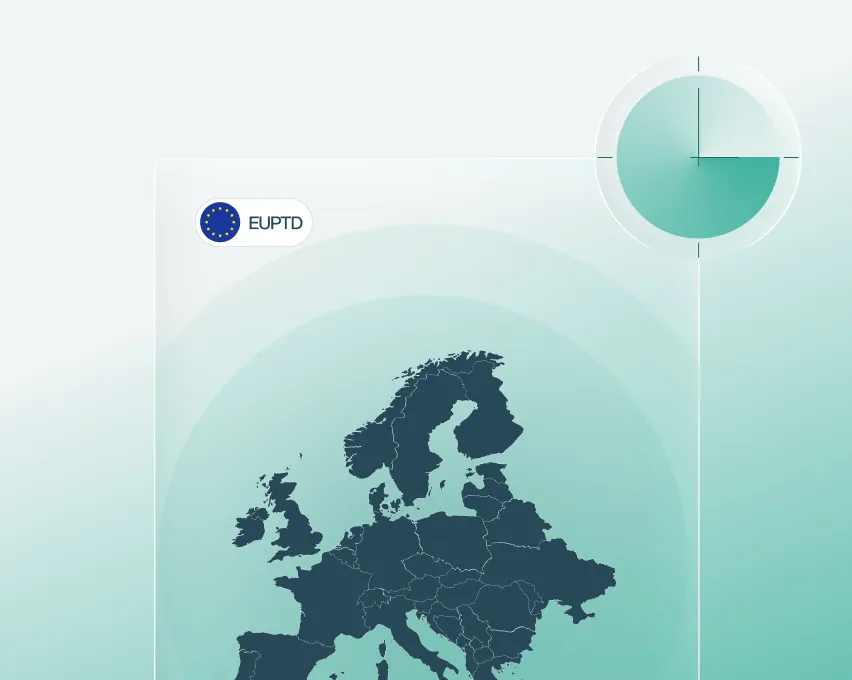
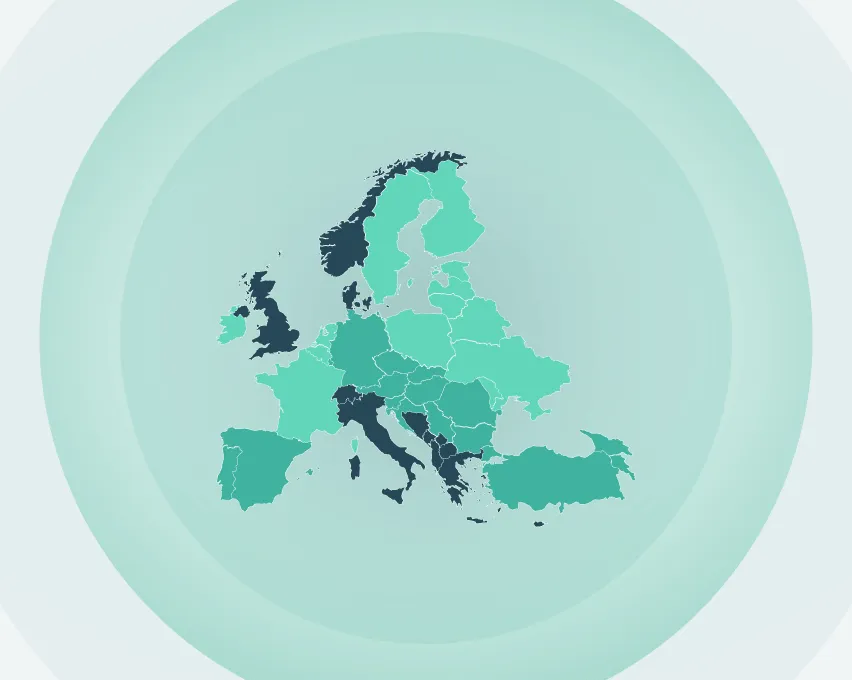
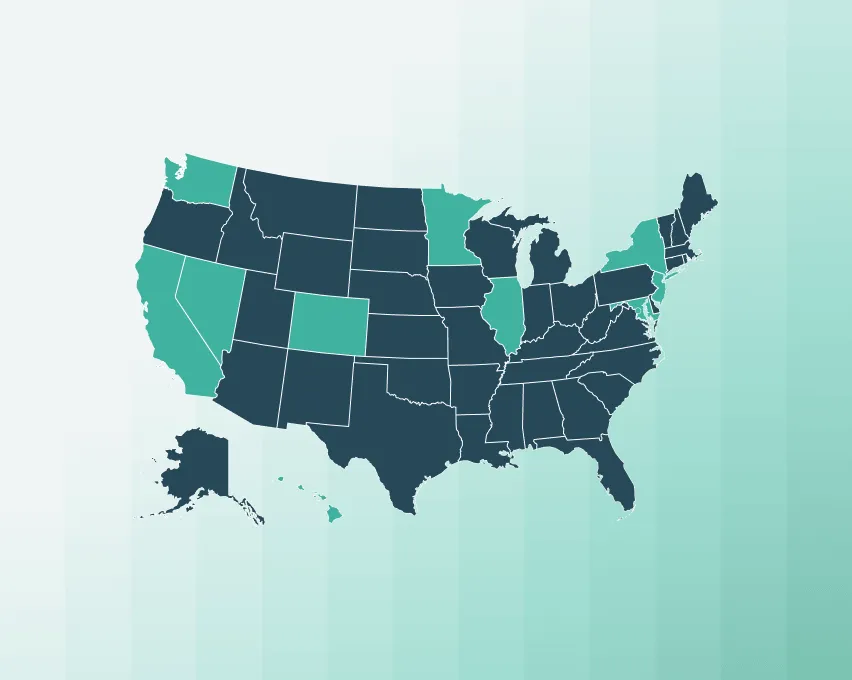
Federal compliance is not the only hurdle. Several states, including California, New Jersey, Rhode Island, and Washington D.C., have their own individual mandates with separate reporting requirements and deadlines.
If your software only handles federal transmission, your HR team is left manually navigating multiple state tax portals, each with its own unique file specifications.
One nuance that often catches multi-state employers off guard: under the Paperwork Burden Reduction Act, ALEs are no longer required to automatically furnish Form 1095-C to all employees. Workers must request it.
However, California, New Jersey, and Rhode Island maintain their own furnishing requirements that operate independently of the federal rule change. A vendor who only tracks federal obligations will leave you exposed at the state level.
What to Look For: Your ACA partner should monitor the legislative landscape and adapt to new state mandates without requiring your team to become experts in local tax codes.
What Data Validation Should ACA Software Perform Before IRS Filing?
ACA reporting requires you to aggregate and transmit highly sensitive PII (Personally Identifiable Information), including Social Security Numbers (SSNs), home addresses, and dependent data. But the more common filing risk is accuracy, not security alone.
What to Look For: Beyond standard encryption, ask about TIN Validation. A leading cause of “Accepted with Errors” status from the IRS AIR System is a mismatch between an employee’s name and Taxpayer Identification Number. A strong solution validates this before transmission, not after.
What Should You Ask an ACA Vendor Before Signing?
Ask these five questions to test the depth of the solution:
- Data Aggregation: “How does your solution handle Aggregated ALE Groups (Controlled Groups) to ensure we have a unified view of our workforce across all EINs?”
- Human Oversight: “Do we get a dedicated data analyst who validates our data, or are we reliant on a generic support ticket system?”
- Audit Defense: “If we receive a Letter 226J in three years, will you help us draft the response and provide the supporting data?”
- Integrations: “Do you have native integrations with our specific payroll system to automate data ingestion?”
- Look-Back Automation: “Can you show me exactly how the system calculates a break-in-service for a re-hired employee?”
What Does a Full-Service ACA Partner Provide That Software Alone Cannot?
The IRS doesn’t audit software. It audits employers. True risk management requires a hybrid approach: the efficiency of automation paired with the oversight of regulatory experts. This is the philosophy behind ACA Complete® by Trusaic.
- Monthly Data Monitoring: We digest your payroll data continuously, flagging affordability risks and eligibility changes in real-time.
- Expert Validation: You are paired with a designated data analyst who validates your codes and logic, ensuring your “Black Box” is transparent and accurate.
- Full Audit Defense: If the IRS ever inquires about a return we filed, Trusaic steps in. We help draft the response, pull the supporting data, and stand behind our work. Trusaic has helped clients avoid more than $1 billion in proposed ACA penalties. Our penalty dispute record on returns we prepared stands on its own.
Frequently Asked Questions
What is the current ACA affordability threshold?
The ACA affordability threshold for 2026 is 9.96% of an employee’s household income, per IRS Rev. Proc. 2025-25. Because household income is difficult to verify directly, most employers apply one of three safe harbor proxies.
The W-2 Wage Safe Harbor tests whether the employee’s required contribution exceeds 9.96% of Box 1 wages on their Form W-2.
The Rate of Pay Safe Harbor tests against 9.96% of the employee’s monthly salary or their lowest hourly rate multiplied by 130 hours, the most practical proxy for variable-hour and seasonal workforces.
The Federal Poverty Level Safe Harbor tests against 9.96% of the federal poverty guideline for a single-person household and offers the most predictability, since the calculation is the same for every employee regardless of pay.
What are the current ACA penalty amounts under §4980H?
For 2026, the §4980H(a) penalty is $3,340 per full-time employee annually (minus the first 30). The §4980H(b) penalty reaches $5,010 per full-time employee who received a marketplace premium tax credit.
The total (b) exposure in any given month is capped at the (a) penalty liability for that same period. No employer will owe more under (b) than they would have owed under (a). Both figures are indexed annually by the IRS.
What triggers an IRS Letter 226J?
Letter 226J is issued when the IRS determines that an ALE may owe an Employer Shared Responsibility Payment. It is typically triggered when a full-time employee receives a premium tax credit on a marketplace exchange and the employer’s filing reflects a missing, unaffordable, or incomplete coverage offer.
Employers have 90 days from the date of the letter to respond, an extension from the prior 30-day window, codified by the Employer Reporting Improvement Act for all notices issued on or after January 1, 2025.
Are Employers Required to Furnish Form 1095-C to Employees?
Under the Paperwork Burden Reduction Act, effective for tax year 2024 returns, ALEs are no longer required to automatically distribute Form 1095-C. Employees must request it, and employers must post a notice of that right. However, employers with workers in California, New Jersey, and Rhode Island must still meet those states’ separate furnishing deadlines, which operate independently of the federal rule.