
















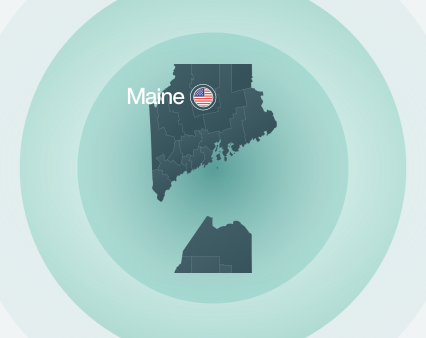
Maine is the latest state to require employers to disclose pay ranges to job applicants and employees. Gov. Janet Mills signed LD 54 — “An Act to Require Employers to Disclose Pay Ranges and Maintain Records of Employees’ Pay Histories” — into law on April 24, 2026. The law takes effect July 29, 2026, and is codified at 26 M.R.S.A. § 622-A.
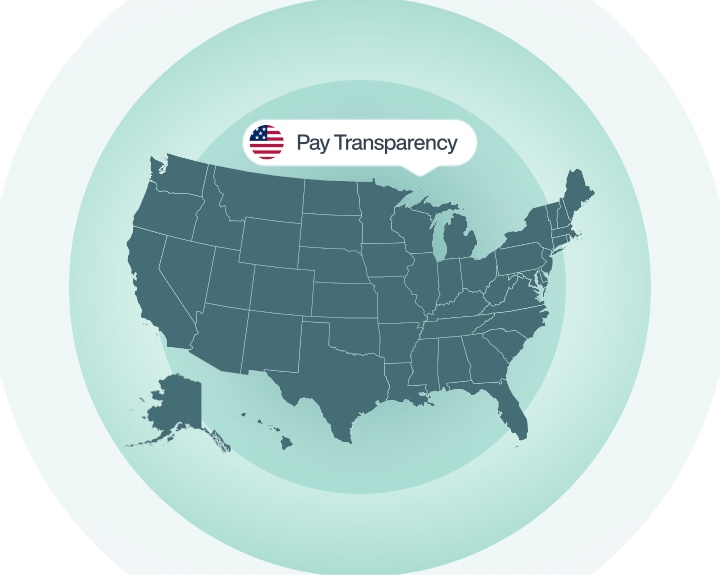
Maine joins a growing list of states, including Delaware and Virginia, that have enacted pay transparency requirements set to take effect this year.
What Employers Need to Know
LD 54 creates new job posting, disclosure, and recordkeeping obligations:
- Employers with 10 or more employees must include a prospective “range of pay” in any job posting, whether the posting is made directly by the employer or through a third party, and whether it’s electronic or printed.
- “Range of pay” means the pay range an employer anticipates relying on to set wages for the position, which may reference: an applicable pay scale; a previously determined range of wages for the position; the actual range of wages for those currently holding equivalent positions; or the budgeted amount for the position.
- Range of pay does not include compensation based solely on commission. If a position is compensated solely on commission, the posting must state that instead of listing a range.
- Upon an employee’s request, an employer must disclose the range of pay it offers for the position the employee currently holds.
- Employers must maintain a record of each position an employee has held and that employee’s pay history in each position, for the duration of employment and for three years after the employee’s termination.
Penalties and Enforcement
An employer in violation of these requirements is subject to a fine of $100 to $500 for each violation.
The law directs funding toward enforcement: it appropriates funds for a new Labor and Safety Inspector position within the Maine Department of Labor specifically to enforce the pay range disclosure and recordkeeping requirements.
Why It Matters
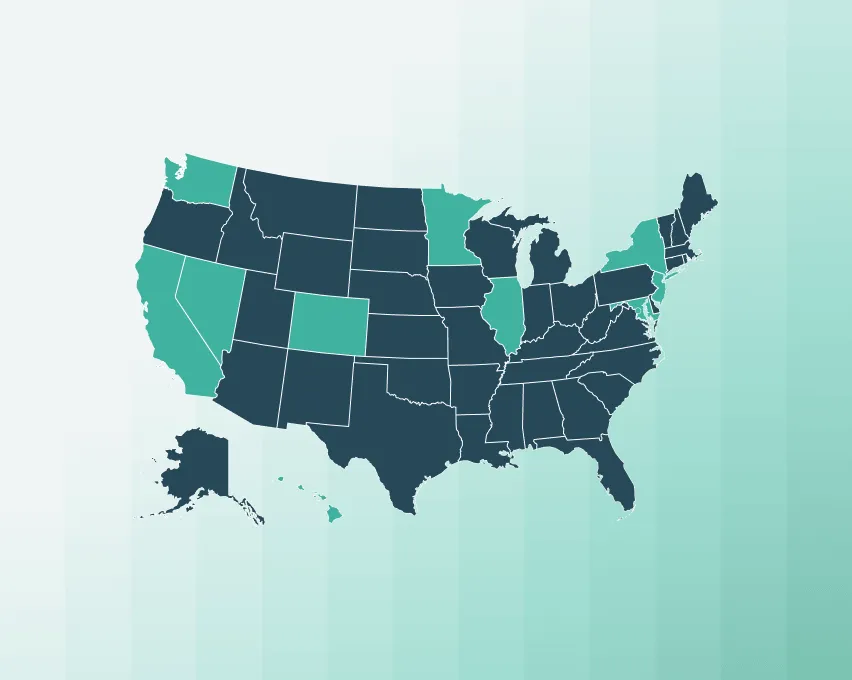
Pay transparency laws in the U.S. are quickly becoming the norm rather than the exception. Maine adds to a fast-expanding patchwork of state and local requirements, and its combination of job posting disclosure, employee-request rights, and multi-year pay history recordkeeping signals that these laws are growing both broader in scope and more detailed in what they expect employers to track.
For multistate employers, the practical takeaway is that compliance can no longer be handled jurisdiction by jurisdiction at the last minute. Now is the time to assess your job postings, evaluate your compensation structures, and ensure you are ready to meet Maine’s requirements — while staying ahead of the next wave of laws taking effect across the country.
How Trusaic Can Help
Trusaic’s PayParity® and Salary Range Finder® solutions work in tandem to help employers comply with pay transparency requirements while advancing meaningful pay equity.
- PayParity® identifies pay inequities across gender, race/ethnicity, age, and more using intersectional, regression-based analyses. It also supports remediation planning, ensuring your compensation decisions are both fair and legally-defensible.
- Our Remediation Optimization Spend Analysis (R.O.S.A.) works as PayParity’s remediation engine to find the most cost-effective way to close pay gaps.
- Salary Range Finder® empowers HR and compensation teams to create data-driven salary bands that are competitive, equitable, and transparent. Real-time guidance ensures new hire offers are aligned with both market rates and your internal pay structures — helping you attract talent while maintaining trust within your workforce.
- Pay Decisions: Generate fair, competitive offers instantly from Workday.
With real-time pay guidance, managers, recruiters, and HR teams can make fair and competitive pay decisions faster — reducing time-to-hire, improving offer acceptance rates, and ensuring salary offers are aligned with your pay equity goals.