

















Update: Delaware Gov. Matt Meyer signed the bill into law Sept. 26, 2025.
The Delaware General Assembly passed House Bill 105 June 30, mandating that employers must include compensation information in all job postings.
Delaware becomes the 13th U.S. state (including Washington D.C.) to pass a pay transparency law. Minnesota, Vermont, and New Jersey all had laws take effect this year, with Massachusetts still to come.
What Employers Need to Know
The law doesn’t take effect until Sept. 26, 2027. Here are the basics:
- It applies to employers with more than 25 employees.
- For jobs located in Delaware and noninternational remote positions offered by an employer based in Delaware all job postings must include the minimum and maximum salary or wage range, set in good faith, as well as a description of benefits and other compensation.
- If an external or internal posting for the job opportunity has not been made available to an applicant, the employer must provide the applicant the hourly or salary compensation range and a general description of the benefits and other compensation for the job opportunity prior to any offer or discussion of compensation and at any time at the applicant’s request.
- Employers must maintain records of pay ranges and job descriptions for current employees for at least three years after separation.
Full-time women workers in Delaware earn $54,740 annually compared to $62,740 for men — 87 cents on the dollar, with even wider disparities for women of color, according to research.
Penalties and Enforcement
The Delaware Department of Labor (DOL) will oversee enforcement. Employers who fail to comply in good faith may face:
- Civil penalties up to $500 for a second violation
- Fines up to $10,000 for each subsequent violation
The Challenge: Accurate, Equitable Salary Ranges
This new requirement poses a common challenge for employers: how do you determine and disclose salary ranges that are both market-competitive and aligned with internal equity?
That’s where Trusaic comes in.
Trusaic’s PayParity® and Salary Range Finder® solutions work in tandem to help employers comply with pay transparency requirements while advancing meaningful pay equity.
- PayParity identifies pay inequities across gender, race/ethnicity, age, and more using intersectional, regression-based analyses. It also supports remediation planning, ensuring your compensation decisions are both unbiased and legally-defensible.
- Salary Range Finder empowers HR and compensation teams to create data-driven salary bands that are competitive, equitable, and transparent. Real-time guidance ensures new hire offers are aligned with both market rates and your internal pay structures — helping you attract talent while maintaining trust within your workforce.
With real-time pay guidance, managers, recruiters, and HR teams can make unbiased, competitive pay decisions faster — reducing time-to-hire, improving offer acceptance rates, and ensuring salary offers are aligned with your pay equity goals.
Why It Matters
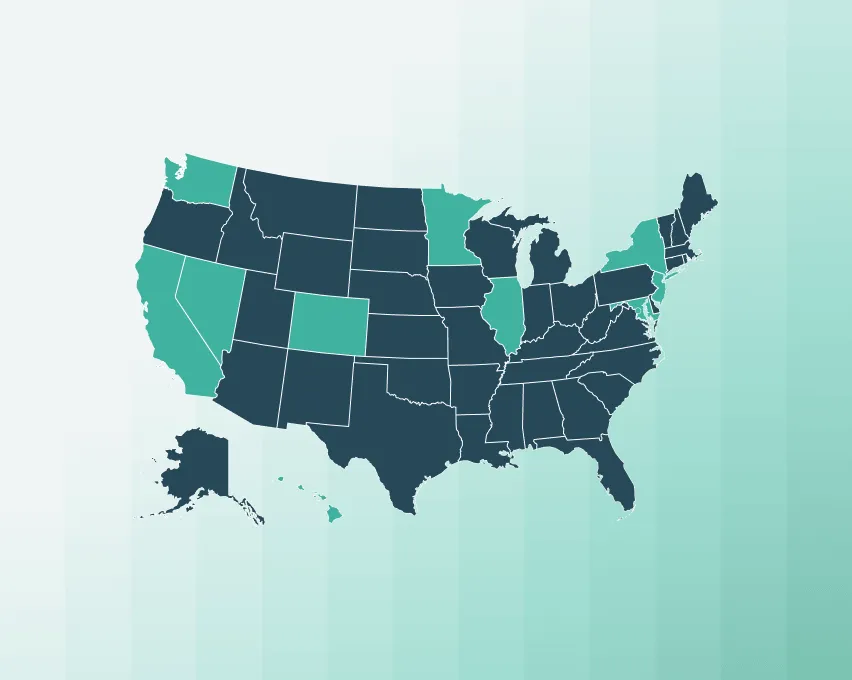
Pay transparency laws are quickly becoming the norm. Delaware is set to join a growing list of states — including California, Colorado, Hawaii, Illinois, Maryland, Minnesota, New Jersey, New York, Washington, Washington D.C, and Vermont. — that require salary ranges on job postings.
By leveraging solutions like PayParity and Salary Range Finder, employers can stay ahead of regulatory change, build trust with candidates and employees, and foster a culture of equity and transparency.
Now is a good time to assess your job postings, evaluate your compensation structures, and ensure you’re ready to meet Delaware’s new requirements.
Learn how our pay transparency solutions can simplify compliance and set your organization up for long-term pay equity success.