








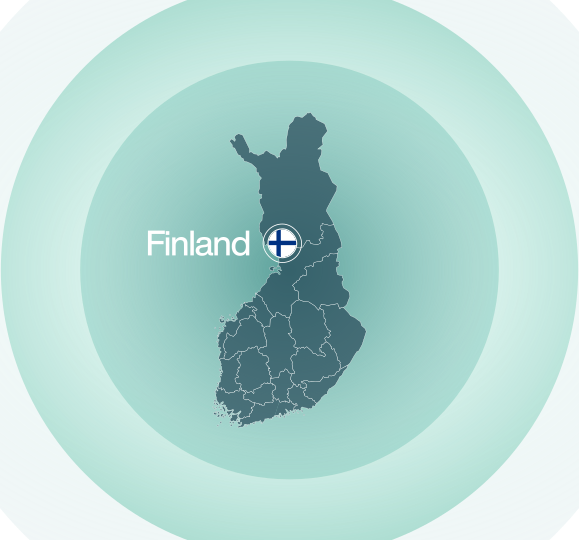
Finland’s EU Pay Transparency Directive transposition continues to move through Parliament, and employers now have their first detailed look at how the country intends to collect pay data under the law.
The government’s bill (HE 129/2026 vp) was submitted to Parliament on 15 September 2026. On 6 October, the Committee on Employment and Equal Opportunities received additional written statements on the bill from the Ministry of Social Affairs and Health and the Ministry of Justice, a routine step before the committee issues its report. The draft would enter into force on 1 January 2027, with reporting beginning in May 2028 for employers with 150 or more employees.
While that process continues, Finland’s Incomes Register (Tulorekisteri) published guidance on 30 September 2026 on how it expects to collect pay transparency reporting data. The guidance is written for reporting purposes, but its definitions of pay components, worker categories, and which employees to include are likely to inform compliance with the Directive’s right to information (RTI) as well, for consistency across the two obligations. More detailed instructions will be published at the end of this year or early next year.
How Will Finland Collect Pay Transparency Data?
As previously reported, Finland will rely on its existing Incomes Register data collection, run through Statistics Finland, to compile most of the required pay data from employers. The exception is pay gaps by worker category, which employers must calculate separately and submit directly to Statistics Finland.
What New Reporting Obligations Does the Guidance Establish?
The guidance confirms a phased start date for the additional data employers must submit:
- 150+ employees: additional data submission begins on or after 1 January 2027
- 100-149 employees: additional data submission begins on or after 1 January 2030
Employers will report electronically through their earnings payment report and a separate report, both submitted as an XML file or through payroll and benefits software that connects to the Incomes Register’s API.
Two categories of data that were previously voluntary become mandatory under the new requirement:
- Monetary wages itemized by income type under the 200 series, using reporting method 2
- Employment relationship data, including whether the position is full-time or part-time, regular weekly working hours, and, for part-time employees, the part-time percentage
How Will Employers Report Pay Gaps by Worker Category?
The employer’s separate report, due beginning in May 2028 for employers with 150 or more employees, will contain pay gaps by worker category, broken down into basic wage and complementary and variable pay (CVP) items, reported as both hourly and annual earnings.
The published formula is the average wage of male employees divided by the average wage of female employees, multiplied by 100, rounded to the nearest whole percentage. Notably, the worked example accompanying the guidance appears to swap the formula to female divided by male, an inconsistency that will need to be addressed. Either reading of the formula also runs counter to the calculation method set out in the Directive itself, which would affect how reporting modules are configured for Finland. The more detailed guidance expected to follow from the Incomes Register may resolve the issue.
How Does the Guidance Define Worker Categories and Covered Employees?
The guidance also clarifies two questions that have come up across multiple Member States’ transposition efforts.
On headcount, employers must count all employees working in service of the company, including those posted abroad, with limited exceptions. Temporary or short-term seasonal workers, including summer employees, trainees, and similar peak-period help, are excluded, as are independent contractors. The count applies only to the employer itself rather than a broader corporate group. The threshold is assessed across the full calendar year rather than on a single date: the reporting obligation applies once the employee count exceeds the threshold for most of the year, which in practice means at least nine months.
On worker categories, employees are grouped using objective, gender-neutral criteria: competence required for the work, responsibility, workload, working conditions, and other relevant factors, and employers may use collective agreement criteria where they exist. Each employee may belong to only one category. Notably, the guidance directly addresses a question many Member States have left open: where only one gender is represented in a category, employers should report that fact rather than calculate or report a pay gap for that category. Employees performing the same work, or work of equal value with similar overall requirements, belong to the same category even following events such as a merger.
What Should Employers With Finland-Based Operations Do Now?
With the bill still in committee and reporting technical guidance still developing, employers have a window to prepare rather than react. That means reviewing how compensation data is currently itemized in Incomes Register submissions against the 200-series income types, confirming employment relationship data (full-time/part-time status, weekly hours, part-time percentage) is captured accurately, and beginning to map employees into worker categories using the objective criteria described above.
How Trusaic Can Help
At Trusaic, we provide employers across the EU with solutions to comply confidently with all of the components of the Directive.
Our Complete EU Pay Transparency Solution enables compliant pay systems, ensures gender-neutral job evaluations, and automates complex reporting obligations to keep you one step ahead of EU pay transparency enforcement.
- PayParity® analyzes your rewards data (compensation/benefits in kind) and quickly identifies any potential unjustified inequities. It enables you to more easily comply with Article 7 (right to information) and Article 6 requirements (pay setting and progression policy).
- Our Remediation Optimization Spend Analysis (R.O.S.A.) works as PayParity’s remediation engine to find the most cost-effective way to close nominal pay gaps to ensure compliance.
- Automated RTI workflows: Our bi-directional integrations with global HCM platforms allow pay equity data to flow securely from the Trusaic platform back into the HCM. Employees can then access their RTI reports directly within their existing HR systems. This eliminates manual report generation and reduces compliance risk.
- For organizations that prefer platform-based access, RTI reports can also be generated and delivered securely through the PayParity platform, with role-based permissions and full auditability.
- Salary Range Finder® ensures equitable pay at the point of hire to prevent any increases in pay gap and enables you to easily comply with the Directive’s salary range disclosure and salary history ban requirements.
- Pay Decisions: Generate fair, competitive offers instantly from Workday.
- Regulatory and Pay Transparency Reporting™ captures your pay equity findings and generates compliant reports.
Trusaic supports GDPR compliance and can assist any organization in any EU state in meeting its obligations under both the EU Corporate Sustainability Reporting Directive and the EU Pay Transparency Directive.
Visit our always updated Member State Transposition Monitor to stay on top of the latest EU Pay Transparency Directive developments.