












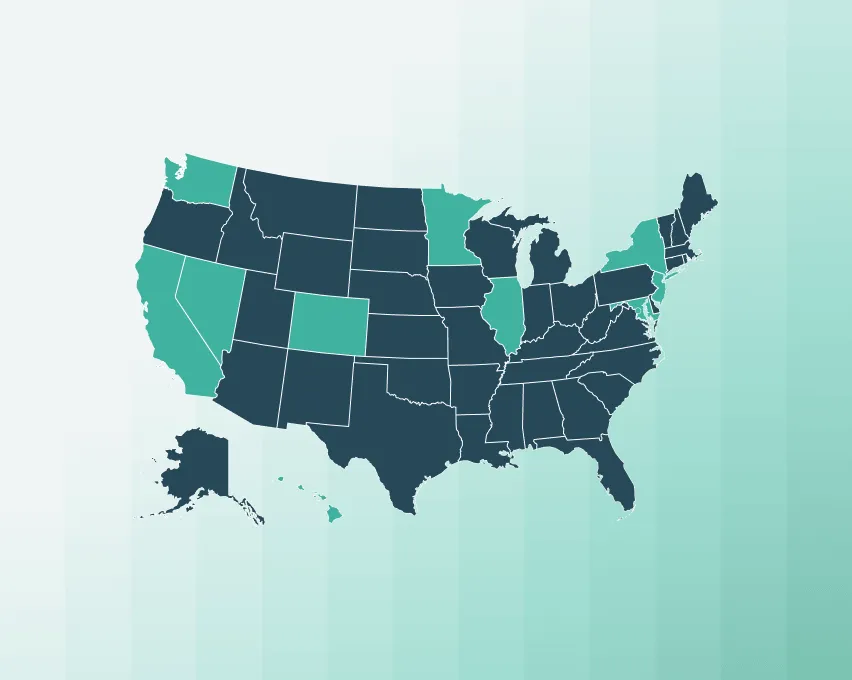




On June 4, 2026 the Governor of Colorado signed HB 26-1207 into law, establishing a new state-level EEO-1 data reporting obligation for employers operating in the state.
The law formally entered into effect Aug. 12, 2026, but the first EEO-1 data disclosure in Colorado will not be required until company-specific periodic report filing deadlines on or after July 1, 2027.
Notably, the requirement stands on its own regardless of what happens at the federal level. Even if the federal government repeals or discontinues federal EEO-1 data collection, Colorado employers will still be required to compile and report this data to the state.
What Will Be Required for Colorado Employers?
The law applies to private sector employers that conduct business in Colorado, employ 100 or more workers, and were required, as of March 1, 2026, to submit EEO-1 data to the U.S. Equal Employment Opportunity Commission (EEOC).
These employers must provide their EEO-1 data within the employer’s periodic report to the Colorado Secretary of State. Importantly, the data reported must be based on the EEO-1 form as it existed on March 1, 2026. Even if the federal form changes or federal collection ends, the March 2026 version sets the standard for what Colorado requires.
For employers less familiar with the federal filing, the EEO-1 Component 1 report captures demographic workforce data. Employers collect data from an employer-selected workforce snapshot pay period and report headcounts broken down by:
- Sex: male and female designations.
- Race/ethnicity: White, Hispanic or Latino, Black or African American, Asian, Native Hawaiian or other Pacific Islander, American Indian or Alaska Native, and two or more races.
- Job category: each employee is classified into one of the 10 EEO-1 job categories, ranging from executive/senior-level officials and managers through professionals, sales workers, administrative support, and service workers.
Periodic reports are required under Section 7-90-501 of the Colorado Revised Statutes. These reports are due annually during the entity’s reporting month, which is based on the anniversary month of the entity’s formation. Employers have a filing window that runs from two months before through two months after that month, with no penalty for filing anywhere in that window.
Once filed, these periodic reports, now including EEO-1 data, become matters of public record.
What Does It Means for Colorado Employers?
The most significant shift is that EEO-1 demographic data, historically submitted confidentially to the EEOC, will become publicly accessible through Colorado’s periodic report system. Unless Colorado takes additional steps to ensure confidentiality of this data, employers should prepare for this data to be viewable by employees, candidates, advocacy groups, and competitors alike.
Compliance also carries real consequences under the existing periodic report noncompliance framework. A report filed after the window closes will incur a late filing fee. From there, an entity has 60 days to file before it is deemed “delinquent,” and delinquency triggers a cascade of business risks:
- A delinquent entity may not maintain a proceeding in any Colorado court to collect its debts until the delinquency is cured.
- The entity loses its good standing with the state.
- Persistent delinquency can ultimately lead to dissolution.
In practical terms, this means an overlooked EEO-1 filing is no longer just a federal compliance matter. It can affect an employer’s legal standing and ability to operate in Colorado. Employers should confirm their reporting month, build the EEO-1 data requirement into their annual periodic report process, and recognize that the March 2026 version of the form is the benchmark they will need to maintain going forward.
Because this data will be public, accuracy and equity matter more than ever. Demographic workforce data that reveals significant disparities across job categories can invite scrutiny from regulators, employees, and the public.
How Trusaic Can Help
Trusaic’s Pay Equity Software Suite enables Colorado employers to comply with the new annual EEO-1 reporting obligations.
Trusaic’s PayParity® solution helps employers organize and analyze workforce demographic and pay data using intersectional, regression-based analyses across gender, race/ethnicity, age, and more. This will surface pay inequities and supporting remediation planning so your compensation decisions are fair and legally defensible.
Our Regulatory Pay Transparency Reporting™ solution enables employers to manage jurisdiction-specific reporting obligations from a single platform. Generate the reports each regulator requires, including Colorado’s EEO-1 reporting disclosure.