









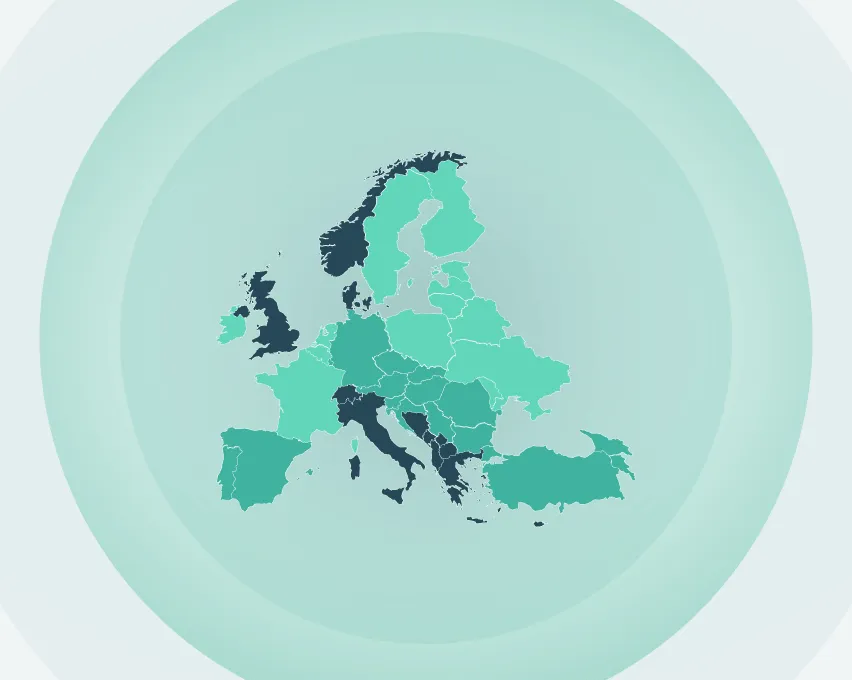











As multinational employers pour resources into preparing for the EU Pay Transparency Directive (EUPTD), a quieter but consequential shift has taken hold closer to home: U.S. states are tightening enforcement of their own pay transparency and pay data reporting laws — and in California, the penalties for failing to report are no longer discretionary.
The EUPTD’s June 2026 transposition deadline and the complexity of its Right to Information requirement have understandably dominated planning agendas. But neglecting established U.S. state obligations in the process can expose employers to immediate, mandatory financial penalties that scale with headcount.
What Changed About California’s Pay Data Reporting Penalties?
California has long required private employers with 100 or more employees (with at least one California employee) to submit annual pay data reports to the California Civil Rights Department (CRD). What has changed is the consequence for failing to do so.
Amendments to Section 12999 of the Government Code, effective in 2026, remove judicial discretion in penalty enforcement. Previously, courts had latitude in whether and how to assess penalties for non-filers. Under the amended framework, if the CRD requests civil penalties for an employer’s failure to file the required report, a court must impose that penalty.
The penalty structure is straightforward — and scales directly with workforce size:
- $100 per employee for a first violation
- $200 per employee for each subsequent violation
For a California employer with 1,000 employees, a first violation translates to a mandatory $100,000 penalty; a subsequent violation, $200,000. The per-employee construction means that the larger the workforce, the steeper the exposure — and the elimination of judicial discretion removes a previously available avenue for relief.
This change reframes pay data reporting from a compliance formality into a hard-edged enforcement priority. Filing late, filing incompletely, or failing to file at all now carries a defined, non-negotiable cost.
Why Are U.S. Obligations Easy to Overlook Right Now?
The timing is the issue. The EUPTD’s transposition deadline and the operational complexity of provisions like Article 7 Right to Information have absorbed the attention of global HR, legal, and compliance teams. Organizations are building new workflows, valuing benefits in kind, and standing up data infrastructure to meet European requirements that come online in 2026 and beyond.
In that environment, it is easy to treat established U.S. state obligations as settled background noise — already handled, low-risk, unlikely to change. California’s move to mandatory penalties is a clear signal that U.S. enforcement is sharpening even as the EU framework takes shape.
The compliance calendars overlap, but the obligations are independent. An employer can be fully on track for EUPTD readiness and still incur a mandatory five- or six-figure penalty for a missed California filing. Global compliance is not a zero-sum exercise; U.S. state requirements demand sustained attention regardless of European workload.
Where Else Are U.S. States Enforcing Pay Transparency Penalties?
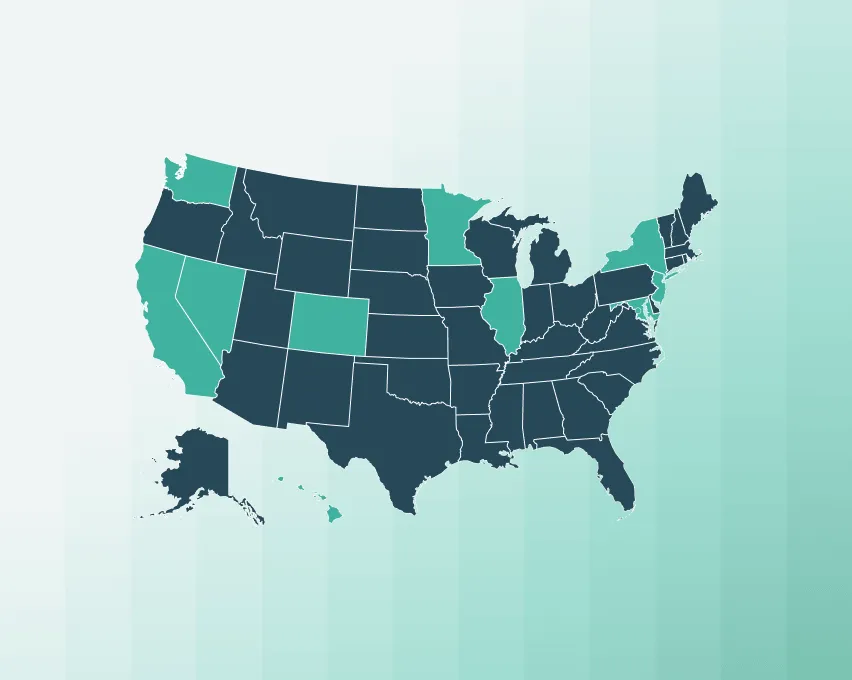
California is not an outlier. A growing number of U.S. states attach real enforcement consequences to pay transparency, equal pay, and reporting obligations. The mechanisms vary — fines, certificate revocation, withheld public contract payments, and escalating penalty tiers — but the direction is consistent.
Illinois
Non-compliance in Illinois can result in suspension or revocation of the Equal Pay Registration Certificate (EPRC), or civil penalties of up to $10,000. The certificate consequence is significant, as it directly affects an employer’s ability to operate in compliance with state requirements.
Massachusetts
Massachusetts uses an escalating tier structure. Violations are punishable by a warning for the first offense, a fine of up to $500 for the second offense, and a fine of up to $1,000 for the third offense. A fourth or subsequent offense may result in a fine of up to $25,000.
Minnesota (contractors)
For non-compliant contractors, the Minnesota Department of Human Rights (MDHR) can issue fines of up to $5,000 per calendar year for each contract. MDHR can also suspend or revoke a non-compliant contractor’s certificate — a step that could cancel current contracts and limit the contractor’s ability to bid on future projects.
New Jersey (contractors)
Employers that violate New Jersey wage laws — including falsifying or failing to maintain or provide access to records, delaying enforcement, or underpaying wages — face fines of $100–$1,000, imprisonment of 10–90 days, or both, per offense. Separately, if a contractor fails to file the required information in a timely manner, money may be withheld from the public works contract.
New York City (not yet in effect)
New York City has adopted, but not yet brought into effect, a penalty framework for pay transparency violations. Under it, a first offense would draw a written warning if the employer provides documentation within 30 days that the violation has been cured. If not cured, the employer would be subject to a $1,000 civil penalty. Subsequent offenses would face civil penalties of $5,000.
Taken together, these regimes demonstrate that U.S. pay transparency enforcement is neither uniform nor static. Employers operating across multiple states face a patchwork of obligations, deadlines, and penalty structures that require the same jurisdiction-by-jurisdiction diligence many are now applying to EU member states.
What Should Multinational Employers Do Now?
The core message is one of balance. Preparing for the EUPTD is essential, but it should not come at the expense of domestic compliance that carries immediate, enforceable penalties. Employers should:
- Treat U.S. and EU obligations as parallel priorities. Maintain compliance calendars for both, and ensure no filing deadline is deprioritized because of European workload.
- Confirm California reporting readiness. With mandatory penalties now in force, verify that pay data reports are complete, accurate, and filed on time. (California’s 2025 reporting cycle was due May 13, 2026, with significant structural changes arriving for 2027 reporting.)
- Map the multistate landscape. Identify every U.S. jurisdiction where the organization has reporting or certification obligations, and document the applicable deadlines and penalty exposure.
- Centralize compensation data. The same data infrastructure that supports EUPTD compliance — clean, consolidated, total-compensation data — also supports accurate, timely U.S. reporting. Build once, use across jurisdictions.
- Strengthen governance and audit trails. Maintain defensible documentation of filings and pay decisions across all jurisdictions to withstand audits and investigations.
The states moving toward mandatory and escalating penalties reward proactive employers. Those that maintain disciplined U.S. compliance alongside their EU preparation will avoid unnecessary financial exposure and enter both landscapes with confidence.
How Trusaic Can Help
At Trusaic, we provide employers across California, the U.S., and the EU with solutions to comply confidently with expanding pay reporting and transparency requirements.
Our Pay Equity Software Suite enables compliant pay systems, ensures gender-neutral job evaluations, and automates complex reporting obligations to keep your organization one step ahead of enforcement.
- PayParity® analyzes base pay and all complementary or variable components using legally defensible regression-based analysis.
- Our Remediation Optimization Spend Analysis (R.O.S.A.) works as PayParity’s remediation engine to find the most cost-effective way to close pay gaps.
- Regulatory Pay Transparency Reporting™ automates complex state and global reporting requirements, including California’s expanded regime and the EUPTD.
- Salary Range Finder® helps employers build equitable, transparent salary ranges aligned with local laws.
- Pay Decisions: Generate fair, competitive offers instantly from Workday.
Trusaic supports compliance with CCPA/CPRA, GDPR, and emerging pay transparency regulations worldwide. Our end-to-end solutions enable organizations to meet the evolving requirements of and build a sustainable, defensible pay equity framework.