















The U.S. Equal Employment Opportunity Commission (EEOC) has proposed rescinding the EEO-1 reporting obligation and its related demographic data collections. But until any rescission is finalized, the requirement remains fully in force, and employers should continue preparing to file in 2026.
The EEO-1 Component 1 report is the mandatory annual data collection that requires all private sector employers with 100 or more employees to submit workforce demographic data — including data by job category, sex, and race or ethnicity — to the EEOC. It has been a fixture of federal workforce reporting for roughly 60 years.
What Has the EEOC Has Proposed?
On May 14, 2026, the EEOC submitted a proposed rule for review by the Office of Information and Regulatory Affairs (OIRA) at the Office of Management and Budget (OMB) to rescind “EEO-1, EEO-2, EEO-3, EEO-4, EEO-5, and the Reporting Requirement under Title VII, the ADA, GINA, and the PWFA.”
On July 23, 2026, the EEOC formally issued its proposed rule to rescind and remove the requirements for employers to file EEO-1, EEO-2, EEO-3, EEO-4, EEO-5, and EEO-6 reports, along with the associated recordkeeping and retention requirements.
Despite the collection’s roughly 60-year history, the Commission’s stated rationale is that it has “preliminarily determined that the reports are inconsistent with equal employment opportunity law and potentially unconstitutional.”
The EEOC further concluded that the collections are “overly burdensome, offer insufficient utility, and may be misused.”
What Happens Next?
Before any rescission can take effect, the proposed rule must move through the Administrative Procedure Act (APA) process; a sequence that takes time and began with OIRA review.
The rule is now in a notice-and-comment period:
- Comments must be received on or before Aug. 24, 2026.
- A public hearing was scheduled to be held on Aug. 11, 2026.
If the Commission decides to move forward after considering the comments it receives, it will need to publish a final rule to formally rescind these obligations.
What This Means for the 2026 Filing Deadline
The impact on 2026 filing is unclear at this time, and employers should still plan to file this year.
- The current regulations (29 CFR 1602.7), until rescinded, require the filing be completed on or before Sept. 30. In practice, the EEOC has often set earlier deadlines — last year’s window closed June 24, 2025.
- A 2026 filing window has not yet been announced by the EEOC.
- The APA process for the proposed rescission may not conclude before the September 30 deadline. If it does not, the EEOC must set a 2026 EEO-1 filing deadline.
State-Level Reporting Isn’t Going Anywhere
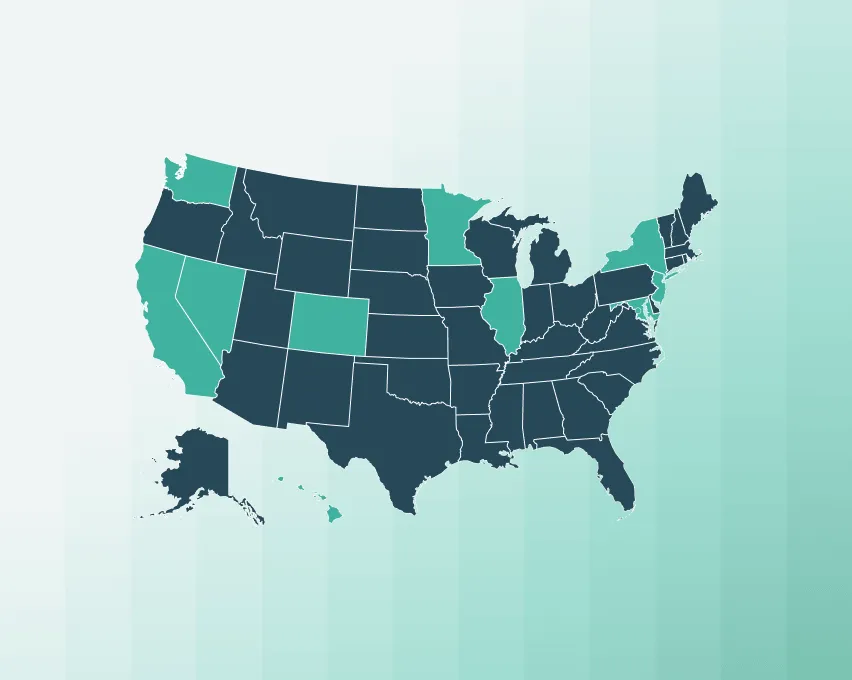
Even if the federal EEO-1 requirement is ultimately rescinded, comparable pay data and demographic reporting obligations remain firmly in place at the state level. Jurisdictions including California, Massachusetts, and Illinois maintain their own reporting regimes, with Colorado requirements coming soon. Notably, California does not permit employers to substitute an EEO-1 report for its state pay data report — and its requirements are expanding, not contracting. For multi-state employers, the practical takeaway is that demographic and pay data reporting obligations will persist regardless of what happens federally. In addition, aside from state-level reporting requirements, in cases of alleged pay discrimination, an employer may still be required by the EEOC to produce the same information collected under EEO-1 requirements.
Key Takeaway for Employers
While the rescission process moves forward, the requirement to collect the required EEO-1 reporting data and to meet the associated recordkeeping obligations remains in place. Employers should remain prepared to submit demographic workforce data, that is, employee data by race/ethnicity, sex, and job category, covering all full-time and part-time employees, and monitor EEOC guidance concerning future filing deadlines.
How Trusaic Can Help
Whether reporting obligations continue through the EEOC or arise from an expanding patchwork of state agencies, the underlying need is the same: clean, accurate, defensible workforce and compensation data — and a reliable way to file it wherever it’s required.
Trusaic’s PayParity® solution helps employers organize and analyze workforce demographic and pay data using intersectional, regression-based analyses across gender, race/ethnicity, age, and more — surfacing pay inequities and supporting remediation planning so your compensation decisions are unbiased and legally defensible.
Our Regulatory Pay Transparency Reporting™ solution enables employers to manage jurisdiction-specific reporting obligations from a single platform by generating the reports each regulator requires, tracking shifting deadlines and requirements across 50+ jurisdictions, and staying ahead of both federal and state reporting mandates as they evolve.
As the EEO-1 landscape shifts, the employers best positioned are the ones who treat demographic and pay data reporting as an ongoing discipline rather than an annual scramble. Now is a good time to confirm your data is ready for a 2026 EEO-1 filing if one is required, and for the state obligations that aren’t going anywhere.