





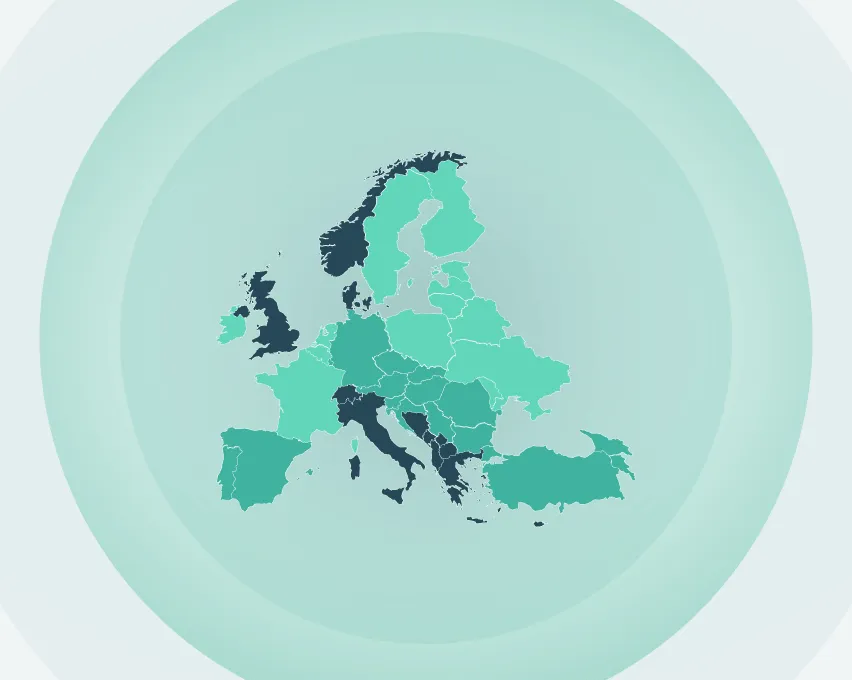









Greece has become the latest EU Member State to advance transposition of the EU Pay Transparency Directive (EUPTD), publishing a draft bill that amends the Labour Code to bring national law in line with the Directive’s pay transparency and equal pay requirements.
On 3 June 2026, the draft transposition was published and entered public consultation, with the consultation period running through 17 June 2026. The release followed a 26 May 2026 press statement in which the Minister of Labour and Social Security, Niki Kerameus, promoted the forthcoming bill and previewed several of its defining features.
Because the consultation period closes after the Directive’s 7 June 2026 transposition deadline, Greece will finalize its legislation after that date, joining the broader wave of Member States positioned to complete transposition in mid-to-late 2026.
While Greece’s draft follows the Directive fairly faithfully, it stands out for adding employer-protective features not seen in other Member States — most notably the ability to refuse abusive, repetitive Right to Information requests and the ability to claim damages where an employee misuses disclosed pay data. The sections below analyze the draft’s key provisions.
What Is the Status of Greece’s EU Pay Transparency Directive Transposition?
The draft is currently a working text in public consultation, the stage at which the government ministry collects feedback before the bill proceeds to the Greek Parliament. After consultation closes on 17 June 2026, the Ministry must review the feedback, make appropriate revisions, and explain which comments were incorporated and why others were rejected. The amended bill then goes to the relevant parliamentary committee, followed by debate in the full plenary session, and only then to presidential signature and publication.
This means enactment is unlikely to be immediate. Greece has missed the Directive’s 7 June 2026 transposition deadline, and the legislative path ahead is further complicated by the Greek Parliament’s customary recess, which generally runs from around June or July until October. Employers should plan for a multi-month timeline to final publication rather than a near-term enactment.
The draft itself contemplates that the law enters into force upon publication in the official gazette, unless an individual provision specifies otherwise.
All citations are to the Labour Code, as proposed to be amended.
How Does Greece’s Draft Define Pay, Pay Levels, and Scope?
The draft amends Article 35 of the Labour Code to adopt definitions that align closely with the EUPTD.
- Remuneration means the usual basic or minimum wages or salaries and any other consideration, in cash or in kind, that an employee receives directly or indirectly — including supplementary or variable elements — in consideration for their work from their employer.
- Remuneration level (pay level) means gross annual earnings and gross hourly earnings.
Both mirror the Directive’s total-compensation view of pay, reinforcing that employer analyses and disclosures must capture all components of remuneration, not base salary alone.
On scope, Article 47 applies the core obligations (Articles 37, 56A, 56B, 56C, and 56D) to employers and employees with a contract or dependent employment relationship in both the private and public sectors, while the pre-employment provisions of Article 41 apply to job applicants.
How Does Greece Define Worker Categories and Work of Equal Value?
The draft establishes the framework employers will use to group comparable roles and assess equal-value work.
Category of worker (Art. 35). A category comprises workers performing similar work or work of equal value, grouped in a non-arbitrary manner on the basis of the impartial, objective, and gender-neutral criteria in Article 37(3). Categories are created by the employer or may result from applicable collective labour agreements, provided they do not involve discrimination.
Work of equal value (Art. 37(3)). Employers must apply criteria that:
- (i) are objective and gender neutral;
- (ii) arise following agreement with employees’ representatives, where such representatives exist; and
- (iii) take into account skills, effort, responsibility, and working conditions, as well as any other relevant factor such as seniority and relevant non-technical skills. The explicit inclusion of seniority and non-technical skills is a clarification beyond the Directive’s baseline framing.
Pay structures (Art. 37(2)). Pay structures must:
- (i) be based on objective, gender-neutral criteria;
- (ii) allow comparative assessment of jobs and worker categories so equal pay can be verified;
- (iii) be documented in writing with a review procedure;
- (iv) clearly identify the remuneration elements for each category; and
- (v) be applied in a gender-neutral manner. Where an employer is bound by a collective labour agreement (CLA), it may use the classifications in that agreement — the operational link to the minister’s point that CLAs can anchor compliant pay structures.
What Pay Criteria Must Greek Employers Make Accessible?
Under Article 37(4), employers must make readily accessible to employees the criteria used to determine pay, pay levels, and salary progression. Consistent with the Directive’s optional exemption, employers with fewer than 50 employees are exempt from providing pay progression criteria.
The draft also commits the Ministry of Labour and Social Security, working with other government bodies, to make evaluation tools, methods, technical assistance, and training available (Art. 37(6)). Greece’s Fair Pay project already released an employer training manual in February 2026 to support understanding and implementation.
What Are Greece’s Right to Information Requirements?
The draft introduces Right to Information (RTI) obligations through a new Article 56A of the Labour Code.
Upon an employee’s request, employers must provide, in writing, information on the employee’s individual pay level and the average pay levels — broken down by gender — for categories of employees performing similar work or work of equal value.
Several procedural features define how RTI will operate in practice:
- Response timelines. Employers must respond to an initial request within two months. The draft does not set a statutory deadline for responding to follow-up requests where information is inaccurate or incomplete.
- Right to refuse. Employers may refuse to respond if a request is manifestly disproportionate or abusive, in particular due to its repetitive nature. In such cases, the employee may pursue the information through the Ombudsman, who will assess the validity of the request.
- Requests through representatives and the Ombudsman. Employees may submit requests through their representatives or the Ombudsman. Employee representatives are the legal representatives of the employees’ union of the most representative trade union of the enterprise.
- Restrictions on use of information. Employers may require that employees not use information received — other than information about their own pay — for any purpose other than exercising their right to equal pay. Where this restriction is breached, the employer may claim compensation for the damage suffered.
- Privacy concerns. Where disclosure under RTI could lead, directly or indirectly, to the disclosure of the pay of an identifiable employee, only the employees’ representatives or the Ombudsman shall have access to the information. They shall advise the employees on a possible claim, without disclosing the actual levels of pay of individual employees.
- Temporary workers. For temporary agency workers, the indirect employer (user undertaking) must provide RTI information after receiving the individual pay level data from the temporary employment agency.
Notably, the RTI provision does not specify a separate effective date. As a result, these obligations would enter into force upon publication of the law.
How Does Greece Handle Confidentiality and GDPR?
Article 56D governs data protection across RTI, reporting, and Joint Pay Assessments. Processing must comply with the GDPR, and personal data may not be used for any purpose other than applying the principle of equal pay.
Critically, where disclosure could lead — directly or indirectly — to revealing the pay of an identifiable employee, only the employees’ representatives or the Ombudsman may access that information. They then advise the employee on a possible claim without disclosing individual pay levels. Employers should therefore assess when a worker category is small enough to trigger this alternative-disclosure route.
What Are Greece’s Pay Gap Reporting Obligations?
Under Article 56B, reporting contents align with the seven indicators in Article 9 of the EUPTD and Greece applies a 100-employee threshold. Greece also adds several clarifications:
- Reporting applies to the previous calendar year, in gross annual and hourly terms; complementary and variable pay need not be broken into component parts; and the same calculation applies to part-time and temporary employees.
- Temporary workers must be included in the indirect employer’s reporting, with necessary information exchange handled under Article 56D.
- Thresholds are based on the average number of employees during the previous calendar year.
Submission deadlines under (Art. 56B(4)) are aligned with those in the Directive:
- 250+ employees: first report by 7 June 2027, then annually on the same date.
- 150–249 employees: first report by 7 June 2027, then every three years.
- 100–149 employees: first report by 7 June 2031, then every three years.
- Fewer than 100 employees: voluntary.
However, Greece permits a shortened reference period for first reports by employers with 150 or more employees. Employers need only report on data from the law’s entry into force to 31 December 2026.
Employer management must confirm the accuracy of the information in writing following consultation with employees’ representatives, who have a right to access the methodologies applied. Reports are submitted to the Ombudsman, and employers may also publish the reported data. Employers must provide employees and their representatives with the reported pay gaps by worker category; public sector employers must post this on their websites. Where a request is made by an employee, employee representative, the Labour Inspectorate, or the Ombudsman, an employer must provide explanations of pay differences within two months, and unjustified differences must be corrected within six months in cooperation with employees’ representatives, the Labour Inspectorate, and the Ombudsman.
When Are Joint Pay Assessments Required in Greece?
Under Article 56C, a Joint Pay Assessment (JPA) is triggered where a 5% pay difference in any worker category is not justified or remediated within six months. The contents align with Article 10(2) of the EUPTD, and the assessment must be completed in cooperation with employee representatives.
The JPA must be made available to employees and their representatives, to the Labour Inspectorate upon request, and to the Ombudsman. Corrective measures, again developed with employee representatives, must be implemented within one year of notification to the Ombudsman.
Where no trade union exists, employees are represented for JPA purposes by a committee: three members for enterprises with up to 149 employees, and five for those with 150 or more, composed of the longest-serving employees unless another method of representation is chosen.
How Will Greece Enforce the New Rules?
The Ombudsman is the designated monitoring body (Art. 55) and features throughout the framework, from RTI escalation to reporting submission and Joint Pay Assessment (JPA) oversight.
On remedies, Article 53 grants victims of an equal pay violation or a wage transparency breach full compensation — covering positive, consequential, and moral damage, with no maximum limit — aimed at full rehabilitation and accounting for back pay, related bonuses or benefits in kind, default interest, lost income and opportunities, and harm from intersectional discrimination. Employers may also be ordered to cure a violation, with recurring fines imposed for every three months of non-compliance; the calculation method and fine amounts will be set by the Minister of Labour and Social Security.
The burden of proof (Art. 54) shifts to the employer once a worker establishes facts from which discrimination may be presumed, and also shifts where the employer has failed to comply with wage transparency obligations — unless the breach was manifestly unintentional and of minor importance. Comparators are not limited to the same employer where a single source determines pay, nor to workers employed at the same time.
How Trusaic Can Help
At Trusaic, we provide employers across the EU with solutions to comply confidently with the Directive.
Our Complete EU Pay Transparency Solution enables compliant pay systems, ensures gender-neutral job evaluations, and automates complex reporting obligations to keep you one step ahead of EU pay transparency enforcement.
- PayParity® analyzes your rewards data (compensation/benefits in kind) and quickly identifies any potential unjustified inequities. It enables you to more easily comply with Article 7 (right to information) and Article 6 requirements (pay setting and progression policy).
- Our Remediation Optimization Spend Analysis (R.O.S.A.) works as PayParity’s remediation engine to find the most cost-effective way to close nominal pay gaps to ensure compliance.
- Automated RTI workflows: Our bi-directional integrations with global HCM platforms allow pay equity data to flow securely from the Trusaic platform back into the HCM. Employees can then access their RTI reports directly within their existing HR systems. This eliminates manual report generation and reduces compliance risk.
- For organizations that prefer platform-based access, RTI reports can also be generated and delivered securely through the PayParity platform, with role-based permissions and full auditability.
- Salary Range Finder® ensures equitable pay at the point of hire to prevent any increases in pay gap and enables you to easily comply with the Directive’s salary range disclosure and salary history ban requirements.
- Pay Decisions: Generate fair, competitive offers instantly from Workday.
- Regulatory and Pay Transparency Reporting™ captures your pay equity findings and generates compliant reports.
Trusaic is GDPR compliant and can assist any organization in any EU state in meeting its obligations under both the EU Corporate Sustainability Reporting Directive and the EU Pay Transparency Directive.
Visit our always updated Member State Transposition Monitor to stay on top of the latest EU Pay Transparency Directive developments.