












The Trump Administration’s recent Executive Order: Ensuring a National Policy Framework for Artificial Intelligence, signed on Dec. 11, 2025, marks a significant shift in how the federal government intends to approach artificial intelligence (AI) regulation in the United States.
At its core, the Order signals an aggressive move to centralize AI governance at the federal level, reduce what the Administration views as fragmented and burdensome state-level AI requirements, and promote a regulatory environment more conducive to innovation and economic competitiveness.
For employers — particularly those using AI in HR, compensation, recruiting, workforce analytics, or compliance-related workflows — the Order introduces both opportunity and uncertainty.
A Clear Federal Signal: Centralization Over Fragmentation
The Executive Order reflects a growing concern within the Administration that state-by-state AI regulations are creating a patchwork of requirements that:
- increase compliance costs,
- slow adoption of AI technologies, and
- discourage innovation.
By emphasizing a national policy framework, the Administration is challenging the expanding role of states in regulating AI — including laws governing automated decision tools, bias audits, algorithmic transparency, and employment-related AI use.
While the Order itself does not override existing state laws, it sets the stage for future federal action that could preempt or constrain state authority in this area.
What Does This Mean for Employers?
1. Reduced Regulatory Fragmentation
For employers operating across multiple states, a unified federal AI framework would ultimately simplify compliance. Instead of navigating different standards across jurisdictions such as those arising in New York, Colorado, and California, employers would need to align to a single national baseline.
2. Expect a Period of Legal Uncertainty
In the near term, employers should expect heightened federal–state tension around AI governance. States that have already enacted AI-related employment laws are unlikely to retreat without legal challenges or formal preemption.
This creates a transition period where:
- federal signals are shifting,
- state laws remain enforceable, and
- court challenges or agency guidance may evolve rapidly.
3. Continue Complying with State AI Laws
Until federal standards are enacted and preemption is determined, employers must continue to comply with existing state AI requirements in every jurisdiction where they operate.
Current state laws include:
- California AI Transparency Act
- Colorado AI Act
- Utah AI Policy Act
- Texas Responsible AI Governance Act
The Executive Order does not suspend or invalidate state laws.
4. Closely Monitor Legal and Agency Guidance
Employers should work closely with legal counsel to track:
- new federal legislation on AI,
- new federal agency guidance,
- potential rulemaking,
- litigation challenging state AI laws, and
- emerging enforcement priorities.
AI governance in the U.S. is entering a period of rapid change, and standards may shift faster than traditional employment regulations.
5. Anti-Discrimination Laws Still Apply
Importantly, the Executive Order does not alter longstanding federal or state anti-discrimination laws.
Regardless of how AI is regulated, the following remain fully enforceable:
- Title VI of the Civil Rights Act,
- equal pay laws,
- disability protections, and
- other employment discrimination statutes
AI does not change an employer’s obligation to make fair, unbiased, and defensible pay decisions.
How This Compares to the EU AI Act
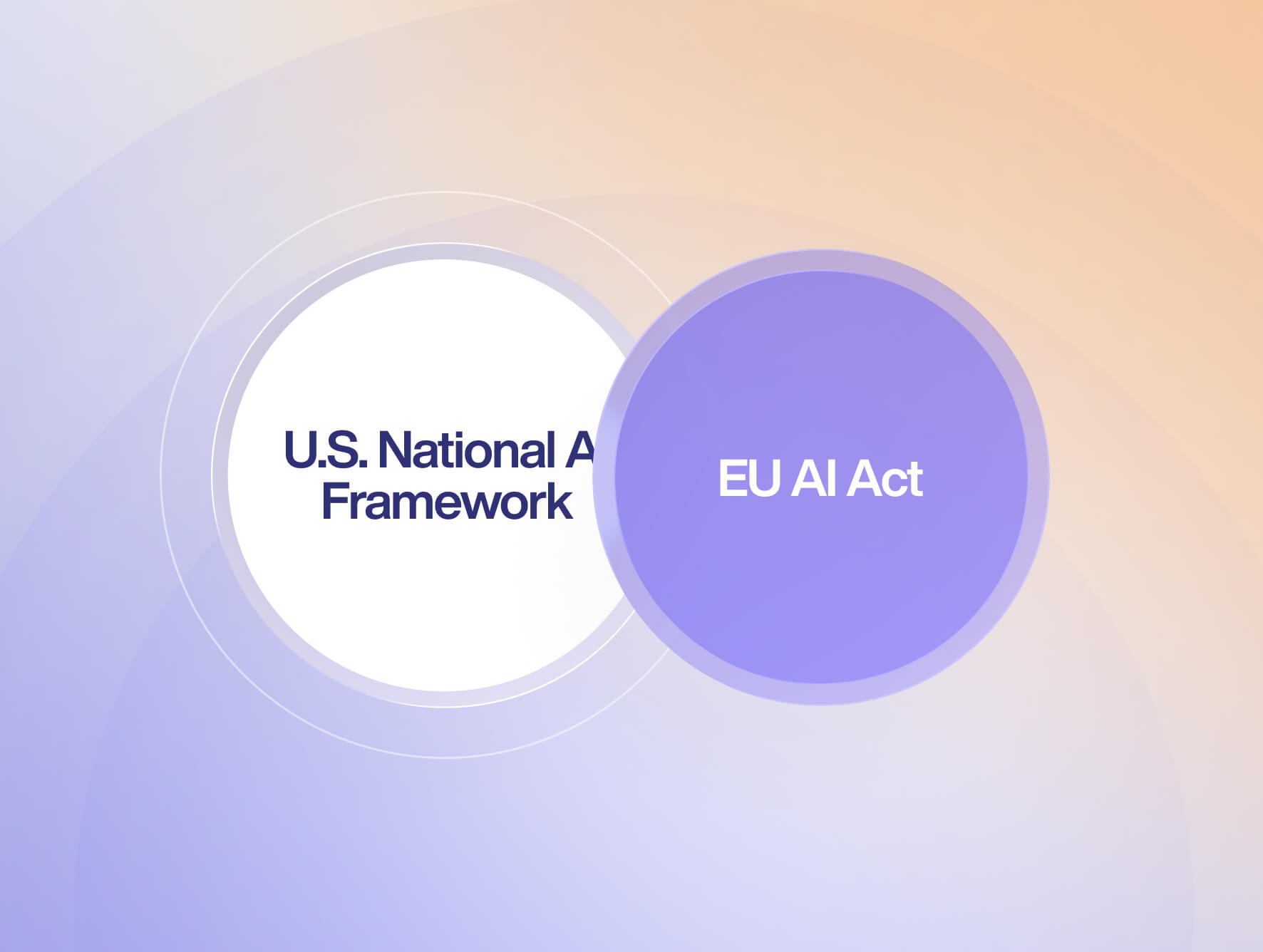
The U.S. approach outlined in the Executive Order stands in sharp contrast to the EU AI Act.
Where the EU has adopted a risk-based regulatory framework with explicit guardrails, documentation requirements, and enforcement mechanisms — particularly for high-risk systems like certain employment and compensation AI — the Trump Administration’s approach is notably more pro-innovation and pro-business.
Key differences include:
- Fewer upfront guardrails in the U.S.
- Emphasis on flexibility and innovation over prescriptive compliance
- Less formal classification of “high-risk” AI systems
This divergence reflects fundamentally different regulatory philosophies.
What This Means for Global Employers
For organizations operating in both the U.S. and Europe, one reality is unlikely to change: EU compliance will continue to set the highest bar.
Employers that design AI systems to meet the EU AI Act’s requirements around:
- documentation,
- human oversight,
- transparency,
- risk management, and
- accountability
will likely be in a good position to comply with whatever national AI framework ultimately emerges in the U.S. (and likely around the globe).
In practice, this means:
- EU-aligned AI governance provides future-proofing
- Global standards reduce operational risk
- Strong internal controls mitigate regulatory whiplash
While the U.S. may move toward lighter-touch regulation, it would behoove global employers to build systems and practices complying with the EU.
Responsible AI as the Baseline for Pay Equity Decisions
As AI regulation continues to evolve in the U.S., one expectation for employers remains constant: AI used in compensation and employment decisions must be responsible, defensible, and compliant.
Trusaic AI™ is designed to support — not replace — human judgment. Our existing and forthcoming AI capabilities are developed with governance, fairness checks, and human oversight. We run continuous bias testing, risk assessments, and regulatory reviews to ensure ethical outcomes.
Pay equity and pay transparency workflows receive automated intelligence and guidance via our proprietary data science and consulting expertise combined with an employer’s own data in our platform. The output is explainable guidance and optimized recommendations, while accountability always stays with the human decision-maker.
This approach reflects Trusaic’s Responsible AI framework: human-in-the-loop decisioning, auditability, alignment with anti-discrimination laws, and compliance with global pay transparency standards. As federal and state AI policies shift, organizations that embed responsible, compliance-first AI into their pay practices will be best positioned to adapt.