




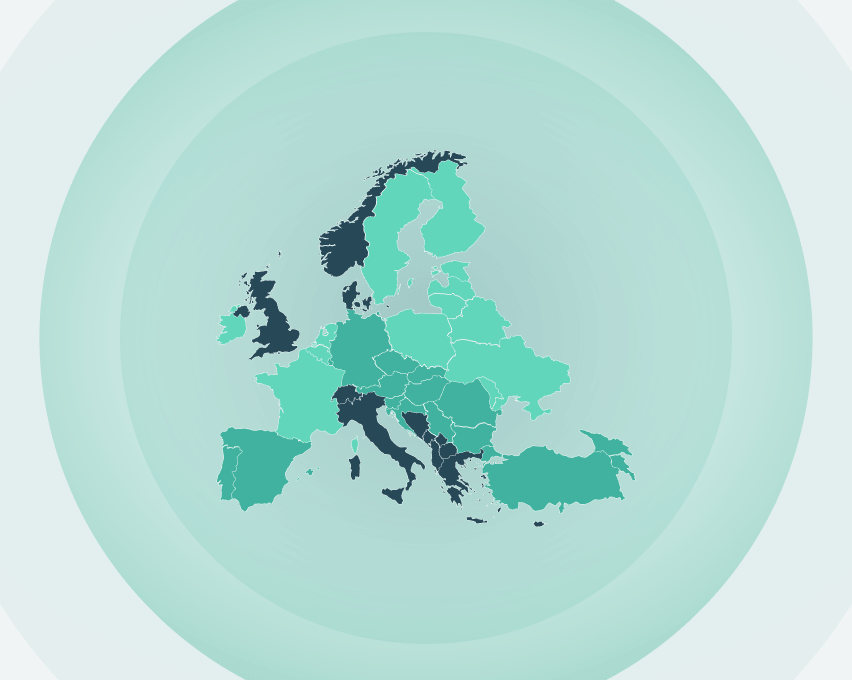







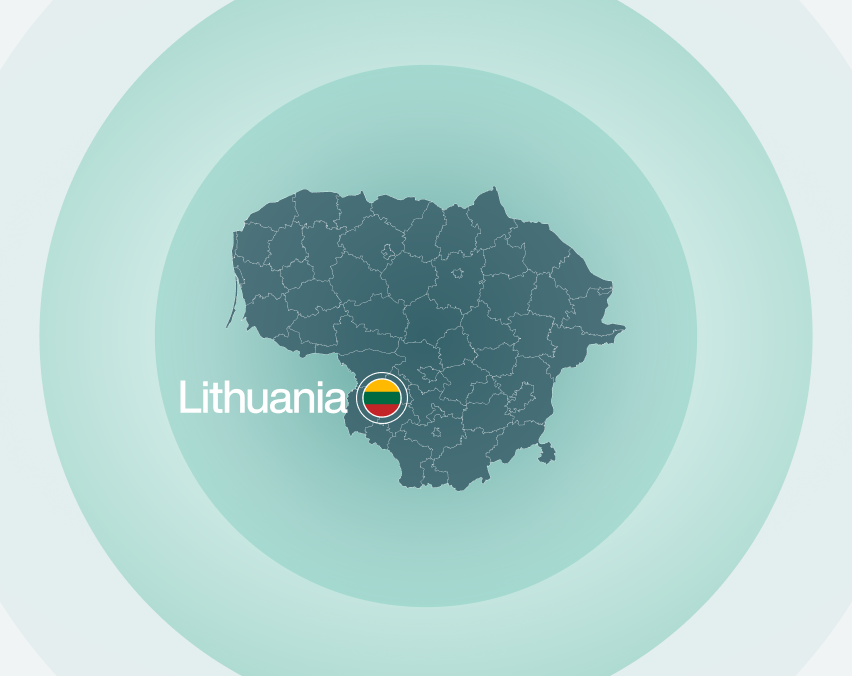
Lithuania is tracking to transpose the EU Pay Transparency Directive by the June 7, 2026 deadline.
On March 18, 2026, Lithuania’s Ministry of Social Security and Labour (SADM) announced that the government approved proposed amendments to the Labour Code to transpose the Directive. The draft legislation now moves to the Lithuanian Parliament for final approval.
In parallel, the State Labour Inspectorate, together with SADM, has approved practical recommendations to help employers assess their current pay systems and prepare for compliance.
Key Takeaways for Employers
Lithuania’s approach reflects a highly centralized and data-driven compliance model, with frequent reporting obligations and strong regulatory oversight.
Pay Transparency Prior to Employment
Under an earlier amendment to Article 25 of the Labour Code (already in effect), an employer in Lithuania must already provide the initial pay or its range in the job notice published by the originator or distributor of that information. Under the draft amendments, employers must now also provide information on any relevant collective bargaining agreement provisions in such a way as to ensure reasonable and transparent negotiations on salary.
Worker Categories
Lithuania defined work of equal value as work that, according to objective criteria, requires no less qualification and is no less significant for the employer in achieving its business objectives than other comparable work.
In a pay system, jobs that are assigned the same or equal work value should be assigned to the same worker category, according to objective and gender-neutral criteria, including:
- Skills (including skills related to communication, cooperation skills, conflict resolution, the ability to work with other people and those important in performing the job function),
- Qualifications,
- Efforts (the amount of physical, mental and emotional resources required to perform tasks according to the job description),
- Responsibility,
- Working conditions (working environment, intensity, risk, physical and mental factors),
- and, if appropriate, other relevant criteria.
Lithuania includes “qualifications” alongside the other four criteria that are specified in the Directive.
Article 7 Right to Information
Lithuania has outlined a formalized process for how to comply with the RTI requirement.
- Employers of all sizes will be required to submit monthly data on employee pay and hours worked to Sodra (Lithuania’s social security authority)
- Required data includes:
- Employee pay
- Job group classification
- Standard working hours
- Working time regime
- Based on this data, Sodra will calculate:
- Average monthly and annual hourly wage, and average annual wage, per employee
- Average monthly and annual hourly wage, and average annual wage, within each job group
This information will be shared each month for monthly data and annually for the annual data with:
- The employer
- The State Labour Inspectorate
- The Office of the Equal Opportunities Ombudsperson
For employers with at least 8 employees (more than 3 women and more than 3 men):
- Gender-based hourly wage data will be publicly published on a monthly basis
Employers shall begin to provide RTI data to employees upon request after that data is provided by Sodra. Employers will be required to respond to RTI requests within one month.
Sodra will provide the annual RTI data to employers for the first time on July 1, 2027. The draft does not set a deadline for Sodra’s first provision of monthly data to employers, which may depend on further implementation acts SADM is required to adopt by June 6, 2026.
Reporting and Joint Pay Assessments
The monthly data submitted to Sodra will also be used to calculate the seven reporting indicators required by Article 9 of the Directive. That data will be provided every three years to employers with 100-249 employees and annually to employers with 250 or more employees.
The procedure for collecting, calculating, submitting, and publishing this data will be established by SADM, which must adopt implementing legal acts by June 6, 2026.
Any requests for explanation of differences in pay between genders must be responded to within one month and an employer must correct any unjustified differences in wages in cooperation with employee representatives within six months.
Any pay gaps of 5% or more that are not explained or corrected within six months will trigger a joint pay assessment under procedures to be established by SADM.
RTI Limitations on Disclosure
Lithuania’s draft introduces safeguards aligned with privacy and GDPR principles when individual employees could be identified:
- If disclosure could reveal an individual’s salary, employees must submit requests through:
- Employee representatives
- The State Labour Inspectorate
- The Office of the Equal Opportunities Ombudsperson
- In such cases, employees will be informed whether:
- The pay difference within their worker category exceeds 5%
This reflects a structured approach to balancing transparency with data protection requirements.
Pay Structures & Objective Criteria
Lithuania is placing significant emphasis on formalized, documented pay systems:
- Employers would need to approve or update their pay systems by June 7, 2026
- Updated systems must include:
- Job classification frameworks based on objective, gender-neutral criteria (e.g., skills, qualifications, responsibilities, working conditions)
- Defined forms of remuneration by job group or position
- Fixed wage amounts or salary ranges
- Rules governing bonuses and additional payments
- Wage progression mechanisms
Employers with fewer than 50 employees are exempt from the requirement to implement formal wage progression mechanisms.
What This Means for Employers
Lithuania’s model stands out for its frequency, transparency, and regulatory involvement.
Monthly data submissions and public disclosures significantly increase the operational burden on employers, while also accelerating regulatory visibility into pay practices.
Employers should prepare for:
- Continuous pay data monitoring rather than periodic reporting
- Increased scrutiny due to publicly available gender pay data
- The need for clearly defined, structured, and defensible pay systems
- Alignment between internal pay practices and externally reported data
With implementation expected by June 2026, organizations operating in Lithuania should begin preparing now to avoid compliance risks and operational disruption.
How Trusaic Can Help
At Trusaic, we provide employers across the EU with solutions to comply confidently with the Directive.
Our Complete EU Pay Transparency Solution enables compliant pay systems, ensures gender-neutral job evaluations, and automates complex reporting obligations to keep you one step ahead of EU pay transparency enforcement.
- PayParity® analyzes your rewards data (compensation/benefits in kind) and quickly identifies any potential unjustified inequities. It enables you to more easily comply with Article 7 (right to information) and Article 6 requirements (pay setting and progression policy).
- Our Remediation Optimization Spend Analysis (R.O.S.A.) works as PayParity’s remediation engine to find the most cost-effective way to close nominal pay gaps to ensure compliance.
- Automated RTI workflows: Our bi-directional integrations with global HCM platforms allow pay equity data to flow securely from the Trusaic platform back into the HCM. Employees can then access their RTI reports directly within their existing HR systems. This eliminates manual report generation and reduces compliance risk.
- For organizations that prefer platform-based access, RTI reports can also be generated and delivered securely through the PayParity platform, with role-based permissions and full auditability.
- Salary Range Finder® ensures equitable pay at the point of hire to prevent any increases in pay gap and enables you to easily comply with the Directive’s salary range disclosure and salary history ban requirements.
- Pay Decisions: Generate fair, competitive offers instantly from Workday.
- Regulatory and Pay Transparency Reporting™ captures your pay equity findings and generates compliant reports.
Trusaic is GDPR compliant and can assist any organization in any EU state in meeting its obligations under both the EU Corporate Sustainability Reporting Directive and the EU Pay Transparency Directive.
Visit our always updated Member State Transposition Monitor to stay on top of the latest EU Pay Transparency Directive developments.