












Manually merging workforce data across disconnected HR systems is a source of IRS Letter 226J penalty assessments in higher education — and most institutions don’t recognize the exposure until a notice arrives.
Higher education institutions manage a complex workforce that requires multiple, specialized software platforms. Unlike a standard corporate enterprise that consolidates its workforce into a single HRIS, universities distribute employee data across systems built for entirely different purposes.
This decentralized architecture creates significant data fragmentation — and the ACA requires precision that fragmented systems cannot reliably deliver.
Why is Higher Education HR Data So Fragmented?
Campus data is structurally fragmented because different worker classifications require completely different administrative software. A standard corporate payroll system cannot process complex academic compensation models without customized workarounds.
A standard university tech stack often looks like this:
- Legacy Academic ERPs: Track faculty course loads, adjunct credits, and complex safe harbor multipliers.
- Modern Cloud HCMs (e.g., Workday or UKG): Manage traditional payroll and benefits for support staff and full-time administrators.
- Student Information Systems (SIS) or Financial Aid Portals: Track federal work-study hours and campus student workers.
The federal tax code makes no allowances for this complexity. The IRS expects a single, unified, and accurate calculation of every employee’s hours of service — regardless of how many platforms an Applicable Large Employer (ALE) uses to manage its workforce.
How Do Disconnected Systems Create ACA Compliance Traps?
A significant compliance vulnerability emerges when an employee is active in two different campus systems simultaneously. If HR exports CSV files from multiple systems and attempts to merge them manually, it is possible to double-count or misclassify hours.
Failing to recognize this cross-pollination leads directly to illegal denials of coverage — or to offering costly, unnecessary benefits.
What Happens When Student Worker Hours Aren’t Properly Classified?
- System A (Financial Aid Portal): Tracks 15 hours per week for a federally funded work-study job. Under the ACA, this time is strictly exempt from hours of service calculations.
- System B (Time and Attendance): That same student works 20 hours per week at the campus bookstore — standard, non-exempt labor.
The Consequence
If these systems do not communicate, the university may push a part-time student over the 130-hour monthly threshold by accidentally including exempt work-study hours.
Alternatively, if hours are under-reported and the student is denied coverage, they may claim a Premium Tax Credit (PTC) on a state exchange — triggering an IRS penalty assessment.
How Do System Upgrades Create Temporary Data Silos?
Data fragmentation isn’t only caused by different departments operating concurrently — it also occurs during routine IT upgrades. To determine full-time status for variable-hour employees, the IRS allows employers to use the Look-Back Measurement Method.
This federal standard requires a seamless, unbroken 12-month historical data record. However, this requirement conflicts with enterprise software migrations. If a university migrates from a legacy system to a new cloud HCM mid-year, that 12-month compliance record is split across two completely different database architectures.
Retroactively reconstructing a full year of variable hours from two disconnected systems is a severe operational liability — particularly when an IRS reporting deadline is approaching.
Why Do Manual Spreadsheets Increase IRS Letter 226J Audit Risk?
Attempting to merge exported data across legacy ERPs, student portals, and modern HCMs using manual spreadsheet formulas and VLOOKUPs introduces logic flaws that are difficult to detect. The IRS AIRS System catches those errors automatically and when a discrepancy is found, the university is presumed liable.
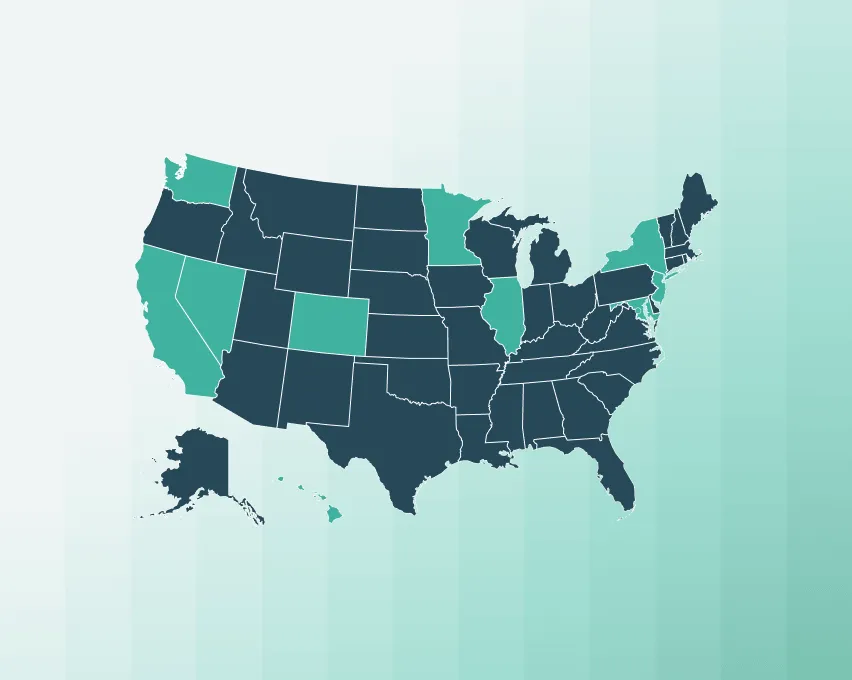
That liability compounds further for institutions operating in states with their own reporting requirements. State-level individual mandates in California, New Jersey, Rhode Island, and Washington D.C. impose additional filing obligations that run parallel to federal ACA requirements.
Manual tracking creates the same structural data gaps at the state level — meaning a single spreadsheet error can generate both federal and state penalty exposure simultaneously.
The ACA Solution for Employers in Higher Education
Universities do not need a costly system overhaul to address the compliance risks created by fragmented HR technology. However, continuing to rely on manual spreadsheets to merge data across legacy ERPs, student portals, and modern HCMs creates operational vulnerabilities that lead to automated IRS Letter 226J penalty assessments.
Instead of forcing a complex academic workforce into standard corporate software, Trusaic’s ACA Complete® serves as a secure, centralized compliance hub. Our HCM-agnostic solution integrates with platforms to establish an unalterable, audit-ready historical record.
Schedule a Penalty Risk Assessment today to protect your institution from Letter 226J.