
















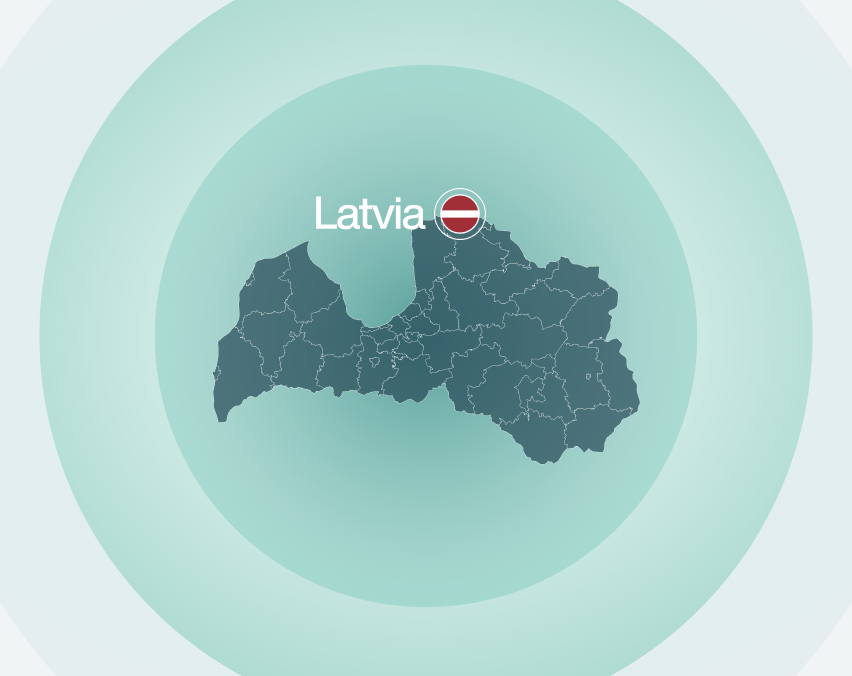
Latvia on March 26, 2026 released its draft legislation to transpose the EU Pay Transparency Directive for public consultation. Despite releasing its draft later than many of its EU contemporaries, there is a chance the bill is on track for timely implementation by the June 7, 2026 deadline. However, that would require the Parliament to use expedited legislative tracks and that there is high political will and no major opposition.
The draft largely mirrors the language and requirements of the Directive through a standalone legal framework rather than amending existing labor laws. The public participation stage (izstrādes/publiskā līdzdalība) ran from March 26 through April 9, 2026.
This phase allows stakeholders to provide input before the legislation advances to Parliament for further consideration.
Below is a breakdown of the key provisions and what employers need to know.
Pre-Employment Pay Transparency
Latvia’s draft states that the gross total monthly or annual amount of the initial salary for a position or the expected hourly rate of pay, as well as relevant provisions of collective bargaining agreements and working procedures, must be included in any job advertisement for the position.
This is consistent with Section 32 of Latvia’s current Labour Law, and goes beyond the Directive in requiring that initial pay must be included in the job posting.
Article 7 Right to Information
Latvia adopts the Directive’s standard framework for employee requests:
- Employers must respond to RTI requests within two months
Notably, Lavia does not limit disclosure directly to employees where comparison groups are small enough to potentially reveal another identifiable employee’s pay. However, that information cannot be used for any purpose other than to exercise a right to equal pay. Latvia has determined that providing access only to workers’ representatives, labour inspectorates, or equality bodies in those situations as many other Member States are doing could unnecessarily restrict workers’ access to the information necessary to exercise their rights.
Definition of Remuneration and Employee Representatives
The draft defines remuneration as pay for work to be paid on a regular basis, which includes salary and allowances, as well as bonuses and any other form of remuneration related to work.
However, the inclusion of the phrase “to be paid on a regular basis” introduces ambiguity.
It remains unclear whether certain forms of compensation (e.g., irregular bonuses or equity-based awards) may fall outside the scope — despite the broad inclusion of bonuses and “any other form” of pay related to work.
Employers should monitor whether this definition is clarified in future revisions or guidance.
The legislation relies on existing Latvian labor law definitions to define employee representatives:
- Employee representatives include trade union representatives or authorized employee representatives
- Where multiple representatives exist, they must:
- Participate in joint negotiations in proportion to the number of employees represented
- Express a unified position
The draft specifies that worker categories must be grouped by the employer in cooperation with any employees’ representatives at the organization.
The definition of “worker” is consistent with the Directive. The draft notes that the scope of the bill is broad and covers other persons who perform certain work under the guidance of another person for pay but are not considered employees.
Reporting Requirements
Latvia’s core reporting framework is fully aligned with the EUPTD, including thresholds, cadence, and data requirements.
Reporting timelines:
- First Report due June 7, 2027: Employers with 150+ employees
- Annual reporting for employers with 250+ employees
- Reporting every three years for employers with 150–249 employees
- First Report due June 7, 2031: Employers with 100–149 employees
- Reporting every three years
Reports must be submitted by June 1 of the following year. Notably, the draft defers procedural specifics:
- The Cabinet of Ministers will establish procedures for submission of reports
- These regulations must be issued by May 1, 2027
Employers should plan ahead, as operational requirements may evolve once these rules are finalized.
Joint Pay Assessments (JPA)
The draft adopts the Directive’s framework for Joint Pay Assessments:
- Triggers and content requirements are aligned with the EUPTD
- When implementing measures arising from a JPA, employers must complete remediation:
- Within a reasonable timeframe
- In cooperation with employee representatives, if any
Equal Pay Claims and Enforcement
Latvia’s draft includes a comprehensive equal pay enforcement framework consistent with the Directive’s requirements, covering:
- Compensation for affected employees
- Burden of proof shifting to the employer
- Use of single-source and hypothetical comparators
- Enhanced access to evidence
- Defined limitation periods
- Protection against retaliation
Penalties for Non-Compliance
The State Labour Inspectorate may impose administrative fines:
- Failure to provide RTI information or pay gap data:
- Up to 70 penalty units (natural person)
- Up to 220 penalty units (legal person)
- Failure to submit required reports:
- Warning or fine up to:
- 140 penalty units (natural person)
- 2800 penalty units (legal person)
- Warning or fine up to:
- Failure to conduct a Joint Pay Assessment:
- Warning or fine up to:
- 70 penalty units (natural person)
- 700 penalty units (legal person)
- Warning or fine up to:
- Failure to ensure equal pay:
- Warning or fine up to:
- 70 penalty units (natural person)
- 700 penalty units (legal person)
- Warning or fine up to:
Currently, one penalty unit is equivalent to 5 euros.
What This Means for Employers
Latvia’s draft legislation reinforces a broader trend across the EU: many Member States are closely adhering to the Directive’s core requirements rather than significantly expanding or deviating from them.
However, key areas such as reporting procedures and remuneration scope remain open for clarification, creating potential operational uncertainty.
Employers should begin preparing now by:
- Ensuring systems can support pay data collection and reporting
- Establishing processes to respond to RTI requests within required timelines
- Reviewing job posting practices for compliance with transparency requirements
- Preparing to engage with employee representatives where required
How Trusaic Can Help
At Trusaic, we provide employers across the EU with solutions to comply confidently with the Directive.
Our Complete EU Pay Transparency Solution enables compliant pay systems, ensures gender-neutral job evaluations, and automates complex reporting obligations to keep you one step ahead of EU pay transparency enforcement.
- PayParity® analyzes your rewards data (compensation/benefits in kind) and quickly identifies any potential unjustified inequities. It enables you to more easily comply with Article 7 (right to information) and Article 6 requirements (pay setting and progression policy).
- Our Remediation Optimization Spend Analysis (R.O.S.A.) works as PayParity’s remediation engine to find the most cost-effective way to close nominal pay gaps to ensure compliance.
- Automated RTI workflows: Our bi-directional integrations with global HCM platforms allow pay equity data to flow securely from the Trusaic platform back into the HCM. Employees can then access their RTI reports directly within their existing HR systems. This eliminates manual report generation and reduces compliance risk.
- For organizations that prefer platform-based access, RTI reports can also be generated and delivered securely through the PayParity platform, with role-based permissions and full auditability.
- Salary Range Finder® ensures equitable pay at the point of hire to prevent any increases in pay gap and enables you to easily comply with the Directive’s salary range disclosure and salary history ban requirements.
- Pay Decisions: Generate fair, competitive offers instantly from Workday.
- Regulatory and Pay Transparency Reporting™ captures your pay equity findings and generates compliant reports.
Trusaic is GDPR compliant and can assist any organization in any EU state in meeting its obligations under both the EU Corporate Sustainability Reporting Directive and the EU Pay Transparency Directive.
Visit our always updated Member State Transposition Monitor to stay on top of the latest EU Pay Transparency Directive developments.