


















Manufacturing employers that evaluate ACA eligibility using weekly or monthly payroll snapshots could misclassify rotating-shift workers as ineligible for coverage. When workers use the exchange and claim a PTC, the IRS AIR System matches that claim against the employer’s 1095-C. When the data doesn’t align, the employer learns about it through Letter 226J.
The Look-Back Measurement Method corrects that classification error. But applying it correctly to rotating shifts, plant shutdowns, and multi-state mobile crews is where the compliance work actually happens.
Why Does Standard Hour-Tracking Fail for Rotating Shift Workers?
Irregular and compressed schedules produce month-to-month hour swings that eligibility logic built on a strict calendar-month snapshot cannot accurately track.
Consider a remote field worker on a 14-on/21-off schedule working 12-hour shifts. Averaged over their 35-day cycle, they work 33.6 hours per week, which legally qualifies them as full-time under the ACA. However, if a calendar month happens to align heavily with their 21-day off-rotation, that worker might log only 10 active days (120 hours) in that specific month.
Under the strict Monthly Measurement Method, which requires 130 hours per calendar month, the system reads this worker as part-time for that month. The classification error is mechanical, not intentional.
That error has a consequence. Under §4980H(a), if an Applicable Large Employer (ALE) fails to offer Minimum Essential Coverage (MEC) to at least 95% of its full-time workforce and any employee receives a PTC, penalty liability applies employer-wide.
How Does the Look-Back Measurement Method Apply to Rotating and Compressed Schedules?
The Look-Back Measurement Method uses three consecutive periods to determine and protect full-time status:
- Measurement Period (3-12 months): Tracks average hours of service across the entire window. For rotating-shift workers, this captures both high-hour active cycles and zero-hour off-rotation weeks, producing an accurate average rather than a misleading snapshot. The regulation sets a three-month floor, but most employers choose six months or longer to fully capture rotating-shift cycles.
- Administrative Period (up to 90 days): Closes the measurement window, calculates averages, and gives the employer time to prepare and extend compliant coverage offers.
- Stability Period (minimum 6 months, at least as long as the measurement period): Workers who averaged 30 or more hours per week during the measurement period retain full-time status for the entire stability window, regardless of schedule fluctuations.
A technician on a 14-on/14-off schedule working 12-hour shifts logs 168 hours per active period. Averaged across the full 28-day cycle, that equals 42 hours per week. The measurement period captures that and a monthly snapshot taken during an off-rotation does not.
One rule carries significant compliance weight: Standard measurement periods can differ by permissible category, such as hourly versus salaried employees or workers in different states, but dates must stay consistent within each category. Adjusting dates per worker creates inconsistencies hard to defend in an IRS review.
How Do Plant Shutdowns and Turnarounds Affect ACA Measurement Periods?
Scheduled plant shutdowns and maintenance turnarounds create zero-hour blocks for an entire facility. Workers remain on the roster but they are not logging hours. The compliance question is whether those zero-hour weeks drag a full-time worker’s measurement-period average below the 30-hour threshold.
The answer depends on whether the shutdown is paid or unpaid:
- Paid shutdown: Hours of service under the ACA include time for which an employee is paid or entitled to payment, even when no work is performed. Workers on paid leave continue to accumulate credited hours.
- Unpaid shutdown: Workers do not accumulate credited hours. A multi-week unpaid shutdown can meaningfully reduce the measurement-period average for workers who would otherwise qualify as full-time.
Turnaround crews add another layer. Contract workers brought in for shutdown maintenance may log intensive hours over a short engagement. Their ACA classification depends on prior work history:
- New variable-hour employees begin an initial measurement period.
- Returning FT calculated or FTD workers are subject to the Rule of Parity: any worker who returns within 13 consecutive weeks of a prior engagement must be treated as a continuing employee.
What Does Rotating-Shift Misclassification Look Like in Practice?
- A refinery runs process technicians on a 14-on/14-off rotating schedule.
- HR evaluates eligibility using monthly hour snapshots.
- During each off-rotation period, technicians log zero hours and are flagged as ineligible.
- No coverage offer is extended.
- Workers purchase subsidized exchange plans and claim PTCs.
- The IRS AIR System matches those PTC claims against the employer’s 1095-C filing.
- The employer cannot demonstrate a valid offer or applicable safe harbor.
- Letter 226J issues under §4980H(a).
What Unique ACA Risk Do Multi-State Energy and Utility Workforces Face?
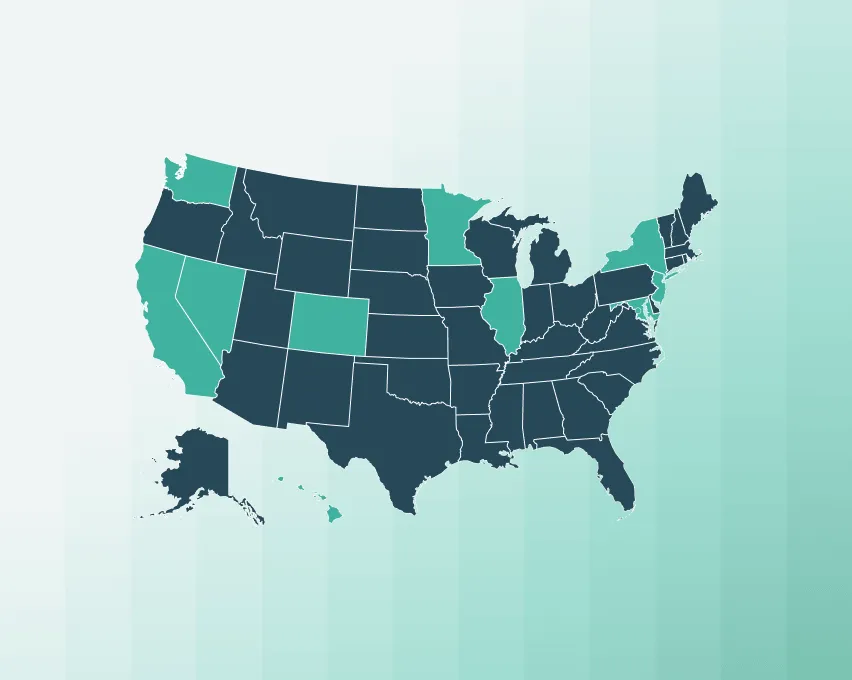
Pipeline crews, utility lineworkers, and energy field workers frequently operate across state lines. State-level individual mandate reporting obligations attach to where the employee lives, not where the work is performed.
A pipeline technician living in California triggers California’s individual mandate reporting requirement on every project, regardless of the project location. An employee living in New Jersey carries New Jersey’s mandate obligations regardless of where they are deployed.
Employers with mobile crews need a jurisdiction-tracking mechanism that maps employee home addresses to state filing requirements. A payroll or ACA system that records job site locations rather than employee residences will produce filing gaps across every state with an active individual mandate.
Why Does Rotating-Shift ACA Compliance Require More Than a Payroll Snapshot?
The Look-Back Method is only as accurate as the data and configuration behind it. For rotating shifts, paid vs. unpaid shutdowns, and multi-state mobile crews, that means individual-level execution across every measurement window. Classification errors made at the measurement stage lock in for the full stability period.
Trusaic’s ACA compliance solution applies that per-employee precision continuously, not just at filing time. Schedule time with one of our ACA experts to determine where there might be gaps in your coverage, and how our managed care approach tackles them.