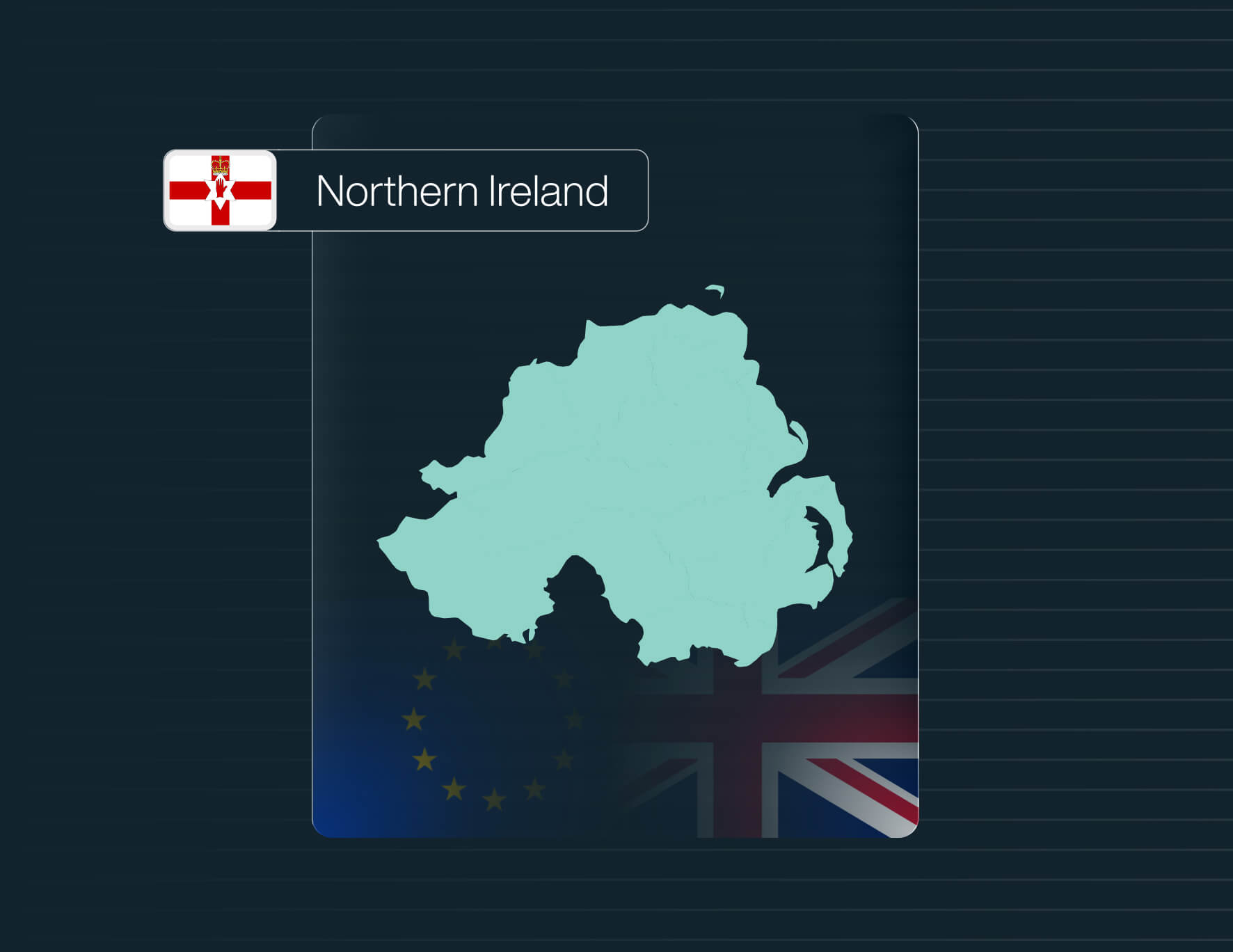
















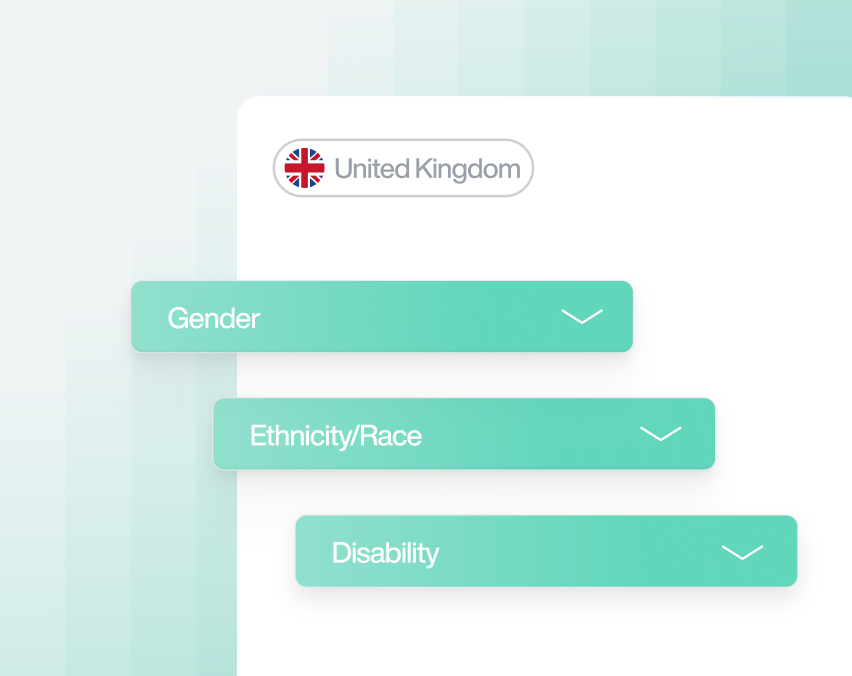
The United Kingdom announced March 25, 2026 it is moving forward in expanding its existing gender pay gap reporting requirement to include mandatory ethnicity and disability pay gap reporting for large employers.
The government confirmed the new requirement in its published response to the consultation period held with UK employers on adding the new reporting requirements.
While the implementation timeline is still to be confirmed, the direction is clear. Employers will soon be expected to assess pay inequities across multiple workforce dimensions — not just gender.
This underscores the growing importance of being able to conduct true intersectional pay equity analyses.
What’s Changing in the UK?
The proposed framework will apply to employers with 250 or more employees and is expected to closely mirror the structure of existing gender pay gap reporting. Employers will calculate the same six metrics — mean and median hourly pay gaps, pay quartile distribution, mean and median bonus gaps, and bonus participation rates — now extended to ethnicity and disability.
This alignment is intentional. It allows employers to build on familiar processes and timelines. However, the simplicity of the framework masks a more complex reality beneath it.
Familiar Calculations, More Complex Data
While the methodology will feel familiar, the underlying data will not.
Gender data is typically more complete and consistently recorded. Ethnicity and disability data, by contrast, is often incomplete, inconsistently categorized, and based on voluntary disclosure. This introduces a level of uncertainty that materially impacts how results are interpreted.
The challenge for employers will not just be calculating the metrics — it will be ensuring the data supporting those calculations is reliable enough to produce meaningful insights.
The government indicated that it will provide detailed guidance on how employers can improve employee declaration rates and how calculations should be made and that it will also encourage employers to go further by considering intersectional inequities where possible.
Workforce Representation and Non-Disclosure Rates
One of the most important additions to the UK’s proposed framework is the requirement to publish workforce composition by ethnicity and disability, along with the percentage of employees who chose not to disclose this information.
This is a notable evolution from gender pay gap reporting. It reflects a recognition that context matters. Pay gap figures alone do not tell the full story; representation and participation rates are critical to understanding what the data actually means.
Non-disclosure rates, in particular, are likely to become a key indicator. High non-response rates may signal cultural or trust issues within an organization and can significantly limit the reliability of reported pay gaps. In some cases, improving data completeness may have a greater impact on reported outcomes than any immediate pay adjustments.
The consultation asked for views on how employers should collect ethnicity data for pay gap calculations. The government confirmed it will maintain the approach set out in the consultation:
- employees will self-identify (choose the ethnicity that they think best describes them)
- employees should choose from the categories used in the Government Statistical Service (GSS) ethnicity harmonised standards, and aggregation in line with Office for National Statistics (ONS) guidance (as used for the 2021 Census of England and Wales and Census in Scotland in 2022)
- employees will not be legally required to disclose their ethnicity — there must be a “prefer not to say” option.
- Ethnicity pay gap reporting will require employers to report a binary comparison at a minimum and also aggregate to 5 ethnic groups where possible.
There are slightly different questions in the ethnicity harmonised standard across England, Wales and Scotland. The consultation response doesn’t provide a clear solution to this issue, stating only that the government “will provide guidance for employers on how they can recognise these different approaches when collecting ethnicity data from their employees across these nations.”
Why True Intersectional Analysis Will Be Needed
The UK government has also indicated that it will encourage employers to go further by analyzing intersectional disparities where possible.
This is where many organizations will face challenges.
A common approach today is to analyze gender and race/ethnicity separately, with disability often excluded altogether due to data limitations. While this may have been sufficient under earlier frameworks, it becomes problematic in a multi-dimensional reporting environment.
Running separate regression analyses for gender, race/ethnicity, and disability introduces both statistical and operational issues.
As outlined in Gail Greenfield’s Pay Equity Deep Dive Series blog, excluding relevant variables from a regression model leads to omitted variable bias. When important factors like race/ethnicity or disability are left out, the model can incorrectly attribute pay differences to other variables, such as gender or Wage Influencing Factors (WIFs).
This can result in distorted conclusions where disparities are exaggerated, understated, or even misidentified entirely.
There is also a practical consequence. Each separate analysis produces its own set of regression weights and predicted pay values. Because predicted pay is central to remediation, having multiple — and potentially conflicting — sets of predictions makes it difficult to design a coherent and defensible remediation strategy.
A More Defensible Approach
A more robust approach is to include all relevant variables — gender, race/ethnicity, disability, and WIFs — within a single regression model.
This produces a unified view of pay across the organization, allowing employers to isolate the true drivers of pay differences while avoiding statistical bias. It also results in a single set of predicted pay values, which is essential for executing consistent and effective remediation.
Importantly, if a variable such as race/ethnicity does not materially impact pay, including it in the model will not distort the results. However, excluding it when it does matter introduces risk that is increasingly difficult to defend under regulatory scrutiny.
What Employers Should Do Now
Even without a confirmed implementation date, employers should begin preparing now.
That preparation starts with data. Organizations should evaluate the completeness and quality of their ethnicity and disability data and take steps to improve disclosure rates where necessary. At the same time, they should reassess their current pay equity methodologies to determine whether they support intersectional analysis.
Aligning internal processes with existing gender pay gap reporting cycles will also help reduce future compliance burden, particularly as action plans become a required component of reporting.
How Trusaic Helps Employers Get This Right
At Trusaic, we help organizations move beyond fragmented analysis toward true intersectional pay equity modeling.
Our approach is built on a single regression model that analyzes pay across gender, race/ethnicity, disability, and other relevant factors simultaneously. By incorporating all WIFs into one model, we deliver a single, consistent set of outputs that can be used to inform clear, defensible remediation strategies.
This eliminates the need to reconcile multiple analyses and ensures that pay equity decisions are grounded in statistically sound methodology.