




















ACA marketplace enrollment dropped from 22.1 million in February 2025 to 19.2 million in February 2026, according to a report from the Department of Health and Human Services — the government’s first official accounting of how the Jan. 1 expiration of enhanced Premium Tax Credits translated into coverage loss.
For Applicable Large Employers, core compliance obligations have not changed. But the individual market has contracted meaningfully, and the workforce segment that depends on it looks different than it did a year ago.
Why Did ACA Marketplace Enrollment Decline by 3 Million?
The February enrollment figures carry particular weight because they reflect coverage after a nonpayment grace period had expired. Earlier federal data showed roughly 800,000 fewer people had selected ACA plans during open enrollment compared to 2025.
The February count tells the fuller story: once people were required to pay their first premium at unsubsidized rates, a larger group did not.
Enhanced PTCs — first enacted through the American Rescue Plan in 2021 and extended through 2025 by the Inflation Reduction Act — expired on Jan. 1, 2026.
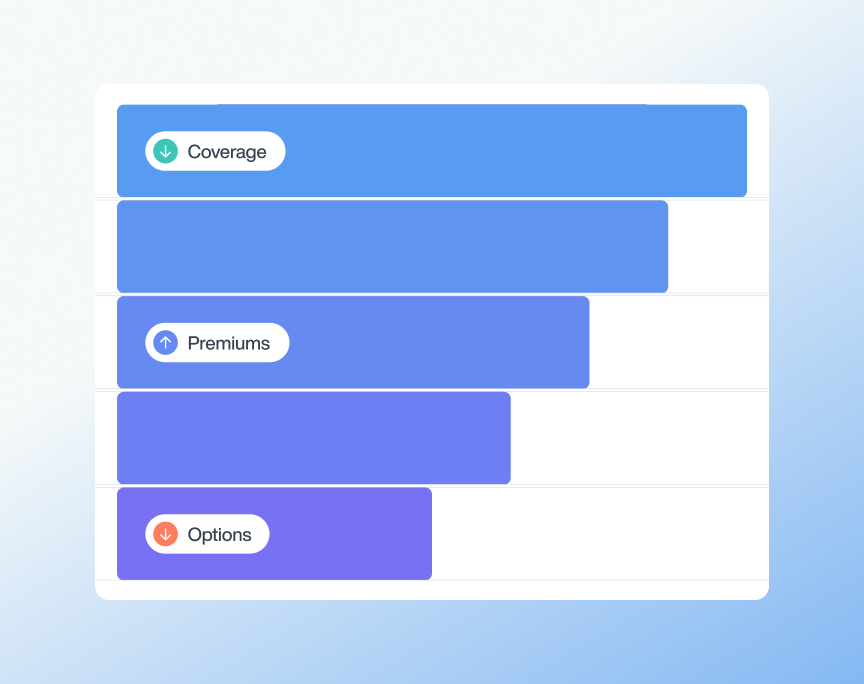
For many enrollees, the cost difference was immediate. Average premiums rose approximately 58%, from roughly $113 per month to $178 per month, according to KFF. For those at or above the 400% Federal Poverty Level threshold, the increases were substantially steeper and subsidy eligibility was cut off entirely.
Bronze plan selections rose from 30% to 40% of total marketplace enrollment, according to the same KFF analysis — a trade of lower monthly premiums for significantly higher deductibles and out-of-pocket costs when care is needed.
KFF projects total effectuated enrollment could average approximately 17.5 million across 2026, down from 22.3 million in 2025.
How Does the Federal Government Explain the Enrollment Drop?
The Department of Health and Human Services released its ACA Exchange Enrollment in 2026 issue brief on June 26, noting that a portion of the 13% enrollment decline may reflect the administration’s work to confirm subsidies.
That work included identifying and removing approximately 2.9 million individuals who could not verify eligibility — including those enrolled through broker-assisted processes without their awareness.
Health analysts, including KFF, point to premium affordability as the more likely primary driver. KFF noted the coverage loss coincided directly with the market’s double and triple-digit premium increases.
Both dynamics are real and not mutually exclusive. The eligibility verification work accounts for a measurable share of the decline; premium affordability accounts for another. The federal data captures both factors together, and a cleaner accounting may not emerge until mid-year data is available.
What Did Congress Do to Extend the Enhanced Subsidies?
In December 2025, the House passed H.R. 6703 — the Lower Health Care Premiums for All Americans Act — by a 216-211 vote. That bill did not include an extension of enhanced PTCs, and the Senate separately rejected a three-year extension measure.
In January 2026, the House voted to retroactively restore enhanced PTCs for three years. As of publication, that measure has not advanced in the Senate, and no extension has been enacted.
Employers should build their 2026 compliance and benefits communication strategy around current law. A retroactive fix, if it ever clears the Senate, would create administrative complexity for both carriers and enrollees — but that scenario remains unresolved.
How Does the Individual Market Contraction Affect Employer ACA Obligations?
The core compliance answer is that the Employer Mandate is unchanged. Applicable Large Employers must offer affordable, minimum value coverage to full-time employees or face Employer Shared Responsibility Payment exposure under IRC §4980H(a) and §4980H(b). The 2026 affordability threshold remains 9.96% of employee wages under the applicable safe harbor.
The subsidy expiration does, however, shift the compliance environment in one notable direction. PTCs are what prompt the IRS to cross-reference an employee’s subsidy claim against an employer’s ACA filings — the mechanism that can initiate ESRP exposure.
As explored previously, fewer employees receiving PTCs means fewer automatic triggers for that cross-reference — a reduction in one source of compliance friction for ALEs with accurate filings.
The downstream effects, however, run the other direction. When marketplace premiums rise, more employees may seek coverage through employer-sponsored plans. That can surface two areas of added complexity:
- Increased mid-year enrollment activity and Special Enrollment Period requests
- Higher demand on full-time eligibility tracking for ACA purposes
The loss of a subsidy alone is not a Qualifying Life Event and does not trigger Special Enrollment Period eligibility for an employer-sponsored plan. However, if an employee’s marketplace coverage lapses, that loss of coverage may constitute a qualifying event depending on plan terms.
HR teams should review their plan documents and consult with benefits counsel to determine how qualifying events are defined in this context.
The ACA marketplace has served as a coverage option for employees who are eligible for an employer-sponsored plan but opted for marketplace coverage instead. With premiums rising sharply in 2026, some of those employees may now be looking at their employer plan differently — and HR teams should be ready for that conversation.
What Does the Enrollment Data Mean for 2026 and Beyond?
The data confirms what many expected at the start of the year: when coverage costs rise sharply, enrollment shrinks. Three million fewer Americans had ACA marketplace insurance in February than a year prior, and KFF projects the decline will continue through 2026.
For ALEs, fewer employees receiving PTCs means fewer IRS cross-references against employer filings — but the underlying obligation to offer affordable, minimum value coverage to full-time employees remains unchanged.
Navigating shifts in PTC eligibility and the downstream effects on ACA compliance requires continuous visibility into your workforce data. Trusaic’s ACA Complete® keeps employers ahead of legislative developments by combining real-time eligibility monitoring, pre-transmission validation, and expert-led penalty risk assessments — so your compliance posture stays current regardless of how the subsidy landscape evolves.